
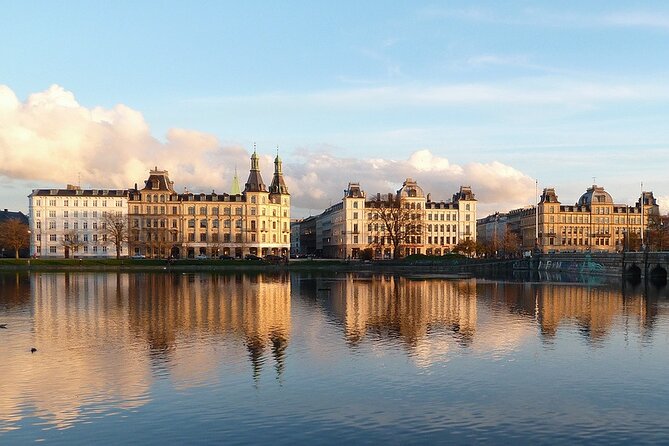
Reviewed · COPENHAGEN HYGGE, HIGHLIGHTS & HIDDEN GEMS
The Philosopher’s Last Walk: An audio tour on the life of Søren Kierkegaard
Philosophy hits the pavement in Copenhagen. This audio walk follows Søren Kierkegaard through real landmarks, with a GPS-guided path you can do at your own speed. It’s a smart way to connect 19th-century ideas to the streets you’re standing on.
I especially like two things. First, the route is packed with recognizable stops—churches, university buildings, Rundetårn, and the cathedral area—so you’re not stuck with random history plaques. Second, the narration is described as well-written and witty, which matters for a topic that can otherwise feel heavy.
One consideration: you’ll need your own smartphone and headphones. The tour also isn’t “step-by-step with a person,” so if you prefer human guidance, you’ll want to be comfortable using an app and following GPS.
In This Review
- Key highlights worth your time
- Price and value: a long walk for $9.99
- Route overview: Nytorv start to the Kierkegaard grave
- Stop 1: Kierkegaard’s family house—begin with origin, not trivia
- Stop 2: the church pass-by—ideas in a city of institutions
- Stop 3: Rundetårn—when Copenhagen’s famous tower enters the story
- Stop 4: Copenhagen University—where thinking meets place
- Stop 5: the cathedral pass-by—big faith, big city
- Stop 6: along the bridge—use the movement to reset your focus
- Stop 7: the lakes—slower pace for the reflective part of the route
- Stop 8: Assistens Cemetery—where the story lands in real quiet
- Stop 9: ending at the burial place—finishing with a clear last note
- How the VoiceMap app helps you not get lost
- Walking pace: best used as a planned city chapter
- What you’ll likely enjoy most (based on the way it’s written)
- Who should book this Kierkegaard audio tour
- Practicalities you should know before you go
- Should you book The Philosopher’s Last Walk?
- FAQ
- How much does The Philosopher’s Last Walk cost?
- What language is the audio tour in?
- How long is the walking tour?
- Where does the tour start and end?
- Is the tour available offline?
- What’s included in the price?
- What do I need to bring?
- What is the cancellation policy?
Key highlights worth your time

- Straight-to-the-point walking route from Kierkegaard’s family home to his burial place
- English narration with writing that comes across as informative and witty
- Offline VoiceMap access for audio, maps, and geodata
- You control the pace, since it’s self-guided with GPS support
- Major Copenhagen landmarks tied to Kierkegaard’s life and the city around him
- The quiet payoff of ending in Assistens Cemetery at the grave site
Price and value: a long walk for $9.99
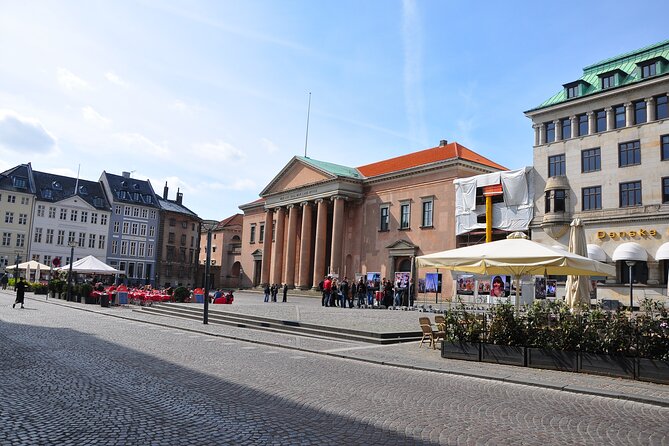
At $9.99 per person, this is one of those purchases that feels small until you think about what you get. You’re basically buying a guided experience for roughly 1 to 1 hour 15 minutes—not by hiring a guide for that time, but by bundling the storytelling into VoiceMap for lifetime access.
That lifetime access piece is underrated. If you come back to Copenhagen later, or if you want to replay parts while you’re researching Kierkegaard, you can. And because the tour has offline audio and maps, you’re not stuck with spotty signal if you wander a little off route.
You should also know what you’re not paying for: the listing doesn’t include admission fees, and it doesn’t include food/drink. So treat it like a city walk you can pair with a coffee stop before or after.
More highlights, hidden corners and a little hygge on foot



Route overview: Nytorv start to the Kierkegaard grave
The tour runs as a single walking loop with clear start and finish points. You begin at Nytorv 2, 1450 København and end at Søren Kierkegaard Gravesite, Kapelvej 2, 2200 København.
It’s set up so that once you’re at the right starting location, the tour should kick off with the correct directions. And it’s designed for normal walking—most travelers can participate—with the key steps laid out as you move through central Copenhagen toward Assistens Cemetery.
Even without a live guide, you still get structure. You’ll hit a sequence of stops that keeps the story moving from early life to the way Copenhagen’s institutions and streets frame his world.
Stop 1: Kierkegaard’s family house—begin with origin, not trivia
The tour starts at Søren Kierkegaard’s family house. That’s a deliberate choice, because for big thinkers, the temptation is to jump straight to quotes and theories.
Starting at the home gives you a better anchor. You’re not just learning facts; you’re learning context. You can picture the “before” part of the story, when ideas haven’t fully formed yet and life details still matter.
If you like your history human-scaled, this opening works well. It sets a tone for the rest of the walk: this is Copenhagen viewed through one person’s life.
Stop 2: the church pass-by—ideas in a city of institutions
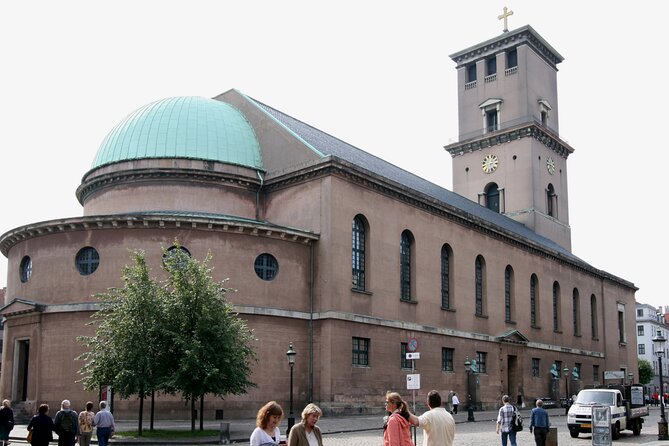
After the family house, the route passes by a church. The narration’s job here is to connect the religious and civic atmosphere of the time with the intellectual world Kierkegaard lived in.
Churches can be visually dull on quick visits unless the story gives them a reason to matter. Here, the “pass by” approach helps because you’re not forced to spend long minutes stuck in one spot. You keep walking, and the audio can frame what you’re seeing while you’re still moving through the neighborhood.
A tip for getting the most out of these quick passes: don’t multitask while listening. Walk forward, and when the narration calls out what you’re looking at, pause for a few seconds to align your view with the audio.
Stop 3: Rundetårn—when Copenhagen’s famous tower enters the story
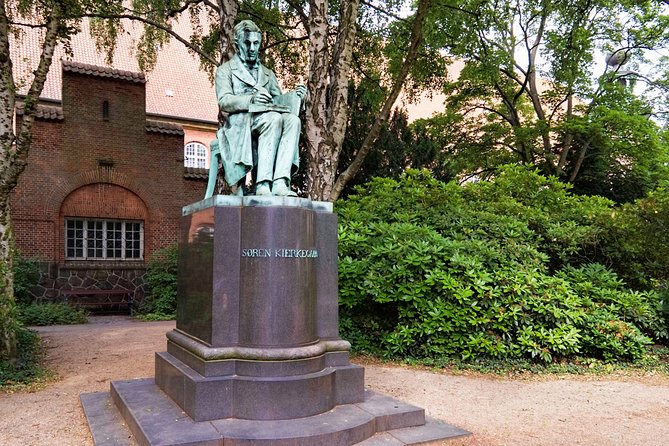
Next up: Rundetårn. This is one of those Copenhagen landmarks you’d likely recognize even if you didn’t know what it meant.
In a Kierkegaard-focused audio walk, it becomes more than a photo stop. It helps you understand the city’s public and scholarly presence—places people gather, study, and think. That matters for Kierkegaard because his life wasn’t lived in isolation; it was lived in a Copenhagen full of institutions.
If you’re the type who likes architecture, you’ll probably enjoy hearing how the narration ties a famous structure to the broader “brainscape” of the 19th century.
More of the Danish story, told street by street





Stop 4: Copenhagen University—where thinking meets place
The route then passes Copenhagen University. This section is valuable if you want the tour to do more than “name drops.”
Universities are physical. They have staircases, halls, and streets that channel how people move and how knowledge gets treated—formal and public. Hearing Kierkegaard in that setting can help you connect theory to daily life.
One downside to keep in mind: this is a pass-by. If you were hoping for detailed, on-site commentary where you stop, look around for long stretches, this may feel lighter than a full walking “point-and-explain” tour. The payoff is momentum—you’re not stuck waiting for the audio to catch up.
Stop 5: the cathedral pass-by—big faith, big city
Then you’ll pass the Cathedral. Cathedrals tend to dominate a city’s visual grammar, and they also represent long continuity—religion, civic identity, and the public meaning of belief.
In a philosophy-focused walk, this is where the story likely broadens from Kierkegaard as an individual to Kierkegaard as part of a larger Copenhagen framework. Even if you aren’t a theology expert, the city’s scale and presence do the heavy lifting.
If you want to absorb it, give yourself a few extra seconds here. You’re near the end of the central stretch, and the next part shifts mood toward the quieter edge of the city.
Stop 6: along the bridge—use the movement to reset your focus
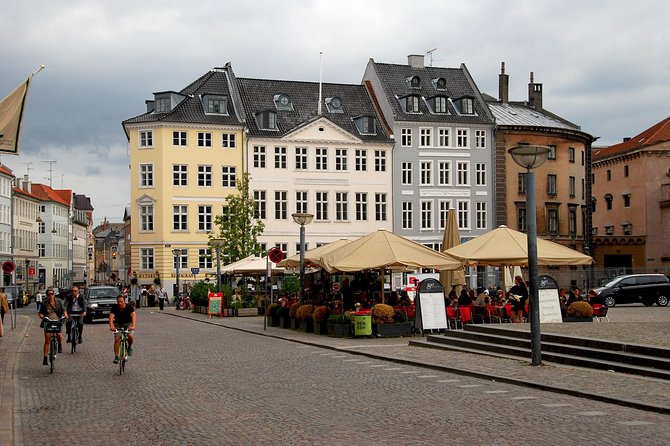
The tour goes along the bridge. This sounds like a simple transit segment, but it’s a smart design choice.
Bridges force a change in perspective. You stop being “inside a street story” and start seeing the wider layout. And since the audio walk is self-guided, a moving section like this helps keep your attention from flattening into passive listening.
Practical note: bridges can be windy and exposed. If you’re doing this in a cool season, bring a layer. It’s the difference between enjoying the walk and thinking about your next coffee.
Stop 7: the lakes—slower pace for the reflective part of the route
After the bridge, the tour passes by the lakes. This is where the experience starts turning more reflective.
Water and open space change how you listen. You tend to walk slower. You look farther. That matters because Kierkegaard’s work often pushes people toward inward thinking, even when they’re outdoors.
If you’re taking photos, do it here, not earlier. You’ll get better “pause-and-breathe” opportunities near the lakes than in dense city corners.
Stop 8: Assistens Cemetery—where the story lands in real quiet
Now for the emotional shift: the tour goes into Assistens Cemetery. This is the kind of stop that can’t be faked with generic background.
Cemeteries have rules—quiet, respect, and careful movement. Even if the audio is driving the narrative, you’ll want to slow down and treat this area like a place for attention, not just a soundtrack location.
This also helps explain why the tour ends where it does. A philosophical life deserves a final moment that feels grounded. In plain terms: it makes the ideas feel less abstract.
Stop 9: ending at the burial place—finishing with a clear last note
The tour ends at Søren Kierkegaard’s burial place. That ending is the whole point of the experience title.
You finish with closure: the person the walk is about is right there, under your feet and within reach. It’s not just “learn and move on.” It’s “learn, then stop.”
If you want to stretch the moment, do it the respectful way: take a few extra minutes after the audio ends. Let the city noises fade, then head out when you feel ready.
How the VoiceMap app helps you not get lost
This is a VoiceMap Audio Tours experience delivered through the VoiceMap app. You get offline access to audio, maps, and geodata, plus directions to the starting point.
That matters because Copenhagen is easy to navigate, but a self-guided tour still needs frictionless guidance. Offline features reduce stress. You’re less likely to lose the route because of dead zones or switching between walking and transit directions.
What to plan for:
- You’ll need a smartphone (included nowhere in the tour price)
- You’ll need headphones (also not included)
- You’ll be following GPS rather than waiting for a live guide
- The “private tour/activity” means it’s just your group, not mixed groups
If you’re unsure how GPS behaves indoors or near dense streets, test your phone settings before you start. Keeping the screen bright enough to follow prompts can help.
Walking pace: best used as a planned city chapter
The duration—roughly 1 hour to 1 hour 15 minutes—is a sweet spot. It’s long enough to feel like you did something meaningful, but not so long you feel trapped when your feet start complaining.
Since you’re not guaranteed a rest stop built into the experience, I recommend timing this as a dedicated chapter. Do it between heavier sightseeing blocks. You’ll get a focused intellectual walk without burning your whole day.
Also: because it’s self-guided, you can adapt. If it’s raining, you might keep your pace up and listen continuously. If it’s sunny, you might take short pauses at key visual points—family house exterior, Rundetårn, and the cemetery entrance.
What you’ll likely enjoy most (based on the way it’s written)
The feedback you have here points to one big strength: the narration is described as informative and witty and the writing is well-delivered.
That combination matters for Kierkegaard. His ideas can feel dense if you’re only reading summaries. A good audio tour does two things at once: it tells you what to know, and it keeps you awake long enough to care.
Expect the tour to give you enough background to follow the “why” behind the landmarks—especially the transition from city institutions to the calmer final stretch in Assistens Cemetery.
Who should book this Kierkegaard audio tour
I think this works best for:
- People who want a low-cost, meaningful Copenhagen experience without booking a guided group tour
- Anyone who’s heard the name Søren Kierkegaard and wants to place him in real streets
- Visitors who like to walk and listen rather than sit in museums for long stretches
- Travelers who can handle a smartphone-based experience (you provide the phone and headphones)
If you strongly prefer a live guide, or if you hate following GPS, you might find the self-guided format a bit too hands-off. But if you’re comfortable with apps, it’s a very efficient way to cover a lot of meaningful ground.
Practicalities you should know before you go
A few things can make or break an audio walk like this, so plan early.
You’ll want:
- Phone + headphones (not included)
- Download time: since you get offline access, give yourself a moment before starting so the app has what it needs
- Comfort: you’ll be walking through central Copenhagen and into a cemetery area, so wear footwear you trust
You also need to handle:
- Transportation to the start (the tour is near public transportation, but transit time is on you)
- Food and drink (not included)
- Any admission fees you encounter on your own (not included)
The opening hours listed run Monday–Sunday, 12:00 AM to 11:59 PM, so you’re not boxed into a short time window. That gives you flexibility, especially if you’re trying to fit it between other plans.
Should you book The Philosopher’s Last Walk?
Yes—if you want a self-guided, English audio walk that links Søren Kierkegaard’s life to Copenhagen landmarks in a time-efficient way.
Book it if:
- You like walking tours you can pause and control
- You want a witty, well-written narration rather than pure lecturing
- You’re interested in Kierkegaard but also want the city context—Rundetårn, university areas, cathedral zones, then the quieter finish at Assistens Cemetery
Skip or think twice if:
- You don’t want to use a smartphone for directions
- You prefer a live guide who can answer questions on the spot
- You’re looking for a tour that lasts much longer than about 1 hour to 1 hour 15 minutes
FAQ
How much does The Philosopher’s Last Walk cost?
It costs $9.99 per person.
What language is the audio tour in?
The tour is offered in English.
How long is the walking tour?
The duration is approximately 1 hour to 1 hour 15 minutes.
Where does the tour start and end?
It starts at Nytorv 2, 1450 København and ends at Søren Kierkegaard Gravesite, Kapelvej 2, 2200 København.
Is the tour available offline?
Yes. It includes offline access to audio, maps, and geodata in the VoiceMap app.
What’s included in the price?
Included items: lifetime access to the tour in English, the VoiceMap app for Android and iOS, offline access to audio/maps/geodata, self-guided GPS flexibility, and directions to the starting point.
What do I need to bring?
You’ll need your smartphone and headphones. Transportation and food/drink are also not included.
What is the cancellation policy?
You can cancel for a full refund if you cancel at least 24 hours before the experience’s start time. If you cancel less than 24 hours before, the amount paid is not refunded.
More Tour Reviews in Copenhagen



More Danish History & Stories

More Highlights & Hidden Gems



Fresh Off the Cobbles: The Newest Copenhagen Reviews












Copenhagen Hygge, Highlights & Hidden Gems, compared.
 ★ 5.0Private Walking Grand Tour of CopenhagenFrom $3423,953 reviews
 ★ 5.0Copenhagen Highlights Walking TourFrom $402,324 reviews
 ★ 4.8Highlights 3 Hour Bike Tour with a Local GuideFrom $622,312 reviews
 ★ 5.0Politically Incorrect Private Highlights Walking TourFrom $3741,244 reviews
 ★ 4.73-Hour City Highlights Bike Tour with GuideFrom $551,239 reviews
 ★ 5.0Copenhagen Highlights 3 Hour Bike Tour with local GuideFrom $611,125 reviews
 ★ 4.7Group Walking Tour – City Highlights – 2 HoursFrom $391,088 reviews
 ★ 5.03-hour Copenhagen City Highlights Bike TourFrom $54757 reviews
Browse the lists this tour appears in