
Reviewed · COPENHAGEN HYGGE, HIGHLIGHTS & HIDDEN GEMS
Copenhagen City Private Walking Tour
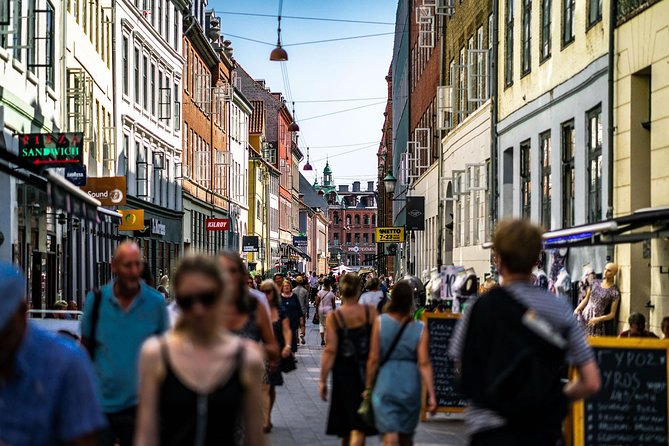
Copenhagen can be a maze, so this private walk helps you get your bearings fast. I like the undivided attention of a private guide and the fact that the commentary can be tuned to your interests while you move between major landmarks. One trade-off: it is city-centre walking with traffic noise, so if you hate street sound, plan for it.
You’ll start at Højbro Plads and work through a classic mix of power, religion, culture, and canals—Christiansborg Palace and St. Nicolaj Church, then Nyhavn, the Opera House, and Amalienborg, before finishing at Kongens Nytorv. I also like that the guide can keep things flexible without turning it into a rushed checklist.
At this price point ($267.07 per person), it makes sense only if a private format is important to you—like if you want questions answered on the spot or you’re traveling as a small group that doesn’t want to follow someone else’s pace.
In This Review
- Key things I’d mark on your map before you go
- Why a private 2-hour walk works in Copenhagen
- Højbro Plads: the quick start with big-sight views
- Christiansborg Slot: Denmark’s palace island and where politics happens
- St. Nicolaj Church: fire stories and a tower viewpoint
- Royal Danish Theatre and Charlottenborg: culture around the harbour
- Nyhavn: canals, colour, and Andersen’s exact house numbers
- Copenhagen Opera House: modern architecture with a clear backstory
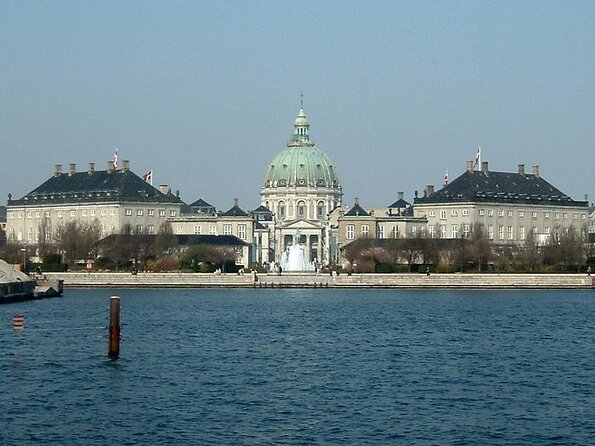
- Amalienborg Palace Museum: royal addresses you can actually picture
- Frederik’s Church (Marmorkirken): dome views and wedding-day vibes
- St. Ann’s Square: the border between neighbourhood moods
- Kongens Nytorv: shopping landmarks, an old hotel story, and a rink
- Price and value: is $267.07 per person worth it?
- Should you book the Copenhagen City Private Walking Tour?
- FAQ
- How long is the Copenhagen City Private Walking Tour?
- Where does the tour start and end?
- Is this a private tour?
- What’s included in the price?
- Are admission tickets included for the stops?
- What stops do you visit during the walk?
- Does the tour run in bad weather?
- Is it easy to reach using public transportation?
- What’s the cancellation policy?
Key things I’d mark on your map before you go
- Private means only your group: you aren’t squeezed into a crowd with a guide trying to talk over everyone.
- Tailored commentary: you can steer the stories toward royal Denmark, architecture, wars and fires, or Danish design and the arts.
- A tight 2-hour loop: you cover the centre highlights without burning half a day to do it.
- Great photo transitions: canals at Nyhavn, formal geometry around Amalienborg, and big city views from church towers.
- Smart pacing at major stops: lots of short viewing moments, so you still have energy for Copenhagen after.
- Professional guides with real energy: the tour has included guides like Silke and Ulf Dahlin, noted for being friendly and lively.
Why a private 2-hour walk works in Copenhagen
Copenhagen is beautiful, but it is also practical: you want your walking time to do something. This tour is designed for that. In about 2 hours, you hit the kind of places you’d otherwise bounce between on your own—except here you get a guide who can explain what you’re seeing as you see it.
The private format matters. When you’re the only group, you can stop when something catches your eye, ask follow-up questions, and still keep the day moving. That’s the difference between simply visiting and actually understanding the city’s layout and priorities.
It also helps that the walk is concentrated in the city centre. You’re not hopping across town, which makes the whole thing feel efficient rather than exhausting. The flip side is noise: the tour notes that traffic noise is unavoidable in the centre. I’d bring comfy shoes and expect the sound to be part of the experience.
Finally, the guide approach seems geared toward making the time feel fun. In past bookings, guides like Silke and Ulf Dahlin have been described as thoughtful, pleasant, and full of energy—exactly what you want when you’re walking outdoors and trying to stay alert.
More highlights, hidden corners and a little hygge on foot



Højbro Plads: the quick start with big-sight views
You begin at Højbro Plads, just off Strøget, so you’re immediately near the action. This stop is short, but it sets the tone: from here you get a strong visual line toward Christiansborg Palace and Børsen (the old stock exchange building). It’s a classic Copenhagen “first frame” moment—buildings that tell you this city takes design and symbolism seriously.
One detail worth watching for is Bishop Absalon on Horseback. Even if you don’t know the name yet, you’ll understand the power of the statue once you’re told who he was and why he belongs in a spot like this. It’s one of those pieces that turns an ordinary street corner into a story.
Practical note: the tour indicates this stop has no admission ticket needed. That makes Højbro Plads a low-stress warm-up before you start dealing with places that may have separate entry rules later.
Christiansborg Slot: Denmark’s palace island and where politics happens
Next comes Christiansborg Slot on Slotsholmen, the “Palace Island.” The big takeaway here is how Copenhagen mixes royal and political roles in one tight geography.
Christiansborg is described as the fifth version of the palace complex on this site. Today it houses the Danish Parliament, so you’re not just looking at something old and decorative—you’re looking at a working seat of government. That’s a different lens than you’d get at a typical museum palace.
The tour makes it clear that admission is not included at this stop. So expect to spend time on the outside and in the surrounding areas rather than going in unless you separately plan for entry. If you’re the type who loves architecture and civic buildings, this is still a strong stop even without ticketed access.
St. Nicolaj Church: fire stories and a tower viewpoint
From Christiansborg, the walk turns toward St. Nicolaj Church. The important context here is that the church building you see now is connected to rebuilding after the Great Fire of 1795. The tour highlights that there were multiple fires, not just one neat event—so the story feels more real and less like a single-page legend.
This stop also has a payoff for people who like views. The tower is noted as offering some of the best views of the city centre. If you’re trying to orient yourself for the rest of the trip, this is the kind of viewpoint that helps everything else click.
Admission is again listed as not included for this stop. So treat it as a landmark stop with potential tower access (depending on what’s available during your visit), but don’t assume entry is covered.
Royal Danish Theatre and Charlottenborg: culture around the harbour
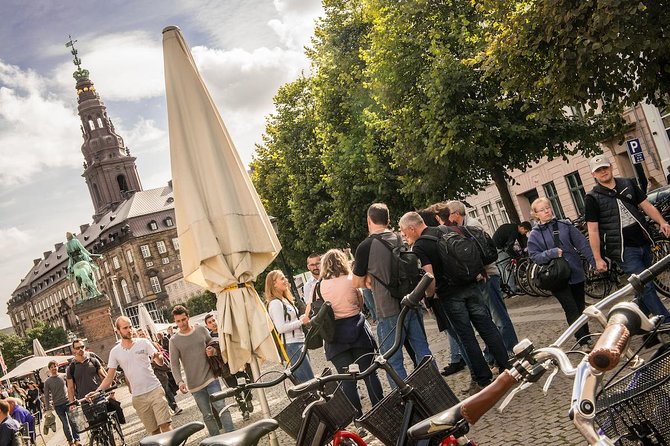
As you head through the central areas near the harbour, you’ll pass by the Royal Danish Theatre (Kongelige Teater). The tour notes that today’s theatre complex includes the Old Stage at Kongens Nytorv plus the new Copenhagen Opera House and the Royal Danish Playhouse by the waterfront. Even if you never catch a performance, it helps to understand how the city’s major performing arts spaces relate to each other.
Right after that, you’ll also stop at Kunsthal Charlottenborg, which is connected with the Danish Art Library. The standout detail here is the yearly graduating exhibition at the Art Academy, which can mean you’re seeing new artists and projects that haven’t fully settled into the gallery world yet. There’s also a hint that some works may be available at reasonable prices—exactly the sort of place where you might find a piece that still feels close to the student energy.
Both of these stops are marked as no admission included, so you’ll likely focus on what you can see from outside and any open areas that don’t require tickets. Still, the cultural context the guide provides makes it feel more meaningful than just walking past.
The whole city in one easy circuit






Nyhavn: canals, colour, and Andersen’s exact house numbers
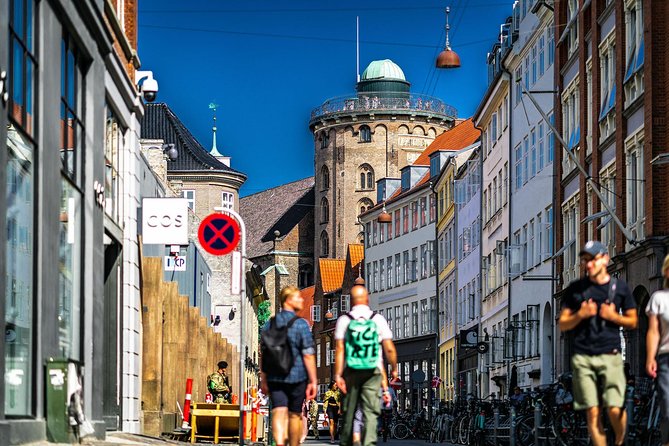
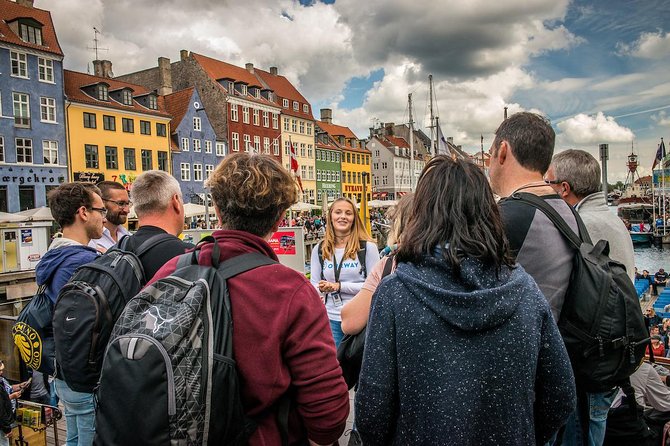
Then you hit Nyhavn, one of Copenhagen’s must-see areas, lined with colourful houses along the canal. If you want the city’s postcard side, this is where it lives.
But this stop is more than pretty buildings. The guide connects it to Hans Christian Andersen, including the detail that he wrote the famous fairy tale The Princess and the Pea in house No. 20. The tour also points out other Andersen addresses in the area—No. 67 and No. 18—so you can picture his life on this stretch rather than treating Andersen as a distant name.
This part has free entry noted for the stop, which is great because Nyhavn is one of those places where you might want to linger longer if the weather is good. The guided time keeps you moving, but you can easily extend it after the tour if you want more canal-side wandering.
Copenhagen Opera House: modern architecture with a clear backstory

Next is the Copenhagen Opera House, and the tour frames it as one of the world’s most modern and well-equipped opera buildings. It also gives you the kind of timeline that helps you appreciate why it looks the way it does.
Here’s the practical context: the A.P. Møller Foundation donated it to the state in August 2000, and it was inaugurated in 2005 on the island of Holmen, opposite Amalienborg Palace. That means your walk isn’t random; you’re viewing two major symbols across the same water space—the city’s royal residence on one side and the cultural landmark on the other.
Admission is not included at this stop. So plan for exterior viewing and explanations more than an inside visit, unless you add ticketed access on your own.
Amalienborg Palace Museum: royal addresses you can actually picture
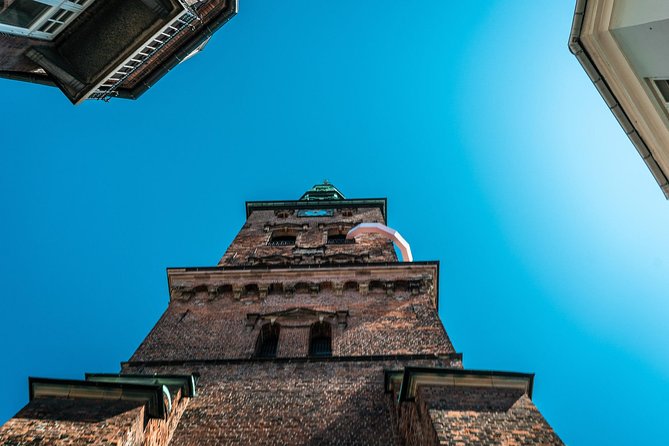
After the Opera House, you’ll arrive at Amalienborg Palace Museum, the official residence of the royal family. The key value here is how the guide helps you map the royal household by location.
The tour explains that Margrethe, the former queen, lives in the palace on the left closest to the waterfront, while King Frederik lives opposite her with Mary and their four children. Once you know that, looking at the facades feels like more than sightseeing; you’re reading a living arrangement in stone and symmetry.
Admission is not included for this stop, so treat it as a landmark viewing moment. Even without entry, this is one of Copenhagen’s most satisfying places to slow down for a minute because the space is so clearly planned.
Frederik’s Church (Marmorkirken): dome views and wedding-day vibes
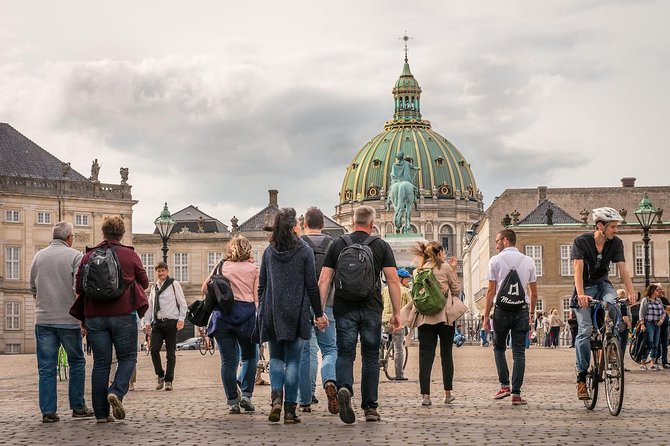
Next comes Frederik’s Church, also known as Marmorkirken (the Marble Church). This is a 1700s construction, and the tour points out how popular it is for weddings. One fun detail: the wedding bells chime nearly all day on Fridays and Saturdays.
If you like the mix of civic and personal moments—big public architecture meeting private rituals—this stop delivers. And yes, there’s a view incentive too. The guide notes you can enjoy a great view from the top of the dome, and that the dome can be visited every day.
Admission is listed as not included. Still, the combination of landmark exterior, wedding chatter in the air, and the dome-view idea makes this a strong stop for first-time visitors who want more than just canals and palaces.
St. Ann’s Square: the border between neighbourhood moods
From there, you’ll step into Sankt Annae Kirke and St. Ann’s Square (Sankt Annæ Plads). The tour describes this square as the border between the city-centre neighbourhoods of Nyhavn and Frederiksstaden. That border framing is genuinely useful. It helps you understand why the energy changes as you walk from one zone to the next.
You’ll also hear what the square contains: park space, statues, embassies, and more. In other words, it’s not only a pretty pause—it’s a civic and diplomatic pocket that connects the waterfront romance of Nyhavn to the more formal Frederiksstaden feel.
This stop is marked as free for entry, so you can linger without the mental cost of ticket planning.
Kongens Nytorv: shopping landmarks, an old hotel story, and a rink
Your final leg brings you to Kongens Nytorv, one of Copenhagen’s large central squares. This is where you get the sense of the city’s everyday rhythm: major buildings around a shared public space.
The tour specifically calls out Magasin du Nord, a Danish department store chain with a flagship at Kongens Nytorv. It also points to Hotel d’Angleterre, whose origins include a restaurant called The Strong Man’s Garden before it became the famous hotel. If you like tracing how places evolve over time, that origin story gives you a neat way to read the building.
There’s also mention of the Kongens Nytorv Skating Rink (Skojtebane). Depending on the season, this becomes an extra visual “life detail” in the square—something you’ll notice even if you don’t plan to skate.
The tour notes free entry here, and it finishes right in this area, near where you can continue exploring—especially toward Nyhavn if you want more canal time.
Price and value: is $267.07 per person worth it?
At $267.07 per person for about 2 hours, this isn’t a budget walking tour. The value isn’t in ticking off more stops. It’s in the private format and the guide’s ability to tailor the commentary while you walk.
Here’s how I’d judge whether it’s worth it for you:
- If you’re traveling as a small group and want conversations, not just narration, the private setup usually feels fairer.
- If you care about royal Denmark, architecture, the way the city rebuilt after fires, or the cultural power of the Opera House and theatre scene, having a guide connect the dots can save you time later.
- If you’d rather wander independently without talking to anyone, you’ll probably get more value spending that money on a few museums and letting the city do the talking.
The tour includes a professional guide, and it uses a mobile ticket. It also notes group discounts, which can matter if you’re not a solo traveler. One more practical point: some stops are free, while others list admission as not included—so if you want to go inside multiple places, budget extra for those tickets.
So yes, it costs money. But for the kind of traveler who likes guidance, pacing, and context without the stress of a group schedule, it can be a solid way to start your Copenhagen trip.
Should you book the Copenhagen City Private Walking Tour?
I’d book it if you want a fast, focused introduction to the central sights—without feeling rushed and without losing time trying to figure out what matters. It’s especially good for couples, small groups, and anyone who enjoys asking questions while walking.
I’d skip it if you’re happy with self-guided exploration and you don’t care about tailored explanations. With city-centre traffic noise built in, it also helps to be comfortable with street sound outdoors.
If you’re curious about Denmark’s power centres (Christiansborg), cultural landmarks (Opera House and theatre areas), and the storytelling connections that make Nyhavn unforgettable (Andersen’s house numbers), this is one of the easiest ways to connect the dots in a couple of hours.
FAQ
How long is the Copenhagen City Private Walking Tour?
The tour lasts about 2 hours.
Where does the tour start and end?
It starts at Højbro Plads (Højbro Pl., 1200 København, Denmark) and ends at Kongens Nytorv, near Nyhavn.
Is this a private tour?
Yes. It’s private, and only your group participates.
What’s included in the price?
A professional guide is included. A mobile ticket is used, and group discounts are available.
Are admission tickets included for the stops?
Some places are listed as free (such as Højbro Plads and Nyhavn), while others list admission as not included (such as Christiansborg Slot and St. Nicolaj Church).
What stops do you visit during the walk?
You’ll see Højbro Plads, Christiansborg Slot, St. Nicolaj Church, the Royal Danish Theatre, Kunsthal Charlottenborg, Nyhavn, the Copenhagen Opera House, Amalienborg Palace Museum, Frederik’s Church, St. Annae Kirke / St. Ann’s Square, and Kongens Nytorv.
Does the tour run in bad weather?
It operates in all weather conditions, so you should dress comfortably and appropriately.
Is it easy to reach using public transportation?
Yes, it’s near public transportation.
What’s the cancellation policy?
Free cancellation is available. You can cancel up to 24 hours in advance for a full refund. If you cancel less than 24 hours before the start time, the amount paid won’t be refunded.
More Tours in Copenhagen



More Tour Reviews in Copenhagen

More Highlights & Hidden Gems


Fresh Off the Cobbles: The Newest Copenhagen Reviews










Copenhagen Hygge, Highlights & Hidden Gems, compared.
 ★ 5.0Private Walking Grand Tour of CopenhagenFrom $3423,953 reviews
 ★ 5.0Copenhagen Highlights Walking TourFrom $402,324 reviews
 ★ 4.8Highlights 3 Hour Bike Tour with a Local GuideFrom $622,312 reviews
 ★ 5.0Politically Incorrect Private Highlights Walking TourFrom $3741,244 reviews
 ★ 4.73-Hour City Highlights Bike Tour with GuideFrom $551,239 reviews
 ★ 5.0Copenhagen Highlights 3 Hour Bike Tour with local GuideFrom $611,125 reviews
 ★ 4.7Group Walking Tour – City Highlights – 2 HoursFrom $391,088 reviews
 ★ 5.03-hour Copenhagen City Highlights Bike TourFrom $54757 reviews
Browse the lists this tour appears in