
Reviewed · COPENHAGEN HOP-ON BUS & BOAT
City Sightseeing Copenhagen Hop-On Hop-Off Bus Tour
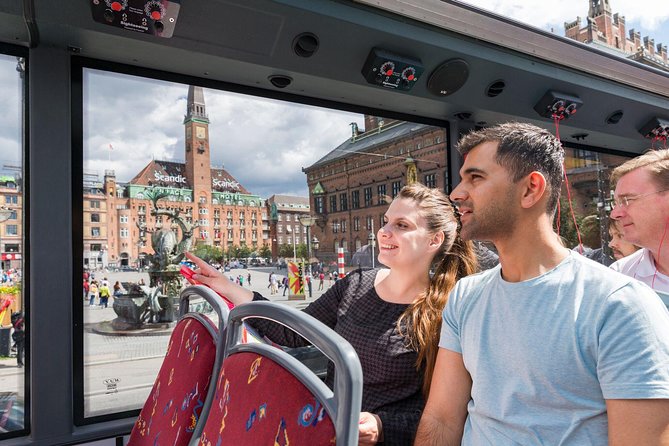
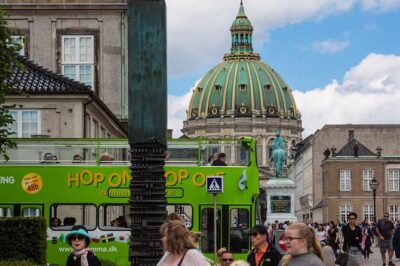
Buses with Copenhagen postcards, on your schedule. City Sightseeing Copenhagen is a simple way to skim the highlights—Nyhavn, Amalienborg Palace, and the Little Mermaid among them—while still giving you control over how long you stay off the bus. I especially like the open-top double-decker setup for photos and the hop-on hop-off freedom to detour to places like Tivoli Gardens or Rosenborg Castle when something grabs you.
My one real caution: finding the right stop and matching the right bus to your route can be fiddly in a busy city. If you miss one ride, wait times can feel long, especially in colder months, so give yourself buffer time and watch for clear route signage.
In This Review
- Key things I’d watch for before you ride
- Why Copenhagen feels easier from an open-top double-decker
- Price and what you actually get for $45.71
- Picking the right route: Classic Red vs Colorful vs Carlsberg
- Classic route (often the best first choice)
- Colorful route (shorter, faster hit)
- Home of Carlsberg route (a focused detour)
- Getting on at Ved Stranden and the Stroget area (your easiest starting point)
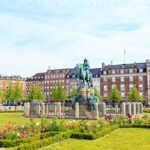
- Nyhavn, Amalienborg Palace, and the Little Mermaid: the photo stretch that pays off
- From Rosenborg Castle to Gammeltorv: where architecture turns into a walk
- Tivoli-area stops, shopping malls, and Black Diamond/BLOX options
- Christianshavn and Freetown Christiania: the Copenhagen detour most people will remember
- Frederiksberg, Carlsberg-adjacent areas, and Copenhagen Zoo: greener, less frantic
- Audio, headphones, Wi‑Fi, and comfort on the bus
- Timing, crowds, and the practical gotchas that can waste your day
- A simple game plan that makes the hop-on hop-off actually work
- Should you book this Copenhagen hop-on hop-off bus?
- FAQ
- How long are the different routes?
- How often does the Classic route bus run?
- What languages is the audio guide available in?
- Can I use a mobile ticket or do I need a paper voucher?
- Are attraction entry tickets included?
- What’s the cancellation rule?
Key things I’d watch for before you ride

- Multiple routes for different interests: Classic, Colorful, and a focused Carlsberg side
- Open-top views for photos: You’ll get easier sightlines than you would from inside a bus
- Audio through free headphones: A practical way to learn as you roll past landmarks
- Stops near major sights: The route is built around walking access, not far-away drops
- Some stops listed as closed: Tivoli-area stops (labeled 11 and 15) may be unavailable
Why Copenhagen feels easier from an open-top double-decker
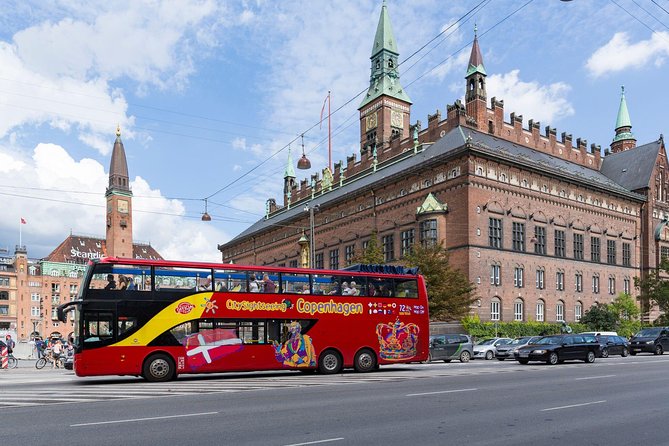
Copenhagen is one of those cities where your day can swing wildly based on weather, energy, and what you notice first. This tour helps by acting like a moving spine through town: you sit down, the bus glides past big landmarks, and you choose where to get off.
What makes this hop-on hop-off style work is the stop clustering. You’re not hopping around “theory locations.” You’re dropped near major places, so it’s quick to turn sightseeing into walking time. That matters for travelers who hate the stress of changing transit lines while also fighting crowds.
And yes, you’ll take photos. The open top makes it far easier to catch the waterfront views and palace facades without the glare you often get from lower windows.
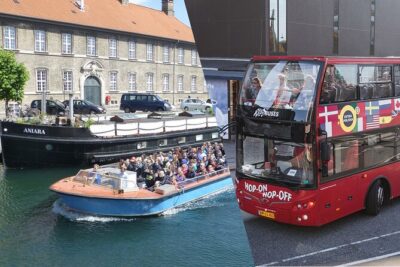
See the sights again by open-top bus and boat


Price and what you actually get for $45.71
At about $45.71 per person, you’re paying for flexibility more than for a deep, guided lecture. The value is strongest if you plan to use the bus as a first pass to orient yourself, then go back on foot for what you liked.
Here’s what’s included that helps justify the price:
- 24, 48, or 72-hour hop-on hop-off access (so you can spread the ride across a longer day or two)
- Audio commentary through free headphones
- Free Wi-Fi and a map
- Stops near key sights across up to three city routes
What’s not included is also part of the math: attraction entry tickets and food/drinks aren’t covered. If you mainly want to look at exteriors from the street, the bus pays off. If you plan to enter several ticketed attractions, you may still want this tour—but budget extra for admission.
One detail I like: your voucher can be valid for up to 12 months from the date you select, so you’re not forced into a single “use-or-lose” day.
Picking the right route: Classic Red vs Colorful vs Carlsberg
The biggest decision isn’t just hop-on hop-off. It’s which loop matches your priorities.
Classic route (often the best first choice)
This is the 90-minute route. It runs from Ved Stranden (Stop 1) with the first departure at 10:00 and the last at 4:30, and buses are posted as running about every 35 minutes. This loop is the one that hits the “big-name” postcards many first-timers want.
If you only do one route, I’d start here. You’ll cover a lot of Copenhagen’s signature scenery in a short time, and you can pick later where you want to return.
Colorful route (shorter, faster hit)
The 55-minute Colorful Route runs at set times from Tivoli and from Ved Stranden. It’s shorter, so you get less time at each stop—but it’s handy if you’re trying to fit sightseeing between reservations, cruise schedules, or a busy walking day.
The whole city in one easy circuit




Home of Carlsberg route (a focused detour)
This 45-minute route is more specialized. It departs from Tivoli and also has departures tied to Copenhagen Zoo and Home of Carlsberg, with times listed as approximate. If your interest leans toward the Carlsberg area and greener corners, this route can be a smart “targeted pass” without forcing you through the whole city.
Practical tip: routes are shorter and schedules are specific, so don’t treat this like an anytime shuttle. Plan around the departure windows and build in a cushion.
Getting on at Ved Stranden and the Stroget area (your easiest starting point)
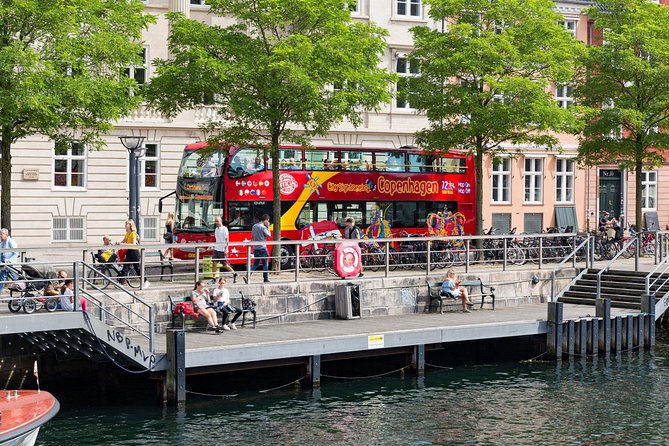
Ved Stranden / Stroget (Stop 1) is your core hub for the Classic-style loop. If you’re staying central, it’s also likely to be the most convenient “grab the bus” location.
The challenge—based on real-world snags people report—is that stop signage can be confusing if you’re expecting a clear, universal label. I’d do two things before you commit:
- Look for the official stop sign, not just a nearby bus shelter.
- When you arrive, identify the bus by its route color / destination display so you don’t board the wrong line.
Once you’re on, Ved Stranden is a great starting point because it quickly feeds you into Copenhagen’s showpieces: canals, palaces, and waterfront sights aren’t far from the start area.
Nyhavn, Amalienborg Palace, and the Little Mermaid: the photo stretch that pays off
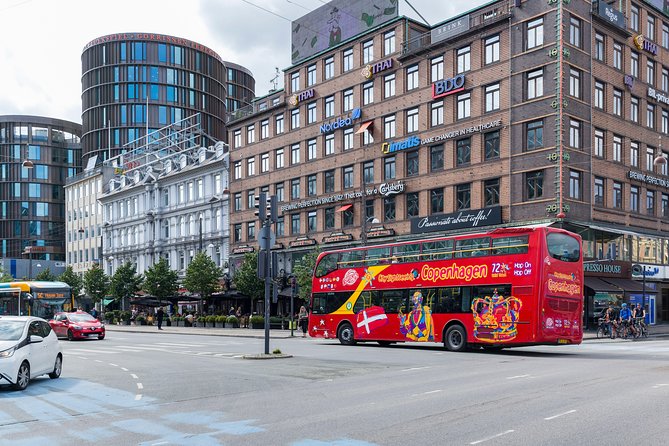
This is where the tour earns its reputation. The bus gives you multiple classic Copenhagen moments close together, so you can do a lot without sprinting across town.
Here’s the arc:
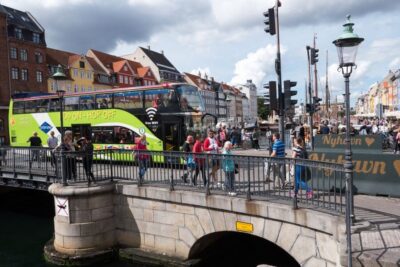
- Nyhavn (Stop 2): the canal front that screams Copenhagen in every photo. Even if you only get 20–30 minutes off the bus, it’s worth stepping out for a look at the waterfront buildings and harbor vibe.
- Amalienborg Palace (Stop 3): a major royal sight that feels best when you can pause on foot rather than just wave from the curb. If you care about royal architecture, treat this stop as a “get out and slow down” moment.
- Gefion Fountain (Stop 4): a quick visual stop that works well if you’re snapping photos between bigger landmarks.
- The Little Mermaid (Stop 5): yes, it’s touristy. But the location is iconic, and the bus makes it easy to fit this into your day without wrestling transit.
- Langelinie (Stops 6 and 7, May–Sep: N/M): the waterfront stretch that’s perfect for sea-air views and those wide angles of the harbor area.
One practical note: if your goal is a specific stop, stand where the driver can clearly see you. A missed pickup can turn a short stop into a long walk—especially in colder weather.
From Rosenborg Castle to Gammeltorv: where architecture turns into a walk
After the harbor hits, the route shifts toward old-town textures—areas that are made for slow wandering once you’ve gotten off the bus.
- Rosenborg Castle (Stop 8) with access connections toward the SMK area: this is one of Copenhagen’s classic “if you’re here, go” sights. Even if you don’t enter, the location is central and walkable.
- Gammeltorv (Stop 9): this is the kind of square stop that’s good for a quick reset. It’s also a natural place to step off and decide if you want to keep walking or re-board.
- Rådhuspladsen / City Hall Square (Stop 10) with access to the National Museum of Denmark: squares like this help you understand city geography. You’ll often find it easier to navigate on foot once you’ve landed in a big open area like this.
If you’re the type who likes to learn visually rather than via a lecture, this middle stretch is where the bus becomes a map you can act on.
Tivoli-area stops, shopping malls, and Black Diamond/BLOX options
The route doesn’t end at palaces and water. It brings you into parts of the city where you can swap sightseeing for a break.
Key stops include:
- Tivoli / Radisson Collection Royal Hotel area (Stop 11): this is a major “choice stop.” If you want entertainment energy, this is your pivot. Note that stops 11 and 15 are listed as closed until further notice, so check the specific stop status for your day.
- Fisketorvet Copenhagen Mall / Tivoli Hotel area (Stop 12): great if you want a restroom break or a quick indoor pause without abandoning your route.
- Copenhagen Marriott Hotel / Kalvebod Waves (Stop 13): a convenient in-between stop, especially if you’re timing meals or trying to avoid long walking stretches.
- Søren Kierkegaards Pl. 1 (Stop 14) near The Black Diamond and DAC / BLOX: museums and design-focused spots tend to cluster around here, and this is one of the best areas for travelers who like modern architecture alongside older city blocks.
This part of the loop is where you can customize your day. Want a meal? Want a museum window into Danish design? Want a breather before the next hop? These stops support that.
Christianshavn and Freetown Christiania: the Copenhagen detour most people will remember
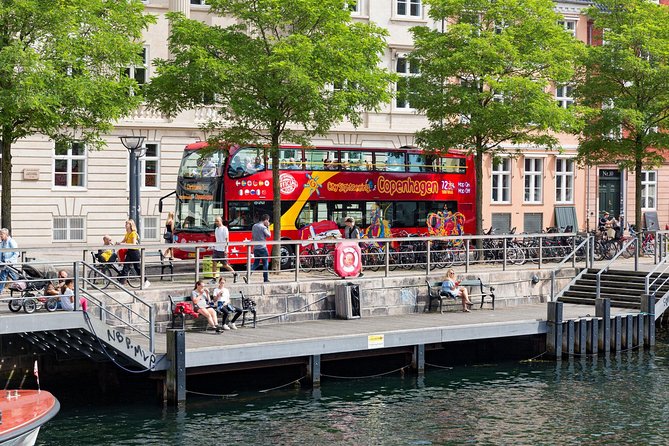
On the second set of routes, you’ll reach Christianshavn (Stop 2) and then Freetown Christiania (Stop 3). Christiania is one of those places where the bus is only the beginning—you’ll want time on foot.
Why it’s worth it: it’s not just a sight. It’s a different rhythm of Copenhagen life. Even if you keep your walk short, you’ll feel the change in the street atmosphere.
Other stops that support this “get off and wander” approach:
- Det Kongelige Teater – Operaen (Stop 4): a big landmark stop, helpful if you want to orient yourself around the opera-house area.
- Reffen – Skøjteøen (Stop 5): a street-food style stop. This is an easy place to treat sightseeing like lunch.
- Casino Copenhagen at Islands Brygge (Stop 6): another “walkable landmark” style stop that pairs well with a longer harbor wander.
This route is best for travelers who like street-level Copenhagen and aren’t trying to do everything “just to say they did it.”
Frederiksberg, Carlsberg-adjacent areas, and Copenhagen Zoo: greener, less frantic
Another route takes you through the west side of Copenhagen, and it’s a nice counterbalance to the packed center.
Stops to look for in that calmer stretch:
- Planetarium | Denmark (Stop 2): good if you like science/indoor options when the weather changes.
- University of Copenhagen Horticultural Gardens area (Stop 4): a good “pause your feet” option.
- Frederiksberg Centret (Stop 5) and Frederiksberg Town Hall (Stop 6): practical stops if you need shopping or want to anchor yourself around a recognizable center.
- Royal Copenhagen Outlet (Stop 7): an obvious stop if you like Danish ceramics or want a straightforward shopping errand that fits sightseeing.
- Copenhagen Zoo / Cisternerne (Stop 8): this is a strong option if your trip timing lines up with outdoor/indoor mood.
- De Små Haver (Pile Allé) (Stop 9) and Frederiksberg Have (Stop 10): this is where the trip becomes more about walking comfort and scenic garden paths than about monuments.
- Meatpacking District (Stop 11): a final stop that works well if you want a food or drinks area after a day of hopping.
If your day is short and you’re mostly interested in royal sights and the waterfront, you might not need this route. But if you want variety, this section is a great second pass.
Audio, headphones, Wi‑Fi, and comfort on the bus
The bus rides are part travel break, part moving commentary. You’ll use free headphones for the audio guide, and the tour is listed as offered in English with multilingual audio. There’s also free Wi-Fi and a map, which is genuinely useful when you’re timing your hop-offs.
One thing I’d watch: headphone reliability. Some riders report that earpieces didn’t work. If that happens to you, try another earbud or adjust seating quickly—don’t wait until you’re already missing key commentary.
Also, don’t expect the driver to narrate everything out loud. Some riders found that commentary wasn’t always enough at every stop. That’s not a deal-breaker if you treat audio as a bonus. If you want history by the minute, pair the bus with one focused walking segment.
Timing, crowds, and the practical gotchas that can waste your day
This tour is built for flexibility, but that flexibility can turn annoying if you’re caught unprepared.
Here are the issues you should plan around:
- Buses run on a schedule, not on demand. On the Classic line, the posted pattern is about every 35 minutes. In practice, some people report closer to 20–25 minutes. Either way, missing one ride means time you may not have.
- Crowds can slow the experience. If you’re visiting on a day with multiple cruise ships or heavy foot traffic, buses can feel packed and lines can form.
- Route matching matters. There are different lines and different branding, and one report described confusion because a differently branded bus was operating what was expected to be another route. Before you climb on, confirm the bus display shows your route.
- Stop finding can be harder than it should be. Some riders struggled because signs weren’t obvious, or because stop descriptions used abbreviations that aren’t self-explanatory. My advice: search for clear “Sightseeing” stop signs and don’t rely on acronyms to tell you where you are.
If you’re traveling in cold weather, this gets more serious. A long wait while you’re bundled up can drain your day faster than you expect.
A simple game plan that makes the hop-on hop-off actually work
I like this strategy for Copenhagen because it keeps you from overcommitting:
- Start with the Classic-style loop for 90 minutes to get your bearings and collect your “must-return” list.
- Pick one major stop to linger (Nyhavn area, Amalienborg, or Little Mermaid depending on your taste).
- Use the second route—Colorful or a west-side loop—only if you still have energy. If not, you’ll still get value from the first pass.
If you want one practical bonus: one rider’s tip was to do the Red line first. That makes sense because it maximizes your chance of finding the landmarks you’ll want to revisit.
And since this is hop-on hop-off, don’t treat every stop as equal. Some are mostly photo points, while others are built for walking time.
Should you book this Copenhagen hop-on hop-off bus?
Yes, but only if you’re using it the right way.
Book it if:
- You want quick access to the big highlights without planning every transit leg.
- You like mixing bus time with walking time based on what you feel like doing.
- You’d benefit from having a map and audio while you move between areas like Nyhavn, palaces, and waterfront sights.
Skip it (or rethink your plan) if:
- You hate waiting for buses and you’re on a strict clock with no buffer.
- You’re expecting a very deep history lesson at every stop. The audio helps, but it’s not a substitute for a good walking tour.
- You’re the kind of traveler who needs ultra-clear signage and instant answers when things go sideways.
If you’re visiting for a first taste of Copenhagen, I think this is a solid value for the money—especially when you use the bus as your starting framework, not your entire day.
FAQ
How long are the different routes?
The Classic route is listed at about 90 minutes. The Colorful Route is listed at about 55 minutes, and the Home of Carlsberg Route is listed at about 45 minutes.
How often does the Classic route bus run?
For the Classic Route, the schedule is listed as every 35 minutes.
What languages is the audio guide available in?
The tour information says the audio guide is available in multiple languages, and it’s also offered in English.
Can I use a mobile ticket or do I need a paper voucher?
Both mobile and paper vouchers are accepted, and you can redeem your voucher at any stop along the route.
Are attraction entry tickets included?
No. Entry to attractions is not included. The bus helps you reach sights and stops near them, but you’ll pay admission separately if you want to go inside.
What’s the cancellation rule?
You can cancel for a full refund if you cancel at least 24 hours in advance of the experience’s start time.
—
If you tell me your travel month and which sights matter most (palaces, waterfront photos, museums, food, or parks), I can suggest which route order fits your day best.
More Tours in Copenhagen




More Tour Reviews in Copenhagen
More Hop-On Bus & Boat

Fresh Off the Cobbles: The Newest Copenhagen Reviews










Copenhagen Hop-On Bus & Boat, compared.
 ★ 3.9Hop-On Hop-Off Bus Tour with Boat Tour OptionFrom $354,122 reviews
 ★ 4.3City Sightseeing Hop-On Hop-Off Bus TourFrom $44709 reviews
 ★ 4.0Copenhagen Bus and Boat ticket, Valid 48 HoursFrom $63565 reviews
 ★ 3.5Copenhagen Hop-on Hop-Off Bus with Boat OptionFrom $36541 reviews
 ★ 4.2City Card with 40+ Attractions & Hop-On/Off BusFrom $94403 reviews
 ★ 4.2Hop-On Hop-Off Bus Tour with Audio GuideFrom $36100 reviews
 ★ 3.5Copenhagen Highlights Hop-On Hop-Off Bus – Classic CopenhagenFrom $20849 reviews
Browse the lists this tour appears in