
Reviewed · COPENHAGEN HYGGE, HIGHLIGHTS & HIDDEN GEMS
Politically Incorrect Private Highlights Walking Tour
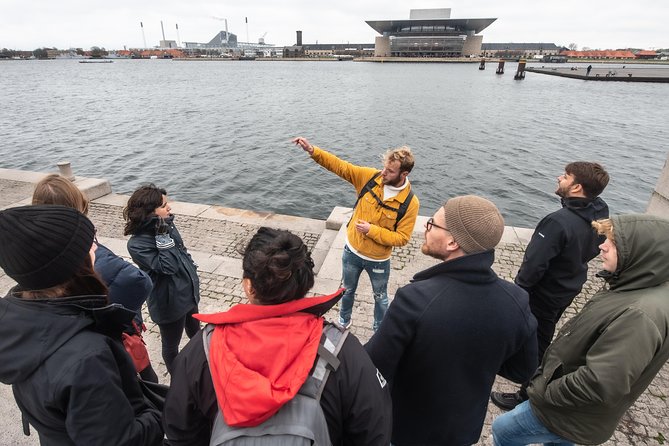
A royal comedy walk that skips the textbooks. This is a privately guided 90-minute highlight loop where Danish royalty, WWII turns, and classic city icons become one continuous story—told with humor. You’ll pass places like Copenhagen Opera House, the shopping street Strøget, and Nyhavn, then finish near Marmorkirken with an easy follow-on walk toward the Little Mermaid.
I like two things most: the guide focus on cause-and-effect, not just sightseeing, and the way Copenhagen’s “why” shows up at stops like Nikolaj Kunsthal (a church-shaped story tied to major Copenhagen fires). I also love how the tour tends to match your interests, with guides such as Troels, Truel, and Jack praised for strong, clear English and fast, funny explanations that still land historical points.
One drawback to factor in: it’s a walking tour with a key timing moment at Amalienborg. If your departure isn’t aligned with the noon highlight, you may catch a different guard change, and a couple of stops are ticketed separately (admission not included at certain venue moments).
In This Review
- Key Things You’ll Notice on This Tour
- A Comedy-Forward Royal History Walk in Copenhagen’s Center
- Starting at Højbro Plads: Where the City’s Story Begins
- Nikolaj Kunsthal: The Church That Explains Copenhagen’s Fires
- Strøget and the Royal-Square View: Squares, Statues, and Power
- Nyhavn and Amaliegade: Harbor Stories and WWII-Era Denmark
- Amalienborg Changing of the Guard: Noon or Another Rotation
- Frederiks Kirke (Marmorkirken) Finale: The Marble Church Finish
- Is the $374.71 Private Price Worth It?
- Who This Tour Fits Best (and Who Might Want to Skip)
- Should You Book This Politically Incorrect Highlights Walking Tour?
- FAQ
- How long is the politically incorrect private highlights walking tour?
- Where is the tour start and end?
- What language is the tour offered in?
- Is this a private tour?
- Does the tour include pickup?
- Are any admissions included in the tour price?
- What kind of cancellation window is offered?
Key Things You’ll Notice on This Tour
- A private tour for just your group (priced per group, up to 1), so you’re not sharing your questions with strangers
- A comedy-leaning approach to Danish royalty that keeps the stories moving instead of turning into a lecture
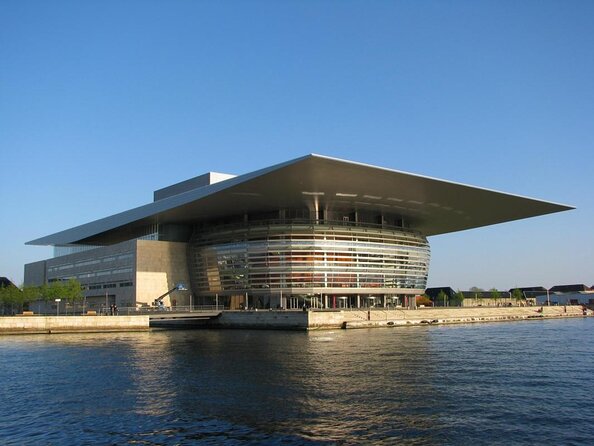
- Copenhagen Opera House, Strøget, and Nyhavn along the way, so you see the big icons without wasting time
- Nikolaj Kunsthal as a storyline pivot, using a surprising setting to explain Copenhagen’s fires
- Amalienborg guard change timing, with the biggest daily one lining up if your tour starts at 11
- A finish near Marmorkirken, with an easy path onward (about a 15-minute walk) toward the Little Mermaid
A Comedy-Forward Royal History Walk in Copenhagen’s Center
Copenhagen can feel like it’s all bikes, clean design, and fairytale facades. This tour gives you the other layer: how power, politics, and turning points shaped what you see today. The humor is part of the delivery, not just a gimmick, so you leave with names, dates, and motives you can actually recall.
You’ll cover a compact route built for orientation. That matters if it’s your first day, or if you want to stop wasting time trying to connect the city’s dots on your own. The pacing is built around short stops—often around 10 to 20 minutes—so you keep moving while still getting explanations.
The tour also has a built-in “story rhythm.” You start with origins near Højbro Plads, then jump from disasters and city rebuilding at Nikolaj Kunsthal to royal squares, then to the harbor, embassies, and WWII-era context, and finally to the formal royal setting at Amalienborg and the marble church finale.
More highlights, hidden corners and a little hygge on foot


Starting at Højbro Plads: Where the City’s Story Begins
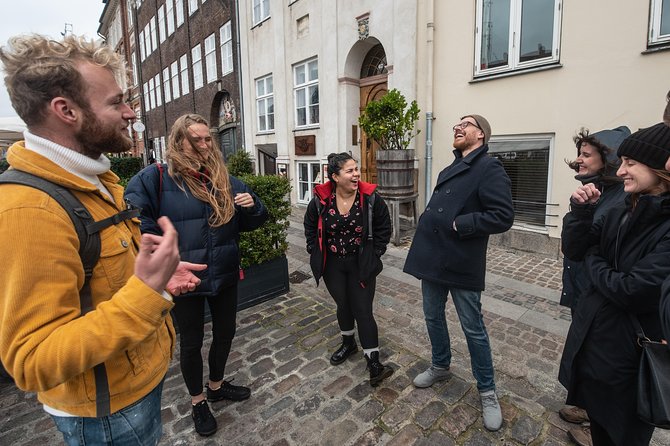
The tour begins at Højbro Pl. 10 (near Højbro Plads), and that first stop sets expectations. Instead of starting with a random monument, you get the city’s early logic—how Copenhagen’s growth and key figures set the stage for everything that follows.
This is the moment I’d use to calibrate your attention. Listen for the names and relationships the guide uses, because later stops will echo them. It’s also a practical start point: you’re in central Copenhagen where you can easily connect to transit before the walk, and you won’t feel stranded out on the edges.
At this first stop, the tour is light on “inside” attractions. That’s a benefit if you don’t want museum queues or ticket hassles right away. You get the narrative foundation and then move on.
Nikolaj Kunsthal: The Church That Explains Copenhagen’s Fires
Nikolaj Kunsthal is one of those spots that looks simple on the outside until you hear the story. The tour frames it as a church—then uses it to connect Copenhagen’s experience with major fires and what those disasters changed.
This stop is also where the tour becomes more than sightseeing. Fires in a pre-modern city weren’t just tragedies; they were turning points that reshaped neighborhoods, regulations, and how power worked in rebuilding. Even if you’ve read general timelines before, this kind of localized storytelling helps the facts stick.
One thing to plan for: admission is not included at this stop. That doesn’t mean you must buy a ticket, but it does mean there’s a chance you’ll want to go in depending on the guide’s approach and timing. If you hate any pay-to-enter element, you’ll want to ask your guide how this stop will be handled for your day.
Strøget and the Royal-Square View: Squares, Statues, and Power
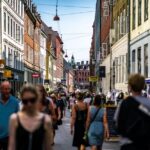
After the Nikolaj Kunsthal moment, the tour swings into the center of everyday Copenhagen life. You’ll pass the long pedestrian-only shopping street, Strøget, which is basically the city’s living postcard—crowds, historic storefronts, and the easy sense that people have been walking these routes for centuries.
You don’t come here to shop. You come to understand how movement through a city reflects power. Shopping streets happen where commerce and city planning intersect, and the guide’s job is to show you what was prioritized and why. If you’re the kind of traveler who likes the “how” behind what you see, this stop hits.
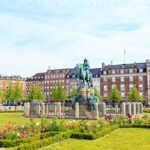
Next comes Copenhagen King’s New Square. This is where you slow down for architecture and symbolism: a central statue, plus standout buildings around the square. It’s one of those places where the details matter—especially when the guide ties them back to Danish royalty and state image.
There are a few “look up” moments here, including a French-inspired department store building called out by the guide, plus explanations pointing toward where the rich and famous might stay when they’re in the city. You may not need the exact hotel name to get the point; the lesson is about how Copenhagen’s prestige spaces function.
Nyhavn and Amaliegade: Harbor Stories and WWII-Era Denmark
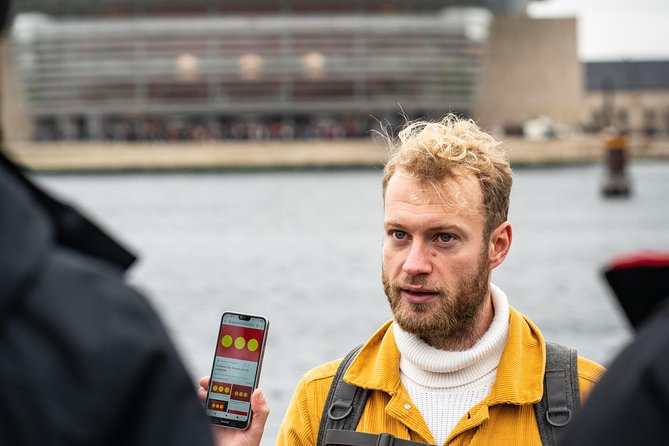
Then the city turns toward water at Nyhavn. This harbor is often photographed, and the buildings do deserve a long look—but the tour uses Nyhavn as a launchpad for stories. Think: who came and went, what kinds of lives and politics gathered near the docks, and how the harbor helped create Copenhagen’s reputation.
Nyhavn is also a good contrast stop. If earlier parts felt formal and square-based, here the tone feels human and story-driven. You’ll likely spend about 15 minutes here, so it’s long enough to absorb the “why this place became famous,” but short enough that you can still continue your day without feeling fenced in.
From there, you head to Amaliegade, known for embassies. The guide’s focus is WWII and Denmark, including the provocative idea that one of the embassies tied to a dreadful foe is part of the city’s physical record. That’s a heavy theme, but handled through place-based explanation, which often lands better than abstract history.
This stop runs around 10 minutes, and it works best if you’re comfortable with a little moral discomfort. You’re not just learning what happened; you’re seeing how modern city streets preserve traces of older political realities. If you prefer lighter touring only, you might want to mentally brace for this section.
Rather keep it to your own group? More private Copenhagen days


Amalienborg Changing of the Guard: Noon or Another Rotation

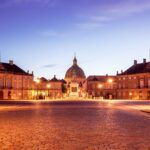
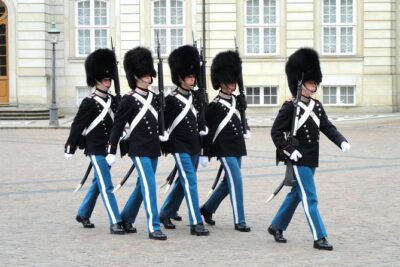
One of the tour highlights is the Changing of her Majesty’s guard at Amalienborg Castle. The cadence matters: guard changes happen every 2 hours, and the tour timing is described in a way that makes one moment especially likely to line up—if your tour starts at 11, you arrive just in time for the big one at noon.
That timing detail is important because it affects your expectation. If you don’t start at that hour, you might still see the ceremony, but it may not be the exact “main” one the guide is aiming for. Either way, Amalienborg is built for spectacle, so the setting does the heavy lifting.
Also, this is a stop with a built-in “watch and listen” rhythm. You’ll spend roughly 20 minutes here, which is enough time to get a good view and still keep the walk moving. If you like to photograph, this is where you should set your camera up early and then focus on the story the guide is telling.
Frederiks Kirke (Marmorkirken) Finale: The Marble Church Finish
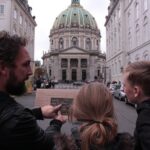
The tour ends at Frederiks Kirke (Marmorkirken), described as the marble church and widely considered the most beautiful church in Denmark. Whether you agree with that ranking or not, you get why this is the finish point: it’s visually striking, centrally located for onward walking, and it makes a clean “last beat” after royal squares.
You won’t just stand outside in silence. The guide ties the end back to the themes you’ve been hearing—power, public image, and how Denmark chooses what to memorialize. The ending may vary slightly by guide, but the tour notes that ending points are within about a 5-minute walk area from the church.
There’s also an added bonus for your self-guided time. From this part of town, you can reach the Little Mermaid on foot in about 15 minutes. So even though the tour ends at a church, it’s easy to keep the day going without needing another plan.
Is the $374.71 Private Price Worth It?

The price is listed as $374.71 per group and the tour is private, with up to 1 person included. That sounds steep until you translate it into how private city walks work in practice: you’re paying for time, expertise, and the flexibility to follow a guide’s pacing for your group.
For value, I’d look at three things:
First, it’s time-efficient. In about 90 minutes you cover a tight loop of major Copenhagen touchpoints—Opera House area, Strøget, Nyhavn, embassy streets, Amalienborg, and the Marmorkirken finish. If you’ve got limited days in town, this format buys you more context than a self-guided walk.
Second, the guides are a big part of the value. Names like Troels, Truel, and Jack come up with consistent themes: strong English, humor mixed with facts, and an ability to fit huge timelines into a short walk. One guide is described as being able to cover around 2000 years of history in about 90 minutes, which is exactly what you’re paying for.
Third, the route is built for orientation. This kind of tour is useful even after you’re done, because it gives you the “map in your head.” Later, when you return to squares or neighborhoods on your own, you’ll understand what you’re looking at.
The main cost risk is your personal tolerance for ticketed stops. One venue stop (Nikolaj Kunsthal) is marked as admission not included, so if you end up buying entry, your total day cost rises. If you’re trying to keep everything on one simple budget, that’s your watch-out.
Who This Tour Fits Best (and Who Might Want to Skip)
This tour is a great fit if you want your history with jokes and your jokes with structure. You’ll like it if you enjoy architecture and urban symbolism, and if you’re the kind of traveler who asks why a city looks the way it does. The WWII and embassy angle at Amaliegade makes it more than a casual highlights loop.
It also fits well as a first intro to Copenhagen. The route is central, the sites are iconic, and the ending near Marmorkirken makes it easy to keep exploring on foot.
If you hate walking or you’re sensitive to schedule-based viewing like the Amalienborg guard change, you might find the timing pressure a bit much. And if you want only museums or only indoor attractions, note that much of the experience is external viewing with story delivery.
Should You Book This Politically Incorrect Highlights Walking Tour?
If you want a fast, funny, and genuinely informative Copenhagen overview, I think this one is worth serious consideration—especially because it’s private and designed to keep you moving through the city’s key visual landmarks. The strongest part is how the guide turns places into explanations, not just backdrops.
I’d book it if:
- you like humor in historical storytelling
- you want a compact route that covers royal sites plus Nyhavn and WWII-era context
- you value clear English and a guide who can cover big timeframes in a short walk
I’d skip or rethink it if:
- you don’t want any chance of ticketed venue entry
- you’re not flexible with walking pace
- you strongly need the noon guard change and your schedule may miss it
FAQ
How long is the politically incorrect private highlights walking tour?
It lasts about 1 hour 30 minutes.
Where is the tour start and end?
It starts at Højbro Pl. 10, 1200 København, Denmark. It ends near Frederik’s Church (Frederiksgade 4, 1265 København, Denmark), with the exact ending point varying by guide within the nearby area.
What language is the tour offered in?
The tour is offered in English.
Is this a private tour?
Yes. It’s a private tour/activity where only your group participates.
Does the tour include pickup?
Pickup is offered, but pickups are done on foot. The meeting point is still the listed starting address.
Are any admissions included in the tour price?
Some stops are free, and others are marked as admission ticket not included. In particular, Nikolaj Kunsthal is listed as not included.
What kind of cancellation window is offered?
Free cancellation is available up to 24 hours in advance for a full refund. If you cancel less than 24 hours before the start time, the amount paid is not refunded.
More Tours in Copenhagen

More Tour Reviews in Copenhagen

More Highlights & Hidden Gems

Fresh Off the Cobbles: The Newest Copenhagen Reviews







Copenhagen Hygge, Highlights & Hidden Gems, compared.
 ★ 5.0Private Walking Grand Tour of CopenhagenFrom $3423,953 reviews
 ★ 5.0Copenhagen Highlights Walking TourFrom $402,324 reviews
 ★ 4.8Highlights 3 Hour Bike Tour with a Local GuideFrom $622,312 reviews
 ★ 4.73-Hour City Highlights Bike Tour with GuideFrom $551,239 reviews
 ★ 5.0Copenhagen Highlights 3 Hour Bike Tour with local GuideFrom $611,125 reviews
 ★ 4.7Group Walking Tour – City Highlights – 2 HoursFrom $391,088 reviews
 ★ 5.03-hour Copenhagen City Highlights Bike TourFrom $54757 reviews
 ★ 5.03h walking tour, small group max 10 people CopenhagenFrom $50686 reviews
Browse the lists this tour appears in