
Reviewed · COPENHAGEN HYGGE, HIGHLIGHTS & HIDDEN GEMS
3h walking tour, small group max 10 people Copenhagen
Copenhagen makes sense fast on foot. This 3-hour small-group walk gives you a guided way to understand Copenhagen’s mindset, with a hygge-focused story that connects buildings, politics, and everyday life. I like that the group is capped at 10, so you’re not lost in a crowd.
I also like how the guides bring the city to life in a way that feels practical, not just academic. I’m especially drawn to the way humor and local perspective show up in the commentary, plus the extra ideas for what to eat and do next (some guides even make specific bathroom and coffee suggestions along the route). The main drawback is simple: it’s a walking tour for about three hours, and you’ll want warm layers and shoes that handle cold sidewalks.
In This Review
- Key Things I’d Bank On
- Starting at Fiolstræde 42: What This 3-Hour Walk Covers
- Nyhavn and Hygge: Seeing the City’s Mood, Not Just Photos
- Amagertorv: A Central Square with Medieval Roots
- Amalienborg Palace Museum: Royal Life Still Humming
- Rundetaarn (Round Tower): Astronomy in Plain Sight
- Christiansborg Palace: Denmark’s Government in the Same Frame as History
- Copenhagen Cathedral: A Church Site That Predates Today’s City
- Tivoli Gardens: A Historic Break Without Detouring Across Town
- Price and Tickets: Is $50.79 Good Value?
- The Real-World Experience: Pace, Guide Style, and What You’ll Remember
- Who This Walking Tour Fits Best (and Who Might Want Another Option)
- Should You Book This Copenhagen Walking Tour?
- FAQ
- FAQ
- How long is the Copenhagen walking tour?
- What is the group size limit?
- Is the tour offered in English?
- What is included in the price?
- Are any attractions ticketed?
- Where do I meet, and is the ending point fixed?
- Can I cancel for a full refund?
Key Things I’d Bank On
- Max 10 people means questions don’t get pushed to the end of the tour.
- Hygge as a theme helps you read Copenhagen beyond the usual photo stops.
- Off-the-beaten-path streets get mixed in with big-name landmarks.
- Iconic “royal and power” stops cover both culture and government in one loop.
- Most stops are exterior, with a couple of places where you may pay entry separately.
- English guidance keeps the history and city tips easy to follow.
Starting at Fiolstræde 42: What This 3-Hour Walk Covers
You start at Fiolstræde 42 in central Copenhagen. From there, the route is designed to cover a lot of ground without rushing—short enough to keep energy up, long enough to give you a real feel for how the city is laid out.
Because the ending point can shift based on weather, group interest, and group speed, plan to stay flexible. The tour is built to move through the center on foot, so you’re not just looking at one neighborhood—you’re getting a guided map of Copenhagen’s key ideas.
One practical note: transportation to/from the sights isn’t included. That’s normal for walking tours here, but it means you should plan your day so you can arrive and depart easily near public transit.
More highlights, hidden corners and a little hygge on foot



Nyhavn and Hygge: Seeing the City’s Mood, Not Just Photos
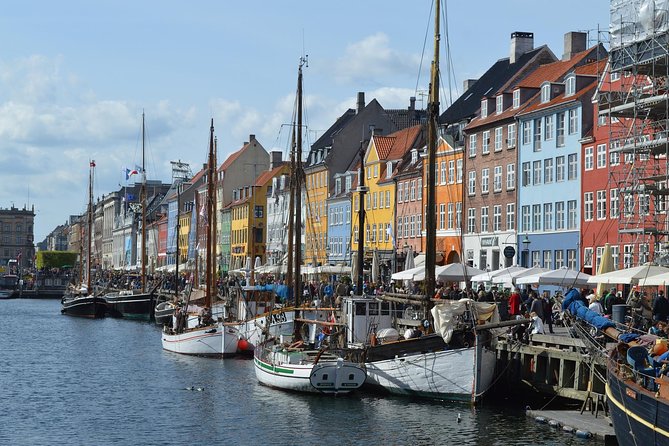
The tour’s opening theme is hygge, Denmark’s idea of comfort, coziness, and calm—made real through places, habits, and small details. That’s a smart approach because Copenhagen can look “pretty” in a brochure, but the city’s character shows up in how people use their streets, squares, and waterfronts.
From there, you’ll spend time around Nyhavn, with its colorful canal-side houses. You’ll see it as more than a postcard: the guide’s commentary is meant to connect what you’re seeing to why the city grew where it did and how Danes think about home, public space, and daily life.
What I’d watch for on this segment: the weather. Several reviews point out how cold Copenhagen can feel in winter, and the fix is easy—dress for wind, not just temperature. If you’re underdressed, the “cozy” idea won’t land.
Amagertorv: A Central Square with Medieval Roots
Next comes Amagertorv, a square that sits right in the gravitational pull of central Copenhagen’s pedestrian life. Today it’s wrapped into the Strøget walking zone, but the name points back to Middle Ages commerce, when Amager farmers came into town to sell produce.
This stop is valuable because it teaches you how to read Copenhagen in layers. You’re standing somewhere old that still functions as a public meeting place, not a museum artifact. Even if you’ve visited other European capitals, Copenhagen’s balance of old structure and modern pedestrian flow feels distinctive.
If you like photo stops but also want context, this is one of the better moments on the route. You get an immediate “why here” that makes the area easier to navigate later on your own.
Amalienborg Palace Museum: Royal Life Still Humming
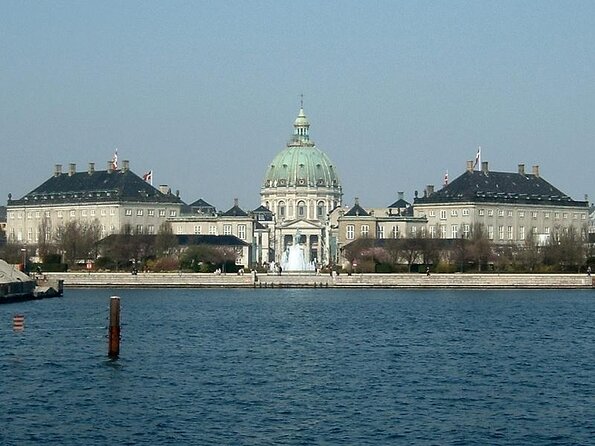
At Amalienborg, you’ll focus on the royal setting that remains tied to Denmark’s current monarchy. The stop listed is the Amalienborg Palace Museum, and it’s noted as an admission ticket not included in the tour price, so expect the option to add that interior time if you want it.
Even when you’re mostly outside, Amalienborg matters because it’s Denmark’s symbolism made physical. The guide talk helps you understand how monarchy functions here—less distant than you might expect, more connected to public identity.
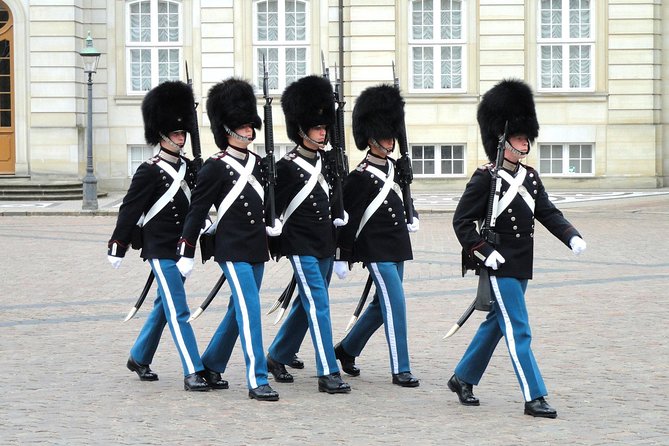
Timing can add a bonus. One review specifically calls out ending with the sight of the royal guard in daily performance. You can’t count on the exact timing every single day, but if your walk schedule lines up, it’s the kind of moment that turns “history” into something you remember.
Rundetaarn (Round Tower): Astronomy in Plain Sight
One of the most striking stops on the route is Rundetaarn, the Round Tower. This is a real anchor point for understanding Copenhagen’s scientific legacy—especially because the tower is tied to Denmark’s astronomy achievements.
You’ll learn that it’s the oldest functioning observatory in Europe and that Christian IV built the tower after astronomer Tycho Brahe. After Brahe died in 1601, the king wanted the research to continue, and the tower became part of that plan.
This stop is noted as a ticketed admission not included. That matters for value: you can still get the tower as an exterior viewpoint, but the full “observable” experience likely costs extra if you go inside.
If you do pay to access more of the observatory experience, the payoff is the outdoor platform views over the old city core. Even on gray days, it’s one of those “oh, that’s how the city sits” moments.
A few more Copenhagen trips we have been out on and rated




Christiansborg Palace: Denmark’s Government in the Same Frame as History
The route then moves to Christiansborg Palace, located on Slotsholmen. This place is different from a typical palace stop because it’s also a working center of government. The seat of the Danish Parliament, plus offices connected to the Danish Prime Minister and the Supreme Court, means you’re seeing power and history together.
What I like about this part of the tour is the shift in tone. You’re not just learning old stories—you’re learning how a modern country frames decision-making within historic buildings and locations. That helps explain why Copenhagen feels both orderly and human-scale at the same time.
This is also a good stop for questions. If you’re curious about Denmark’s political culture or how the country thinks about civic life, the guide’s commentary here is often the easiest to connect to the rest of your sightseeing day.
Copenhagen Cathedral: A Church Site That Predates Today’s City
The tour includes Copenhagen Cathedral, currently in a neo-classicist design by C.F. Hansen. The foundation stone was laid by King Frederik VI in 1817, and the consecration happened on Whitsunday 1829.
But what makes this stop more than an architectural photo moment is the longer timeline. The site has hosted churches since early Copenhagen, when Bishop Absalon built a chapel there. The original church was erected around 1200 on what was described as the highest point in town.
That’s a key idea for first-time visitors: Copenhagen is young in some ways, but many of its most important sites sit on older ground. When you understand that, you can better appreciate why the city center feels coherent even when the buildings vary in era and style.
If you’re cold, this stop can be a helpful pause too, assuming you can enter areas that are open during your visit. You’ll likely want a warm moment here, even if you’re not planning a long interior visit.
Tivoli Gardens: A Historic Break Without Detouring Across Town
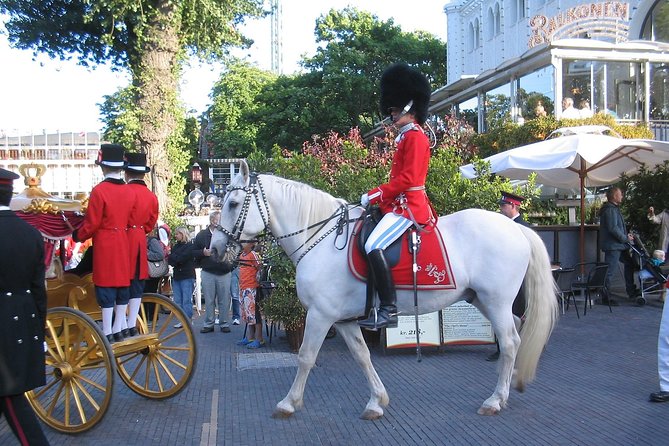
Finally, the tour reaches the area of Tivoli, or Tivoli Gardens. This isn’t just an amusement park detour. It’s a major piece of Copenhagen’s public life.
Tivoli opened on 15 August 1843 and is noted as the second-oldest operating amusement park in the world after Dyrehavsbakken in nearby Klampenborg. That alone makes it a “more than rides” stop, because you’re standing near a place that has shaped how generations of Copenhageners and visitors celebrate leisure.
Depending on timing and weather, this stop can work as a natural reset. You’ve been walking, learning, and looking up. Tivoli gives you a different kind of atmosphere—more people, more energy, and a good place to continue your day with clear next steps.
Price and Tickets: Is $50.79 Good Value?
The tour costs $50.79 per person and runs about 3 hours. You’re paying for a local English-speaking guide, a small-group experience (max 10), and a route that ties together landmarks, civic life, and cultural themes like hygge.
Here’s where the value usually shows up for me:
- You get a coherent overview of central Copenhagen fast, so you’re not building your plan from guesswork.
- The small group size makes it easier to ask questions and adjust at your pace.
- A lot of the experience happens outside, so you’re not stuck paying for multiple museums just to justify the time.
About tickets: some stops list admissions as not included, notably Amalienborg Palace Museum and Rundetaarn. That means the tour can still work as a strong “walking highlights” experience even if you skip interior entry fees.
In other words, the price is fair if you want a guided foundation and optional add-ons, not if you’re trying to turn this into a full museum crawl.
The Real-World Experience: Pace, Guide Style, and What You’ll Remember
What comes through strongly from the guide-led nature of the tour is the focus on making three hours feel comfortable and complete. Multiple guides are praised in reviews for being warm, friendly, and able to mix history with humor, which matters a lot when you’re standing outside in winter wind.
You’ll likely feel a pace that keeps the group moving without turning into a sprint. One review even mentions a “three hours passed in no time” feeling, which is exactly what you want from an intro tour.
Guides also seem to lean into local perspective. Names that show up include Michele, Jose, Alex, Daniele, Dan, Morgan, Ann/Anne, Tom, and Diana Chung. That variety is a hint at something important: the tour isn’t one script read at you. It’s meant to be flexible, with commentary that adapts to what the group cares about.
You may also get practical advice that isn’t “tour brochure” style. One review notes that a guide suggested where to find bathrooms during a church visit, and several mention food and pastry recommendations afterward. Those little tips can save you time and help you eat like a person who lives there.
Who This Walking Tour Fits Best (and Who Might Want Another Option)
This tour is best for:
- First-time visitors who want a fast orientation to central Copenhagen.
- Active travelers who don’t mind walking for about three hours.
- People who enjoy history and city culture, but also want the “why” behind the landmarks.
- Anyone who likes small-group interactions and clear explanations in English.
It may be less ideal if:
- You’re in Copenhagen for a very short time and expect minimal walking.
- You want long indoor time at multiple paid attractions. A couple of stops can require extra admission, and much of the tour is designed around walking and viewpoints.
- Your mobility needs mean you can’t comfortably handle a multi-stop city-center walk.
If you’re debating winter weather: wear layers, bring gloves, and bring patience. The route works, but the city can feel sharp in cold wind.
Should You Book This Copenhagen Walking Tour?
If it’s your first visit, and you want the city explained in a way that helps you plan the rest of your trip, I’d book it. The small-group format plus the emphasis on hygge, canals, central squares, and Copenhagen’s royal and government sites is a strong combo for getting oriented quickly.
I’d especially consider booking if you value a guide who can connect landmarks to everyday Danish life and you want useful next-day ideas like where to eat. Just go in knowing it’s a true walking tour, so dress for the weather and plan to keep moving.
FAQ
FAQ
How long is the Copenhagen walking tour?
It runs for about 3 hours.
What is the group size limit?
The tour is limited to a maximum of 10 travelers.
Is the tour offered in English?
Yes, it’s offered in English, with an English-speaking local guide.
What is included in the price?
You get an English-speaking local guide and a customized, relaxing walking tour.
Are any attractions ticketed?
Yes. Amalienborg Palace Museum and the Round Tower are listed as not included for admission. Other stops are free, as noted.
Where do I meet, and is the ending point fixed?
You meet at Fiolstræde 42, 1171 København. There is no fixed end point; the route can change based on weather, group interest, and group pace.
Can I cancel for a full refund?
Yes. You can cancel up to 24 hours in advance for a full refund.
More Tours in Copenhagen


More Tour Reviews in Copenhagen

More Highlights & Hidden Gems

Fresh Off the Cobbles: The Newest Copenhagen Reviews

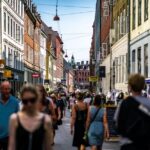
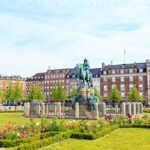








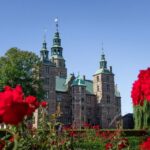
Copenhagen Hygge, Highlights & Hidden Gems, compared.
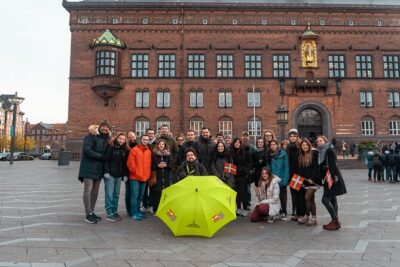 ★ 5.0Private Walking Grand Tour of CopenhagenFrom $3423,953 reviews
 ★ 5.0Copenhagen Highlights Walking TourFrom $402,324 reviews
 ★ 4.8Highlights 3 Hour Bike Tour with a Local GuideFrom $622,312 reviews
 ★ 5.0Politically Incorrect Private Highlights Walking TourFrom $3741,244 reviews
 ★ 4.73-Hour City Highlights Bike Tour with GuideFrom $551,239 reviews
 ★ 5.0Copenhagen Highlights 3 Hour Bike Tour with local GuideFrom $611,125 reviews
 ★ 4.7Group Walking Tour – City Highlights – 2 HoursFrom $391,088 reviews
 ★ 5.03-hour Copenhagen City Highlights Bike TourFrom $54757 reviews
Browse the lists this tour appears in