
Reviewed · COPENHAGEN ESCAPE GAMES & MYSTERY HUNTS
e-Scavenger hunt Copenhagen: Explore the city at your own pace
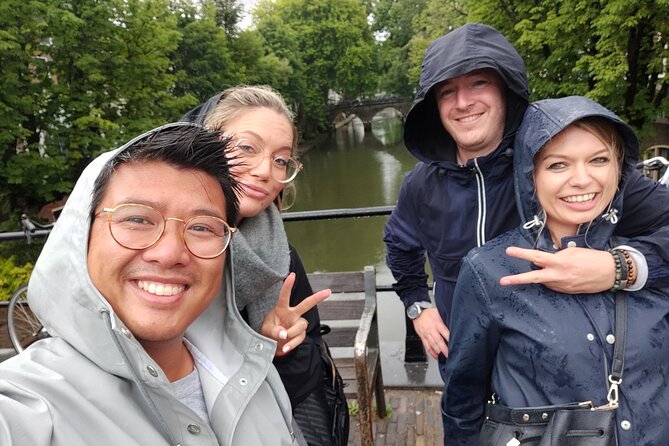
Copenhagen can be a lot at once, but this game helps you pace it. It’s a self-guided smartphone scavenger hunt from Qula that nudges you through big highlights while you answer questions and complete small tasks. I like that you can start, stop, and pause whenever you need, and I love how the route pushes you toward places you might miss if you only follow a strict checklist. One possible drawback: the experience relies on your phone and location accuracy, so if GPS is off or prompts don’t feel obvious, you may end up doing a bit of guesswork or using your map as backup.
If you’re the type who learns by walking, this fits nicely. You’ll be moving through canals, royal buildings, museums, and street-level Copenhagen life, and the phone-based format keeps it from turning into a long lecture. It’s also designed to work in English, and it’s a private group activity, so you’re not squeezed into someone else’s pace.
In This Review
- Key Things I’d Watch For
- A Self-Guided City Game That Feels Like a Walk, Not a Tour Lecture
- Price Per Group: What $36.67 Buys You in Real Terms
- Getting Started at Landemærket and Using the App Smoothly
- Nyhavn and Tivoli: Start With Water Views and Classic Copenhagen Fun
- Our Saviour’s Spiral Stair and Christiansborg: Turning Attention to Big Landmarks
- Markets, Art Museums, and the National Museum: Three Ways to Learn Without a Class
- Round Tower and Old Copenhagen Views: A Short Climb With a Big Payoff
- Amalienborg, Copenhagen City Hall, and Strøget: Royal Life Meets Public Space
- The Modern Opera House and Finishing at Christiania: Copenhagen’s Two-Track Personality
- What I Like Most: The Game Design That Makes You Pay Attention
- A Few Practical Considerations (Including GPS Drift and Prompt Frustration)
- Should You Book e-Scavenger hunt Copenhagen? My Call
- FAQ
- How long does the e-Scavenger hunt Copenhagen take?
- What is included in the experience?
- What does it cost and how many people can join?
- Do I need a smartphone and data?
- Is it available in English?
- Where does the hunt start and end?
- Can I pause or stop the tour during the game?
- Is it a private activity?
- Can I cancel and get a full refund?
Key Things I’d Watch For

- Start/stop/pause freedom: you control the timing instead of rushing the city.
- App-led questions and tasks: they guide your attention to details you’d otherwise skip.
- Major highlights on foot: Nyhavn, Tivoli, the Round Tower area, and more are part of the walk.
- Phone and data matter: smartphone use and internet aren’t included, so plan ahead.
- GPS can be imperfect: keep the app’s map handy in case directions drift.
- Good for groups and pairs: the structure works whether you’re exploring with friends or family.
A Self-Guided City Game That Feels Like a Walk, Not a Tour Lecture
This is Copenhagen by way of play. You use a mobile ticket and a game on your phone to move between stops, answer prompts, and earn points along the way. The best part is that it’s still a real walking route—just with the mental fun turned up.
I like that the experience gives you a reason to look left and right. Copenhagen rewards attention: details on buildings, canal edges, and the way neighborhoods change block by block. A scavenger hunt turns that observation mode into something you actually want to do.
More riddles and hunts loose across the city



Price Per Group: What $36.67 Buys You in Real Terms
The cost is $36.67 per group, up to 6 people. That matters because you’re not paying per head for the “experience wrapper.” If you split it among a family or a small group, it can feel like you’re buying one shared activity that keeps everyone engaged.
You should also think about value vs. time. With a 2 to 4 hour window, you’re paying for a concentrated city walk that hits many famous stops without you having to plan every turn in advance. If you only have a short Copenhagen day, this style of pacing can be a smart way to get movement plus context.
Getting Started at Landemærket and Using the App Smoothly

Your start point is Landemærket 29, 1119 København and the activity ends back there. That loop format is convenient: you’re not stuck figuring out transit at the end of your game.
You’ll also want to think about the practical stuff before you leave the hotel:
- Bring a charged phone, since the tour depends on it.
- Have data or a way to connect, because smartphone and data aren’t included.
- Wear walking shoes. This is a city-hunt, not a sit-down museum day.
The experience runs all day on the published opening-hours window (it lists 12:00 AM to 11:59 PM), so you can usually match it to your day’s weather and plans. And because it’s offered in English, you don’t have to worry about language barriers while you’re in motion.
Nyhavn and Tivoli: Start With Water Views and Classic Copenhagen Fun
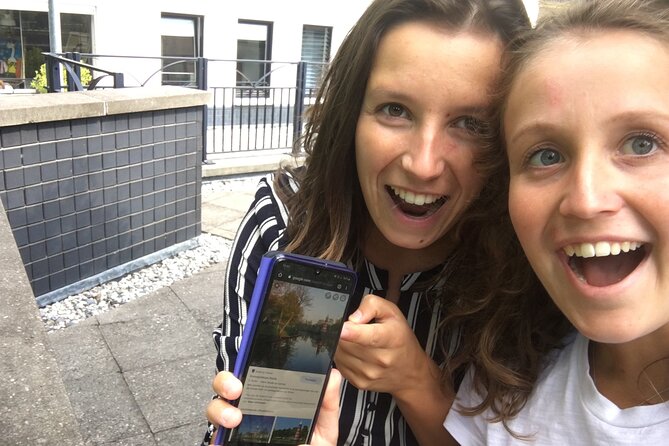
Your route begins with Nyhavn, the 17th-century waterfront district known for canals and a lively mix of old facades and people watching. Even if you’ve seen Nyhavn photos before, walking the edge of the harbor area in person shows you why it’s so iconic: the buildings line up, the water pulls your gaze, and the atmosphere feels both local and touristy in the best way.
From there, you move toward Tivoli (Tivoli Gardens), the amusement park that opened on 15 August 1843. Tivoli is one of those places that feels like it belongs to Copenhagen’s personality, not just its tourist map. In the context of a scavenger hunt, it’s a great mid-route anchor: you get a fun break vibe, and it keeps the day from getting too “serious” too fast.
Possible consideration: Tivoli and the surrounding area can get busy depending on the time. If your goal is quieter strolling, you might aim earlier or plan a shorter visit depending on where your game brings you.
Our Saviour’s Spiral Stair and Christiansborg: Turning Attention to Big Landmarks
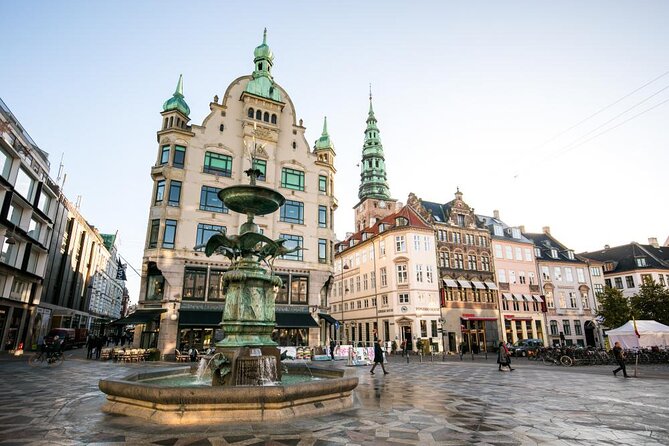
Next up is The Church of Our Saviour, famous for its external spiral staircase. This stop is a smart choice for a phone-based game because the architecture basically gives you something to look at immediately. Even from street level, you’ll notice how the design pulls your eyes upward, which makes answering prompts easier.
After that you head toward Christiansborg Palace, the palace and government building on Slotsholmen in central Copenhagen. This is where the walk shifts from postcard charm to civic power. You’re in the heart of Danish administration, and the buildings carry a different energy—less entertainment, more official presence.
The whole city in one easy circuit






Markets, Art Museums, and the National Museum: Three Ways to Learn Without a Class
Copenhagen isn’t only about landmarks; it’s also about what people eat, see, and do day to day. Your route includes an urban covered marketplace with stalls featuring local produce, gourmet foods, beverages, and desserts. This kind of stop is practical: it gives you a chance to take a breath and recharge without leaving the route.
Then you’ll pass Glyptoteket, an art museum tied to a private art collection (the founder’s son of the Carlsberg Breweries). This museum stop works well inside a scavenger hunt format because it’s not just “walk in and hope you get it.” The game approach nudges you to notice things you’d likely ignore if you were only chasing headlines.
You’ll also encounter the National Museum of Denmark (Nationalmuseet), which is Denmark’s largest museum of cultural history. Even if you don’t spend hours inside a museum, the stop itself can be a useful way to orient yourself: you’re seeing where the country explains itself through artifacts and stories.
Round Tower and Old Copenhagen Views: A Short Climb With a Big Payoff

One of the most famous stops on the route is the Round Tower (Rundetaarn), built by King Christian IV and dating from 1642. It’s one of those Copenhagen sights that people mention because it’s instantly recognizable, and it’s also one of the most visited edifices.
For your experience, this is a high-impact moment. The Round Tower area ties together the “old Copenhagen” feeling—historic architecture, city center density, and that sense of being in the oldest layers of the city. It’s also a natural place for a game that asks you to look carefully, since the tower dominates the surrounding streetscape.
Amalienborg, Copenhagen City Hall, and Strøget: Royal Life Meets Public Space
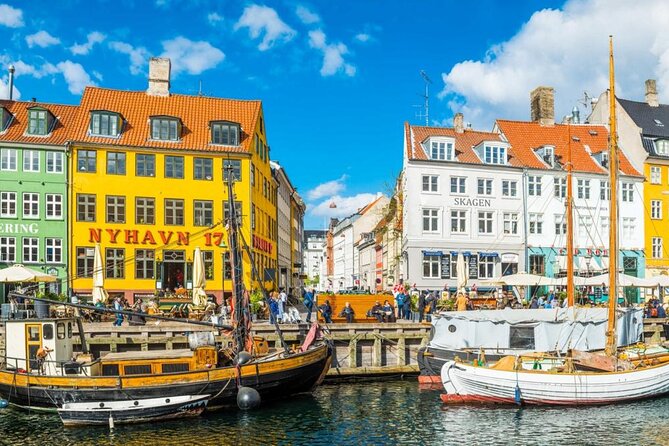
From history and museums, the route turns toward royal and civic Copenhagen.
You’ll visit Amalienborg Palace, where Denmark’s royal family still resides. That detail matters. It’s not just a showpiece building; it’s a place with real living continuity. Even if you don’t catch anything ceremonial, the setting gives you a clear sense of how the monarchy fits into the city’s daily geography.
Then comes Copenhagen City Hall, the municipal council headquarters and home to the Lord mayor of Copenhagen Municipality. This stop adds a different kind of context. You’re not only looking at Denmark’s past—you’re also seeing how the country runs today.
And you’ll walk through Strøget, a pedestrian, car-free shopping area and one of Europe’s longest pedestrian shopping streets. This is an easy win for a self-guided game because it’s active and walkable. The game keeps you moving with purpose, while the street keeps giving you visual variety—storefronts, architecture, and street-life rhythm.
The Modern Opera House and Finishing at Christiania: Copenhagen’s Two-Track Personality
Copenhagen can swing from historic to cutting-edge fast, and your route reflects that.
You’ll pass the opera house, described as among the most modern opera houses in the world and also one of the most expensive opera houses ever built. Even if opera isn’t your thing, the building itself is a statement. It’s a great “contrast stop” after the older layers of the city, especially in a time-limited walk.
Finally, the route heads toward Freetown Christiania, a neighborhood created in 1971 after a squat in a former military area. This is one of Denmark’s most popular tourist attractions, and it’s also a place with controversy attached to its origin and reputation. In a scavenger hunt format, it lands well because it’s not just about clicking famous photos—it’s about seeing a different side of Copenhagen’s identity and choices.
What I Like Most: The Game Design That Makes You Pay Attention
The biggest strength is the way the prompts steer your attention. Instead of you wandering with a vague plan, the game gives you small goals that pull you toward interesting angles—where to look, what detail matters, and how landmarks connect across the walk.
I also like the pacing control. Being able to start, stop, and pause turns this into a flexible day activity. If you’re hungry, tired, or just want a slower moment at a canal or in a covered market, you’re not trapped in a fixed schedule.
And for what it’s worth, this kind of format can help families and mixed-age groups too, as long as everyone’s ready to walk and enjoy the hunt element.
A Few Practical Considerations (Including GPS Drift and Prompt Frustration)
Here’s the honest part: this experience is phone-driven, so it’s only as smooth as your device and your location accuracy.
If you run into issues like:
- GPS not matching what you expect
- A prompt that feels hard because there’s nothing obvious to read on-site
- Questions that don’t clearly connect to the exact spot you’re standing in
…your best move is to treat your phone like a navigation tool, not like magic. Keep the map visible, and use general direction sense if you’re walking past an expected “bonus” spot. You can also plan to be a little patient with the hunt style. It’s more fun when you expect “light discovery,” not a scavenger hunt where every answer is instantly posted on a sign.
Weather matters too. You’ll be outdoors for much of the route, so in cold or wet conditions, build time for a warm break—ideally around that covered marketplace stretch.
Should You Book e-Scavenger hunt Copenhagen? My Call
Book it if you want a self-paced Copenhagen walk that covers multiple major sights in 2 to 4 hours without feeling like homework. It’s a strong choice for people who like learning through movement—pairs, friend groups up to 6, and families who are game for short tasks along the way.
Skip it (or go in with eyes open) if you hate being dependent on phone navigation, or if you want every answer to feel perfectly obvious right where you stand. The route can still be fun—especially for the variety of neighborhoods—but the success of the game depends on your phone working well and your tolerance for a little mystery.
If you’re doing Copenhagen on limited time and you want your day to feel like an adventure instead of a checklist, this one is worth your money.
FAQ
How long does the e-Scavenger hunt Copenhagen take?
It takes about 2 to 4 hours, depending on your pace.
What is included in the experience?
It includes an online app to play the game on your phone and the game/city walk experience.
What does it cost and how many people can join?
It costs $36.67 per group and is up to 6 people.
Do I need a smartphone and data?
Yes. Smartphone and data are not included, so you’ll need your own phone and internet/data access.
Is it available in English?
Yes, it is offered in English.
Where does the hunt start and end?
It starts at Landemærket 29, 1119 København, Denmark, and ends back at the meeting point.
Can I pause or stop the tour during the game?
Yes. The tour supports start, stop, and pause so you can fit it around your schedule.
Is it a private activity?
Yes. Only your group will participate.
Can I cancel and get a full refund?
Free cancellation is available. You must cancel at least 24 hours in advance for a full refund.
Copenhagen City, In Full
More Tour Reviews in Copenhagen






More Games & Mystery Hunts



Fresh Off the Cobbles: The Newest Copenhagen Reviews












Copenhagen Escape Games & Mystery Hunts, compared.
 ★ 5.0Da Vinci Escape RoomFrom $356344 reviews
 ★ 5.0Outbreak Escape RoomFrom $356122 reviews
 ★ 5.0The Six Forgotten Giants Hunt and Nature WalkFrom $13795 reviews
 ★ 5.0Downfall Spy Mission (Premium Private Escape Room)From $46779 reviews
 ★ 5.0SHERLOCK Escape RoomFrom $68578 reviews
 ★ 3.5Old Town Helsingborg: Exploration Game and Self-Guided TourFrom $723 reviews
 ★ 3.0King’s Garden Outdoor Escape Room GameFrom $1716 reviews
 ★ 4.0Copenhagen Self-Guided Murder Mystery Tour by the Round TowerFrom $2911 reviews
Browse the lists this tour appears in