
Reviewed · CHRISTIANIA & CHRISTIANSHAVN TOURS
Copenhagen Christiania: Hidden Stories Self-Guided Adventure
Copenhagen has a secret quest. This Copenhagen Christiania self-guided adventure turns the area around Freetown Christiania into an outdoor puzzle walk, using your smartphone instead of any borrowed kit. I especially like the no-equipment setup and the way you can move at your own speed between clue stops. The main thing to watch is that directions can get a bit fiddly when you’re focused on solving, so give yourself time and stay patient.
You’ll start outside Christianshavn Metro Station and work through a chain of locations: the Church of Our Saviour, a Thomas Dambo troll sculpture, Den Grå Hal (The Grey Hall), and then deeper into Christiania toward the finish at Stupa / Kids Zone. Each waypoint feeds the next bit of the story, so you’re not just sightseeing. If you want a stroll where you actually do something, this fits the bill.
In This Review
- Key things I’d keep in mind
- Why Christiania works so well as a phone puzzle walk
- Price and value: cheap enough to treat as a main activity
- What you actually need on the day (and what you don’t)
- How the route plays out: 8 stops and a flexible pace
- Start at Christianshavn: the Metro Station clue kickoff
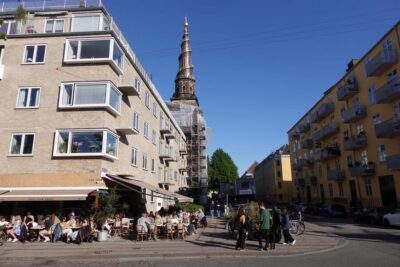
- Church of Our Saviour: a story clue in a calmer pocket
- The troll moment: Green George af Thomas Dambo (Trold nr. 50)
- Den Grå Hal (The Grey Hall): where the directions matter
- Freetown Christiania: the heart of the adventure
- Månefiskeren area: Moon Fisher and a cafe stop
- Christiania Art Gallery: puzzle + browsing energy
- Finish at Stupa / Kids Zone: wrap the story and your route
- A real-world pacing strategy so directions don’t steal your fun
- Christiania etiquette: how to be respectful without turning it into homework
- Who should book this self-guided Christiania adventure
- Should you book it? My decision guide
- FAQ
- FAQ
- How long does the Copenhagen Christiania self-guided adventure take?
- Where does the adventure start and end?
- Do I need to pick up equipment before playing?
- Is there a time limit to the game?
- Is the activity offered in English?
- What is included with the ticket?
- Is a tour guide included?
- Are the sights on the route free to enter?
- What are the opening hours?
Key things I’d keep in mind
- Smartphone-only play: no equipment pickup, just an access code and your phone
- Self-paced timing: no strict time limit, and you can pause and resume
- A landmark chain, not a single view: you’ll hit multiple Christiania-adjacent spots
- Free access at stops: each listed stop shows admission ticket free
- Respect rules matter: some areas have photo limits and you’ll want to act respectfully
Why Christiania works so well as a phone puzzle walk
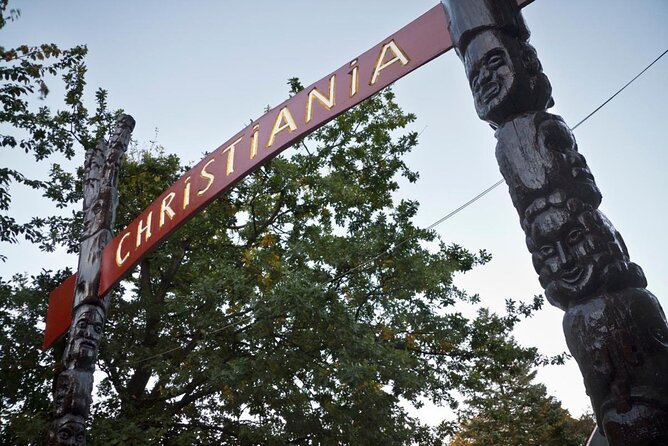
Christiania is one of those Copenhagen places that rewards wandering. But wandering can also mean missing things. This adventure avoids that problem by giving you a route with prompts: you solve puzzles, and the next clue points you onward.
I like that the game design nudges you outside your comfort zone. Instead of just reading plaques, you’re paying attention to details around each stop. That turns a normal walking day into something you’ll remember.
Deeper into Christiania and Christianshavn


Price and value: cheap enough to treat as a main activity
At $7.21 per person, this is priced like an easy add-on. In practice, it can be a main event. You get 12 puzzle challenges and storyline content, all self-guided, with a mobile access code rather than a paid guide.
You’re not paying for someone to talk at you for an hour. You’re paying for a structured way to explore Christiania at low cost and without the usual schedule pressure. You can book it in advance (it’s commonly reserved about 13 days ahead), but you’re not locked into a fixed start time by a tour guide.
What you actually need on the day (and what you don’t)
This is designed to be simple. You don’t need to pick up equipment. The experience runs on your smartphone, and you use a mobile access code to access the content.
The listing also notes it’s offered in English, and most travelers can participate. It’s near public transportation, and service animals are allowed. One practical note: it’s private for your group, so you won’t be competing with others for attention when you stop to think.
The only real “need” is willingness to slow down for a few moments. Some clue solving takes focus. If you rush, the route can feel harder than it needs to be.
How the route plays out: 8 stops and a flexible pace
The walk is roughly 40 minutes to 1 hour 10 minutes on paper. But the smarter approach is to treat that as a baseline for moving steadily between locations.
You’ll have clue-based steps at eight points. Each listed stop shows 5 minutes, but that doesn’t mean you’re forced to leave after five minutes. The experience is explicitly flexible: you can stop for as long as you like and continue when you’re ready.
That matters in Christiania, where you may want to pause, look closer, or make detours. A “game” format makes those detours feel natural instead of like you’re off track.
Start at Christianshavn: the Metro Station clue kickoff
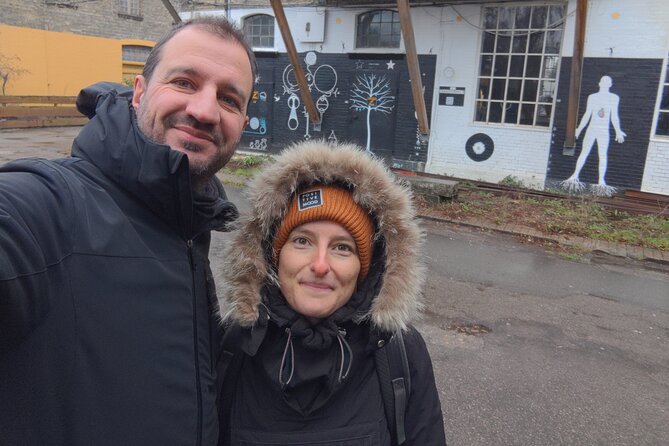
Your first move begins outside Christianshavn Metro Station at Christianshavn 1400 Copenhagen. You’ll get your first clue right there. It sets up the challenge and gives directions to the next stop.
This is a good design choice. You start at a clear landmark with easy transit access. You’re not searching for a weird side entrance before you’ve even begun the game.
Tip: before you start walking, take 30 seconds to steady your phone connection and read the clue fully. If you start moving immediately with half the message, you’ll end up backtracking while you try to decode what you missed.
Let a Copenhagen local lead the way



Church of Our Saviour: a story clue in a calmer pocket
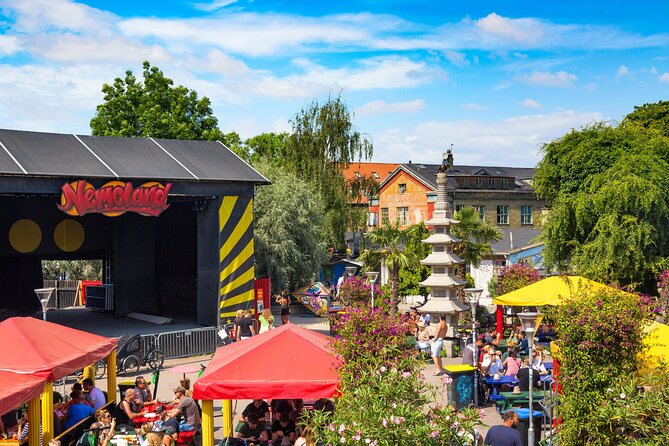
Stop 2 is the Church of Our Saviour. Like the next waypoints, you’ll receive a clue to solve for the next stage of the adventure.
Here’s why this stop works: it gives your brain a break. Christiania can be visually intense. A religious landmark tends to slow things down. Even if you aren’t into architecture, it helps you reset so you’re ready for what comes next.
The drawback is the obvious one: if you’re the type who hates solving puzzles in public spaces, you might feel a bit self-conscious. The fix is simple—step aside from heavy foot traffic and give yourself a moment.
The troll moment: Green George af Thomas Dambo (Trold nr. 50)
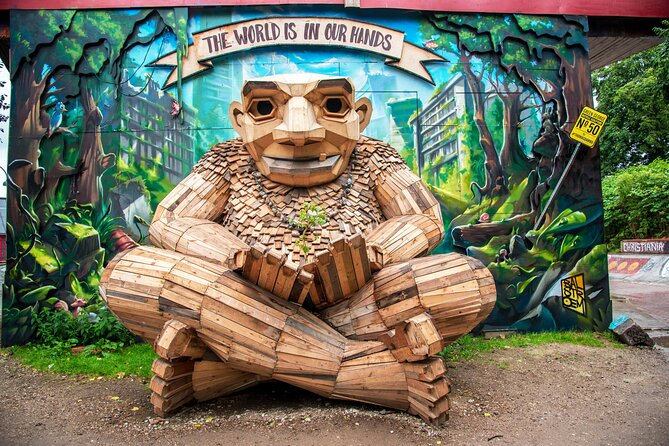
Stop 3 takes you to Green George af Thomas Dambo – Trold nr. 50. This is one of those places where the sculpture does half the work for you. You’re likely to look around first, then use the clue to guide your next step.
This is also where the adventure starts to feel like more than an urban scavenger hunt. Troll sculptures in Copenhagen often act as playful wayfinding. When you combine that with puzzle steps, you get a sense of discovery without needing a guide’s explanations.
If you’re bringing kids, this is a strong moment to engage them. It’s visually fun even for people who normally skip “mystery walks.”
Den Grå Hal (The Grey Hall): where the directions matter
Stop 4 is Den Grå Hal (The Grey Hall). You’ll get another clue here that moves you toward the Christiania section of the route.
This segment is worth taking slowly. The Grey Hall area can involve tighter navigation and less of a typical tourist flow. If you’ve ever walked in a place that feels half art space, half neighborhood, you’ll understand why directions can feel tricky when you’re also solving a puzzle.
My practical advice: zoom in on your map before you move between steps. Don’t rely on memory. Let the clue do the steering, not your assumption.
Freetown Christiania: the heart of the adventure
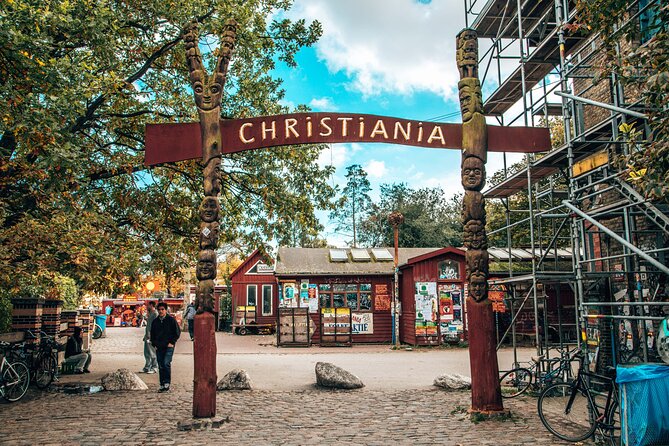
Stop 5 is Freetown Christiania. You’ll get a new clue that points you to the next stop, and your game continues from there.
This is the moment many people come for: the actual Christiania atmosphere. But Christiania isn’t just an attraction. It’s a community, and your behavior should match that reality.
Also, keep an eye on photography rules. Some parts have restrictions, and you’ll want to respect living spaces and people who call the area home. If you want photos, be selective and follow any cues you see on site.
The good news: the puzzle format nudges you to explore in a way that doesn’t require you to treat everything like a backdrop.
Månefiskeren area: Moon Fisher and a cafe stop
Stop 6 brings you to Moon Fisher, tied to the Månefiskeren Cafe area. Your clue here leads you to the next stage.
Even if you don’t stop for a drink or snack, this pause point can be useful. A cafe setting gives you a place to reset your phone, read the next prompt calmly, and regroup before continuing deeper into the route.
One caution: if you’re hungry, it’s easy for the walk to turn into a longer meal stop. That’s not bad, but factor it into your pacing so you’re not rushing through the final stages.
Christiania Art Gallery: puzzle + browsing energy
Stop 7 is the Christiania Art Gallery. You’ll solve another clue and continue onward at your own pace.
This works well because it blends two travel modes. You’re doing the puzzle steps, but you can also browse or linger depending on your mood. It’s a spot where curiosity naturally takes over, and the self-guided style lets you follow that impulse.
Just keep your phone time in mind. If you get absorbed, you might lose track of where you are in the storyline. A quick check every few minutes keeps you on course.
Finish at Stupa / Kids Zone: wrap the story and your route
Stop 8 ends at Stupa / Kids Zone (the finish location is listed as Mælkebøtten 162B, 1440 København, with the experience ending at Stupa / Kids Zone). Here, the story and the city exploration games end.
This kind of finish is satisfying because you don’t feel like you’re returning to the exact start point. Instead, you reach a clear endpoint that’s built for families and play. It gives the whole walk a clean closing beat.
If you’ve stretched the route, you’ll still have a natural stopping place without needing to force your schedule.
A real-world pacing strategy so directions don’t steal your fun
The game is designed for flexibility, but your success mostly depends on your pace. If you move fast, you can miss clues and make navigation harder.
Here’s how I’d play it:
- Start with a calm phone setup near the first clue
- Give each stop a short look first, then solve
- If you stall, pause and resume when your brain feels fresh again
- Plan for distraction time, since Christiania has plenty to browse
A practical lesson from people who enjoy these self-guided walks: the route often takes longer than the baseline estimate. That’s usually because you slow down for the small stuff—shopping, lingering at sculptures, or simply taking in the area.
Christiania etiquette: how to be respectful without turning it into homework
This is a big one. Christiania is not just scenery. If you want the experience to feel good, you should treat it like a place people live in, not a theme park.
At minimum:
- Respect residents and private areas
- Pay attention to photography limits in certain sections
- Keep your voice and behavior low-key
The puzzle format can actually help with this. Instead of gawking, you’re looking for details tied to the clues. That mindset tends to keep things respectful.
Who should book this self-guided Christiania adventure
This fits best if you want:
- A low-cost activity that feels different from a museum day
- A walk with purpose, not just exercise
- A smartphone game you can start when you feel ready
- Time flexibility for breaks and distractions
It’s also a good option for groups who don’t want to follow a single guide schedule. Since it’s private for your group, you can solve at your own speed without constantly coordinating with strangers.
If you hate puzzles, struggle with map navigation, or feel stressed by self-guided directions, you might find it less relaxing. In that case, you may want a guided alternative.
Should you book it? My decision guide
I’d book this if you’re visiting Copenhagen and you want one day where you do more than look. For the money, you’re getting a structured walking route, 12 puzzle challenges, and storyline content without a guide.
You should think twice if you’re very short on time or if smartphone-based clue navigation makes you uneasy. The route can be navigationally tricky in spots, and the storyline depends on staying with the clues.
If you can spare extra time for wandering, this becomes a standout. If you’re trying to schedule it tightly like a 45-minute appointment, plan on frustration.
FAQ
FAQ
How long does the Copenhagen Christiania self-guided adventure take?
The duration is listed as about 40 minutes to 1 hour 10 minutes, depending on how you pace yourself.
Where does the adventure start and end?
You start outside Christianshavn Metro Station (Christianshavn 1400 Copenhagen). You finish at Stupa / Kids Zone, with the end listed at Mælkebøtten 162B, 1440 København.
Do I need to pick up equipment before playing?
No. The experience is designed so you can play on your smartphone, without any equipment pickup.
Is there a time limit to the game?
No. You can choose when to start and take breaks, and you can pause and resume anytime.
Is the activity offered in English?
Yes, it’s offered in English.
What is included with the ticket?
Included items are mobile access code, 12 puzzle challenges, storyline content, and flexibility to pause/resume.
Is a tour guide included?
No. It is self-guided, and there is no tour guide included.
Are the sights on the route free to enter?
The stops are listed with admission ticket free, so you do not need separate paid entry for those points as part of this activity.
What are the opening hours?
The listed opening hours run Monday through Sunday from 12:00 AM to 11:30 PM (with dates shown from 02/15/2022 to 02/07/2027).
More Guided Copenhagen Tours
More Tour Reviews in Copenhagen



More of Christiania & Christianshavn

Fresh Off the Cobbles: The Newest Copenhagen Reviews





Christiania & Christianshavn Tours, compared.
 ★ 5.0Hippies & Christianshavn Walking TourFrom $6249 reviews
 ★ 5.0Private Walking Tour of ChristianshavnFrom $276122 reviews
 ★ 4.7Christiania & Christianshavn Guided Walking TourFrom $49119 reviews
 ★ 5.0Private Hippies & Christianshavn Politically Incorrect TourFrom $374114 reviews
 ★ 3.61.5-hour Private Walking Tour of ChristianshavnFrom $68315 reviews
 ★ 5.0Copenhagen Christianshavn Walking TourFrom $825 reviews
Browse the lists this tour appears in