

Reviewed · COPENHAGEN ATTRACTION PASSES & TICKETS
Copenhagen Card – DISCOVER 80+ attractions and public transport
This card turns Copenhagen into a sights buffet. For one price, you get timed access and a long list of major stops plus public transport, all activated through the Copenhagen Card app. What makes it interesting is the mix: classic royal sites, big museums, and a few out-of-the-way experiences, so you can build a day that fits your energy.
I especially love the unlimited transit angle. If you’re hopping around neighborhoods (and you will, because Copenhagen rewards wandering), the card keeps you from thinking about fares every time you move. I also like the free museum and attraction entry, because it turns several expensive tickets into a manageable trip budget.
One catch: you’ll get the best value only if you plan around opening hours and any timed-entry or pre-book requirements (for example, some tower visits and at least one special booking). If you arrive with a short, unplanned schedule, it’s easy to miss the money-saving payoff.
In This Review
- Key things to know before you go
- Price and what the Copenhagen Card Discover really buys you
- Entering Copenhagen smoothly: activating the card and using transit
- The biggest included hits: zoo, Tivoli, Rosenborg, and canals
- Royal power indoors: Christiansborg, Amalienborg, and Our Saviour’s Church
- Castles and Danish landmarks beyond the city center: Kronborg and Frederiksborg
- Museums that make the card feel worth it: art, science, and design
- Art for many tastes
- Science and hands-on fun
- Danish creativity and architecture
- Family-friendly and quirky stops: experiment, aquarium energy, and more
- Museums tied to people and cities: Copenhagen, literature, and the human body
- Day trips with real payoff: Roskilde and Viking-age history
- Music, libraries, and ships on Holmen: extra Copenhagen texture
- Making the itinerary work: how to schedule your card for best value
- Should you book the Copenhagen Card Discover 80+ attractions?
- FAQ
- What card lengths are available for the Copenhagen Card Discover?
- How do I redeem the Copenhagen Card?
- Does the card include public transport?
- Are there attractions with free entry but extra requirements?
- Do I need to pre-book for Home of Carlsberg?
- Is the Kronborg Castle visit included?
- Can I bring children for free?
- Can I cancel if my plans change?
Key things to know before you go
- Timed access (24 to 120 hours): pick the right duration up front, then use it strategically from your first scan
- Transport covers the city region: buses, trains, and Metro so you can move quickly without recalculating costs
- A big spread of attractions: from Rosenborg Castle and Tivoli to design, science, and contemporary art
- App-based redemption: you’ll scan using the Copenhagen Card app (not a physical card)
- Some stops need extra planning: certain tower visits and at least one venue require pre-booking
Price and what the Copenhagen Card Discover really buys you

At $95.96 per person, the Copenhagen Card Discover version is clearly priced for people who want to pack in a lot. The good news: you’re not just buying entry to a single museum. You’re buying access to a whole menu of major attractions plus unlimited public transport.
The value equation is simple. If you use public transit several times a day and hit enough included sites, the card can quickly become a bargain in a city where many attractions cost real money. If your plan is only one or two stops (or you get stuck in rainy-day indoor limits), it can feel pricey. That’s why this card works best when you already know what you want to see.
Also note that this is fully digital. You’ll be using your phone for redemption and at the attractions, so it helps to keep your battery charged and your app ready.
More Copenhagen attractions worth the ticket



Entering Copenhagen smoothly: activating the card and using transit
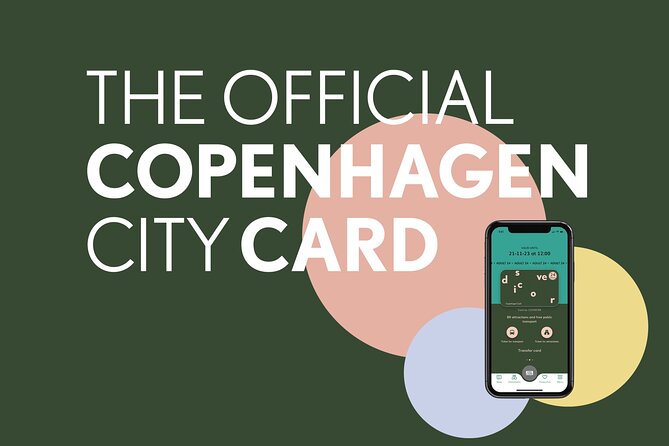
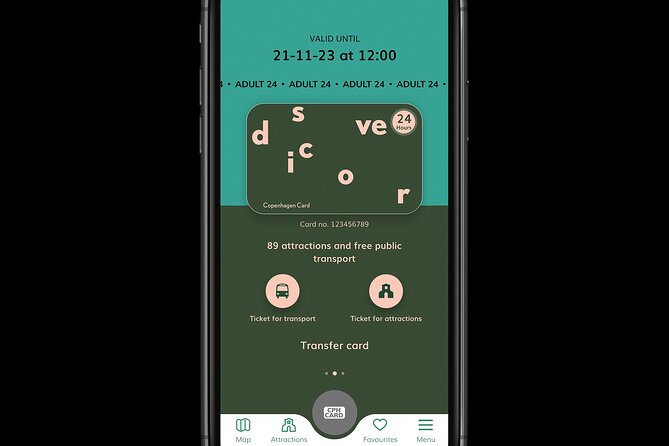
You choose a card length at booking (24, 48, 72, 96, or 120 hours). Then you redeem it in the Copenhagen Card app by entering the barcode number. Hours start counting from when you first use the card, so don’t wait too long after arrival to make your first scan.
On the ground, the practical win is how much Copenhagen you can cover without thinking about the fare system. The card includes free rides on buses, trains, and the Metro services in the city region. In real use, it can also reduce friction at attractions because entry is covered once you’re properly set up with the app.
One small reality check: the card experience depends on your phone working reliably. If you lose access to the app while you’re out and about, you don’t have a physical backup plan. I’d treat this as one more item to manage, like your passport and your tickets.
The biggest included hits: zoo, Tivoli, Rosenborg, and canals
If you want your card to pay off fast, start with the headline Copenhagen moments.
Copenhagen Zoo is an easy win for animal lovers. You’re promised a huge global collection (4000+ animals) and state-of-the-art facilities, so it’s a solid “use up your day” option. For pacing, plan about an hour if you want highlights, or more if you naturally slow down for the exhibits that catch your eye.
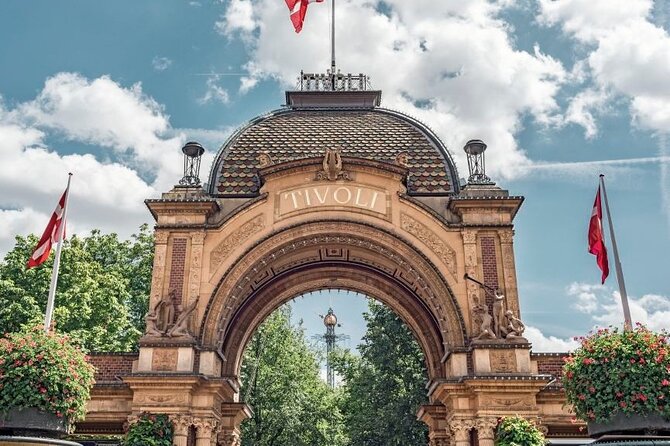
Tivoli Gardens is the other classic “first day” pick. This amusement park is one of the oldest in Europe, and it’s the kind of place you can enjoy at a relaxed pace even if you’re not traveling with kids. One practical note: opening hours can change with seasons and operations, so check what’s running for your travel dates before you build your schedule around it.
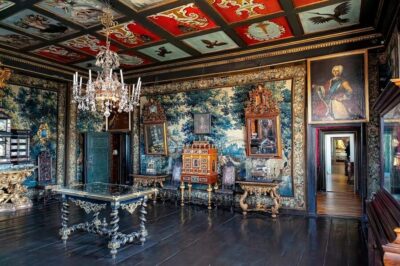
Rosenborg Castle gives you Danish royal drama without the guesswork. It’s included for a full visit, and it’s home to the Crown Jewels, which makes it a must for many first-timers. If you love history that feels curated and tangible, this is where you’ll feel the card’s value quickly.
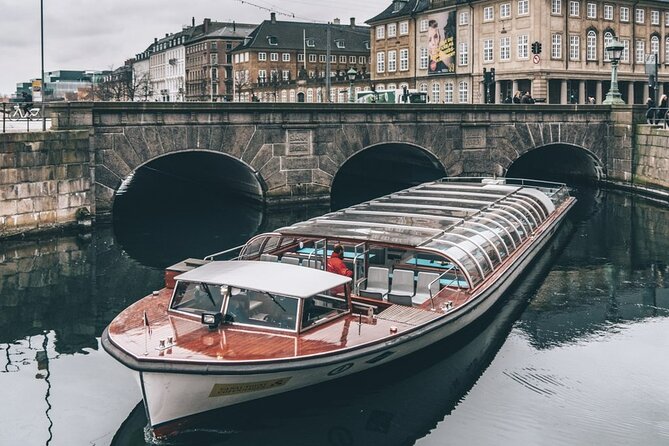
Stromma Canal Tours rounds it out with a Copenhagen viewpoint. A canal cruise is one of those experiences where you don’t need to be a history expert to get it. You can do it early or late, and it pairs well with museum days so you get at least one scenic reset.
Royal power indoors: Christiansborg, Amalienborg, and Our Saviour’s Church
For royal architecture and official Copenhagen landmarks, you’ve got several strong included stops.
Christiansborg Slot is the official seat of the Queen. It’s a key place to understand how Denmark runs at a state level, not just as a tourist postcard. Plan your time carefully here if you also want to climb or see specific areas, because places like this can have busy flow patterns.
Amalienborg Palace Museum lets you see recreated royal palace interiors. It’s essentially a look at the home-life side of royalty, which many people find more engaging than just exterior photos. If you like interiors and formal rooms, this is a great use of an included ticket.
Our Saviour’s Church is a special case because the entrance is free, but the tower climb requires advance booking. That means you can still enjoy the church even if you can’t get a timeslot, but your best-value experience depends on planning ahead. If climbing the tower is on your list, build your day around securing that slot early.
Castles and Danish landmarks beyond the city center: Kronborg and Frederiksborg
The card can stretch beyond central Copenhagen, and these two castle stops are the big reason why.
Kronborg Slot in Elsinore (north of Copenhagen) is one of northern Europe’s finest Renaissance castles, built in the late 1500s. It’s especially famous worldwide because of Shakespeare’s Hamlet. Even if you don’t plan a full Shakespeare deep read, the setting at the entrance to Øresund makes it feel like a destination, not just a museum stop.
Frederiksborg Castle is another major included Renaissance site, located in Hillerød north of Copenhagen. Its Museum of National History focuses on Danish history from the late Middle Ages onward. If you like historical rooms and portraits, this is the castle visit most likely to hold your attention after the initial wow moment.
The tradeoff is time. These are not quick in-and-out stops, so if you select a short-duration card, you’ll need to be decisive about whether you’re making a day trip or keeping everything in central areas.






Museums that make the card feel worth it: art, science, and design
This is where the Copenhagen Card Discover list really differentiates itself. Instead of repeating the same two big museums, it gives you options across taste levels.
Art for many tastes
Ny Carlsberg Glyptotek is a great all-around art pick with a mix of art and archaeological objects, including ancient Egypt and Greek and Roman worlds, plus Danish and French art of the 19th century. If you want variety in one building, it’s a strong use of your included time.
National Gallery of Denmark (SMK) is Denmark’s largest art museum and covers seven centuries, mixing Danish and international works. It also includes royal collections and rotating programming like talks and performances. If you’re an art person, this is a core anchor. If you’re not, you can still enjoy it with a short, focused plan rather than trying to see everything.
Ny Carlsberg Glyptotek and SMK together can cover both the “wow” and the “meaning” sides of art in one trip. I like using one for breadth and one for depth, rather than trying to do both at maximum intensity.
For peaceful, high-quality art in a calmer setting, Ordrupgaard Art Museum (about 10 km north of Copenhagen) is a standout. It features French Impressionism highlights like Monet and Degas, plus Danish art focusing on Vilhelm Hammershøi. The park setting is part of the value here, because it makes a museum day feel like an outing, not a sprint.
The Hirschsprung Collection in Østre Anlæg is another good fit if you like Danish Golden Age to Modern Breakthrough painting. It’s housed in a listed building, so the setting supports the collection.
If contemporary art is your thing, Copenhagen has multiple included options:
- Copenhagen Contemporary in a former B&W welding hall, built for large-scale installations and monumental video works
- Nikolaj Kunsthal, set in a historic church building, for Danish and international contemporary art
- Kunsthal Charlottenborg, a major contemporary exhibition space with events around exhibitions
- Det Kgl. Bibliotek (The Black Diamond), the Royal Danish Library cultural center with exhibitions connected to literature and photography
I like that these don’t all feel identical. Some are more industrial, some more architectural, some more gallery-like. You can match them to your mood on the day.
Science and hands-on fun
If you want to balance out museums with something that works for families and curious adults, Experimentarium is ideal. It’s a world-class hands-on science center where you can jump right in. Pair it with a zoo day or a canal cruise day to keep your schedule from becoming all indoors.
Planetarium is another strong included choice, built around films inside a dome with updated visual and sound specs. You also get access to exhibitions and one movie in the dome with your card. If you’re traveling with kids, or if rainy weather shows up, this is one of the best ways to stay on plan.
Museum of Natural History focuses on nature and changing exhibitions, including mineral halls and hands-on moments like touching a huge meteorite. It’s a good break from art while still feeling “big museum” in scale.
Danish creativity and architecture
Danish Architecture Center (DAC) starts you off in the right mindset if you want Copenhagen to make architectural sense as you walk. It’s in BLOX and features exhibitions, guided tours, and events about historic icons and new highlights in Danish architecture and design.
Designmuseum Danmark is another must for design lovers. It’s a working archive for Danish design across eras, with works by names like Arne Jacobsen and Poul Kjærholm. It also covers applied art from Art Nouveau to contemporary work, including glass, ceramics, fashion, textile, and posters.
Family-friendly and quirky stops: experiment, aquarium energy, and more
Not every included stop is a heavyweight museum. Some are quirky in a good way, which keeps the card from feeling like a checklist.
Cisternerne is an underground art gallery in a former water reservoir. The cold, humid, dark setting can make contemporary installations feel theatrical. It’s also a smart choice for a day when weather is unreliable, because you’re already inside.
Ragnarock gives you pop, rock, and youth culture through listening and seeing, focused on music from the 1950s through today’s rhythms. It’s a fun stop if you want something that doesn’t require you to read labels for an hour.
Casino Copenhagen is included too, which surprises people. It offers traditional games plus a huge number of slot machines, and it’s set up as a full entertainment venue.
Sælen submarine (the last Danish service submarine that even participated in hostilities) gives you a maritime military angle. It’s short, which makes it easy to add on between bigger plans.
Classic Car House is a crowd-pleaser if you like craftsmanship. It focuses on 20th-century classic cars, with innovation and design history as part of the story.
If you want something more dramatic and historical, you’ve got:
- Danish War Museum (from the 1500s to today, including samurai swords to modern drones)
- Museum of Danish Resistance (a WWII resistance experience that takes you underground into sabotage, illegal newspapers, code work, and interceptions)
These can be intense, but they pair well with lighter stops like art or design the next day.
Museums tied to people and cities: Copenhagen, literature, and the human body
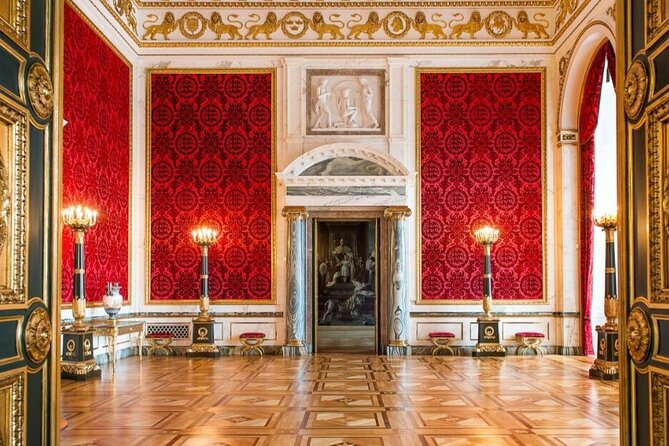
A few included stops help you understand Copenhagen as a living place, not just a monument.
Museum of Copenhagen is about the city and its people through Viking-age beginnings, building booms, plague, fires, bombings, and even Christiania today. You get an interactive model that helps you see how areas connect.
Thorvaldsen’s Museum focuses on Bertel Thorvaldsen, with vivid colors and a building designed to show the sculptor’s works. If you like art tied to one creator, it’s a tidy, satisfying visit.
Karen Blixen Museum is short and atmospheric, tied to the author’s home on the coast near Rungsted Kyst Station. It’s a different kind of stop: quieter, more personal, and close to the Sound.
For the human body in a museum setting, Medicinsk Museion lives inside the historic Royal Academy for Surgeons. It covers how the body and diseases were understood and treated from antiquity to the genomic age, plus exhibitions in that historic building.
Day trips with real payoff: Roskilde and Viking-age history

Some of the strongest experiences on the list require leaving the Copenhagen core. If you’re using a 72 to 120-hour card, this is where you’ll feel like you stretched your trip.
Viking Ship Museum (in Roskilde) centers on five 1000-year-old original ship finds from the Viking Age. It includes reconstructions and even options to sail in reconstructed boats, plus craftsmen and activities connected to old maritime trades.
Roskilde Domkirke is a UNESCO-listed cathedral site with about 1000 years of history and a burial layer tied to 40 kings and queens. Even if you don’t plan to spend hours, it’s the kind of stop that gives context to the Viking story.
Lejre Land of Legends is an open-air museum where you can see reconstructions of Viking Kings Hall and settlements, plus active workshops from the Iron, Stone, and Viking Ages. It’s the most hands-on, outside-the-city type of history stop on the list.
These are not “grab-and-go” visits. They’re worth it when you deliberately plan a day around them.
Music, libraries, and ships on Holmen: extra Copenhagen texture
A few included stops add local flavor that you might not naturally prioritize.
Det Kgl. Bibliotek (The Black Diamond) is set on the edge of Copenhagen Harbour, making it easy to combine with walks and harbor viewpoints. It’s oriented toward storytelling through exhibitions involving literature and photography.
The Ships on Holmen includes specific naval vessels, with explanations about their propulsion and roles. If you like engineering history as much as military history, this is a great addition.
Making the itinerary work: how to schedule your card for best value
Here’s the practical way I’d plan it so the math works and you don’t waste included hours.
First, pick your two or three big anchors. In Copenhagen, those are often Rosenborg Castle, Tivoli Gardens, the zoo, and one or two museum heavyweights like SMK. Then add one transit-friendly experience like a canal tour.
Second, protect your schedule for timed issues. Our Saviour’s Church tower climbing needs advance booking, and Home of Carlsberg requires pre-booking, with your card active before booking. If you want those, schedule early so you’re not scrambling.
Third, watch your days of the week. One of the most repeated patterns in planning is that many attractions can close on Mondays. Build your biggest indoor time on other days and keep Monday more flexible.
If you do it this way, even a short card length can cover a surprisingly full experience stack.
Should you book the Copenhagen Card Discover 80+ attractions?
Book it if you’re planning at least three to five included stops plus regular transit. This is especially worth it if you’re mixing major sights (Rosenborg, Tivoli, canals) with museums across art, science, and design. The biggest advantage is reduced decision fatigue: you move freely and you don’t feel like every ticket must be justified.
Skip it or go shorter if your schedule is tight or you only want a couple of attractions. In that case, you’re paying for access you might not use. Also, if you dislike planning around opening hours or pre-booked timed options, you may find the card adds stress instead of lowering it.
My take: if you want Copenhagen to feel like an all-day experience you can keep building, this card is one of the easiest ways to do it without micromanaging every fare and every ticket.
FAQ
What card lengths are available for the Copenhagen Card Discover?
You can select a 24-, 48-, 72-, 96-, or 120-hour Copenhagen Card at booking. The hours run from when you first use the card.
How do I redeem the Copenhagen Card?
You download the Copenhagen Card app and type in the barcode number. The card is redeemed digitally, and there is no physical card included.
Does the card include public transport?
Yes. Your card provides complimentary travel on Copenhagen’s buses, trains, and Metro services throughout the covered city region.
Are there attractions with free entry but extra requirements?
Yes. Our Saviour’s Church entrance is free, but climbing the tower requires booking in advance. Home of Carlsberg also requires pre-booking.
Do I need to pre-book for Home of Carlsberg?
Yes. You must pre-book your visit, and your card must be active before booking because you’ll need the card number.
Is the Kronborg Castle visit included?
Yes. Kronborg Slot is included with free admission.
Can I bring children for free?
Each adult can bring up to 2 children ages 3-11 for free, as long as you add the free kids cards to the cart when buying your own card.
Can I cancel if my plans change?
Free cancellation is available up to 24 hours in advance for a full refund. If you cancel less than 24 hours before the start time, the amount paid is not refunded.
More Tour Reviews in Copenhagen

More Passes & Attraction Tickets




Fresh Off the Cobbles: The Newest Copenhagen Reviews











Copenhagen Attraction Passes & Tickets, compared.
 ★ 4.7Home of Carlsberg Experience Entry TicketFrom $351,009 reviews
 ★ 4.6Copenhagen Zoo Entry TicketFrom $39708 reviews
 ★ 4.0Copenhagen Bus and Boat ticket, Valid 48 HoursFrom $63565 reviews
 ★ 4.2Hard Rock Cafe with Set Menu for Lunch or DinnerFrom $39437 reviews
 ★ 4.2City Card with 40+ Attractions & Hop-On/Off BusFrom $94403 reviews
 ★ 4.6Rosenborg Castle Entry TicketFrom $23381 reviews
 ★ 5.0Skip the Line: Disgusting Food Museum Entrance TicketFrom $25359 reviews
 ★ 4.1THE TUBE Copenhagen Entrance TicketFrom $19318 reviews
Browse the lists this tour appears in