
Reviewed · COPENHAGEN HYGGE, HIGHLIGHTS & HIDDEN GEMS
2-Hour Walking Introduction to Copenhagen and its Main Sights
Two hours can fix your Copenhagen confusion. This 2-hour walk is a fast way to learn how Copenhagen works, from government buildings to the harbor vibe, guided in clear English by someone who actually talks like a local. I like the small-group feel (max 10) and the headset option so you don’t miss the story while dodging bikes and scooters. One thing to plan for: it’s an orientation walk, so you mostly see exteriors, and a couple stops have admission not included.
You’ll start at Rådhuspladsen by the Andersen statue, then head through the city center and toward the water. Along the way, you’ll get context for what you’re looking at: why Danes gather at City Hall Square, why Christiansborg matters, and how the waterfront shaped the city. The best part is that the guide will also steer you toward what to do next, based on your interests.
The route is compact but packed, so if you’re hoping for lots of museum time, you’ll need to come back later on your own. Still, for a first day (or a first afternoon after you land), this kind of guided route can save you hours of aimless wandering.
In This Review
- Key Highlights Worth Your Time
- Getting Oriented at Rådhuspladsen and Andersen’s Statue
- City Hall Square, Tivoli, and Strøget: Copenhagen’s Heartbeat
- Christiansborg Slot: The Parliament, Supreme Court, and Prime Minister’s Home
- Harbor Stops: Christian IV’s Brewhouse and the Dragon-Tailed Stock Exchange
- Holmens Kirke and King’s New Square: Royals, Burials, and Easy Next Steps
- Nyhavn and Amalienborg Palace: Color, War, and a Smart Finish
- Is This Tour Worth $40.41? Value, Pacing, and What You Skip
- Tips Before You Go: Comfortable Shoes and Question Time
- Should You Book This 2-Hour Copenhagen Walk?
- FAQ
- How long is the walking introduction to Copenhagen?
- What does the tour cost, and is there anything extra I might pay?
- What’s included in the experience?
- How many people are in the group?
- Where do I meet, and where does the tour end?
- Does the tour run in bad weather?
- What is the cancellation policy?
Key Highlights Worth Your Time
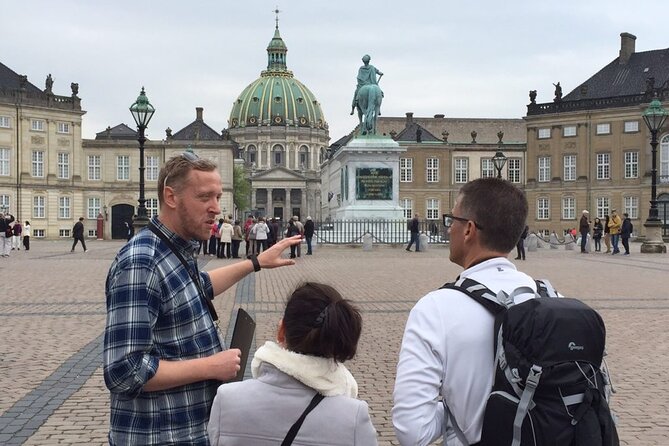
- Small group, headset listening so you can focus on the walk instead of straining to hear
- Big-name Copenhagen landmarks covered in one tight loop: City Hall, Christiansborg, Holmens Kirke, Nyhavn, Amalienborg
- Lively guide energy you’ll feel in the stories and the way questions get answered
- Harbor history you can picture at Christian IV’s Brewhouse and the old Stock Exchange
- A clear end point with options near Amalienborg, with practical ideas for continuing to Nyhavn and beyond
- Weather-dependent walking since it’s a walk-first experience
Getting Oriented at Rådhuspladsen and Andersen’s Statue
The tour starts where many first visits feel like they begin: Rådhuspladsen, by the statue of Hans Christian Andersen. That’s a smart move. This area is central, easy to reach, and it helps you frame Copenhagen as a city with both culture and civic life side by side.
From the first steps, you get a guided sense of direction—where the main sights sit relative to each other, and what’s worth slowing down for later. You’re not just collecting facts. You’re learning the city’s “logic,” which makes everything after this walk easier to navigate.
One practical note: this is a walking tour that includes travel time. So you’ll be moving steadily for the full 2 hours (about), which is great for orientation but less ideal if you want a lot of stop-and-stare without walking.
More highlights, hidden corners and a little hygge on foot



City Hall Square, Tivoli, and Strøget: Copenhagen’s Heartbeat
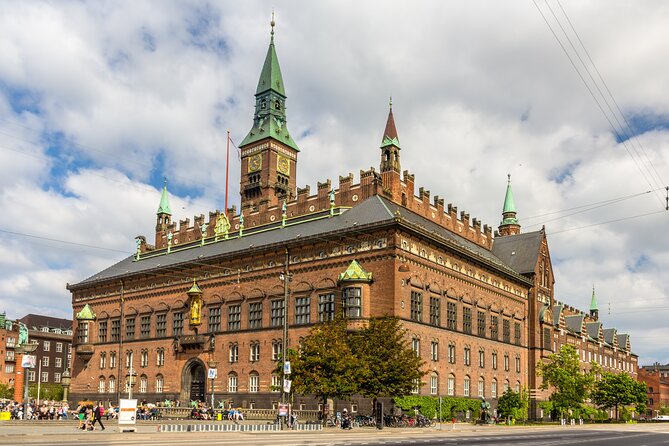
Stop one is City Hall Square, the core meeting point where Danes gather in huge numbers for big wins—sports events or major national moments. That gives the space meaning beyond architecture. When you see the square after the tour, you’ll understand why it feels like a stage.
The tour then orients you to what the City Hall building represents—built in 1905, it’s the administration home for Copenhagen. Even if you don’t go inside, you’ll learn how the city centers decision-making and public identity in the same place.
Next comes the “small delight” stretch—Tivoli Gardens. Tivoli is famous as one of the most beautiful amusement parks in the world, and the standout detail is that it’s placed right in the middle of a major city. You’ll walk away understanding why that’s a big deal: Copenhagen doesn’t treat fun as an afterthought. It’s part of daily life.
Then you reach the world’s longest pedestrian shopping street. In Copenhagen, shopping isn’t just errands; it’s a social corridor. Walking that stretch with the guide’s context helps you see it as a designed public space, not just a long lane of stores.
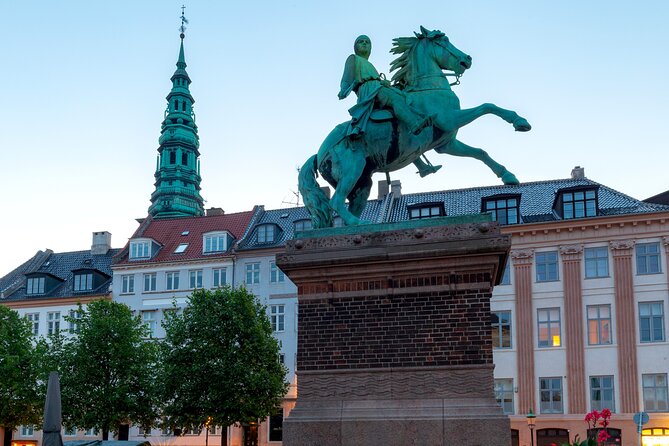
The tour also points out an equestrian statue of the bishop traditionally tied to the founding of Copenhagen in 1189. You’ll likely hear how the city’s early roots relate to the later growth around these central squares. It’s the kind of quick origin story that makes the map in your head click.
Potential drawback here: this section is visually dense. If you’re the type who likes to take photos every 10 seconds, you may feel a bit rushed. Use the headset and listen first, then snap pictures once you know what you’re seeing.
Christiansborg Slot: The Parliament, Supreme Court, and Prime Minister’s Home
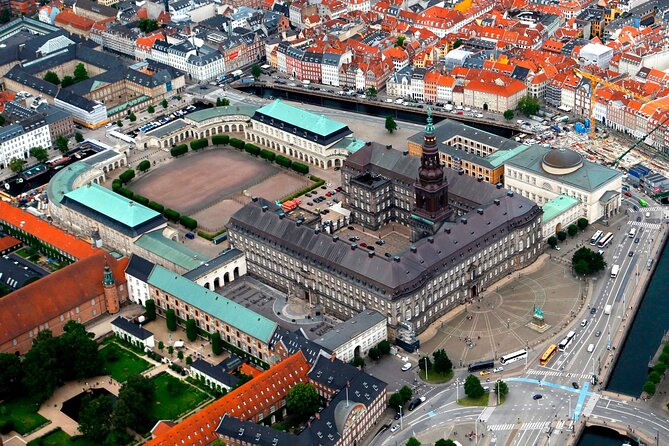
Christiansborg Slot is where the tour shifts from “city life” to “politics with a capital P.” This is a huge palace complex where you find Denmark’s parliament, the supreme court, and the prime minister. It’s also described as the place from which Copenhagen’s story begins—so you’re standing in the city’s power center and its origin point at the same time.
The tour also frames the surrounding area as administrative country-of-denmark territory: ministries, the central bank, and other important institutions all sit in this broader zone. When you learn what lives here, the buildings stop feeling like random landmarks and start feeling like a functional map of the state.
If you’re into civics, this stop is a highlight. You’ll walk away knowing what each institution represents in everyday terms. If you’re less into politics, the guide’s stories and timing help you stay engaged anyway—plus you get a sense of why Danish governance feels so rooted in central Copenhagen.
Again, you’ll likely see more from outside than inside, since this is an introduction walk. If your goal is to tour chambers or museums, you’ll want to plan a separate visit later.
Harbor Stops: Christian IV’s Brewhouse and the Dragon-Tailed Stock Exchange
After the city power zone, the tour heads toward the waterfront history—one of the best ways to understand Copenhagen because the harbor shaped the city’s survival, trade, and defense.
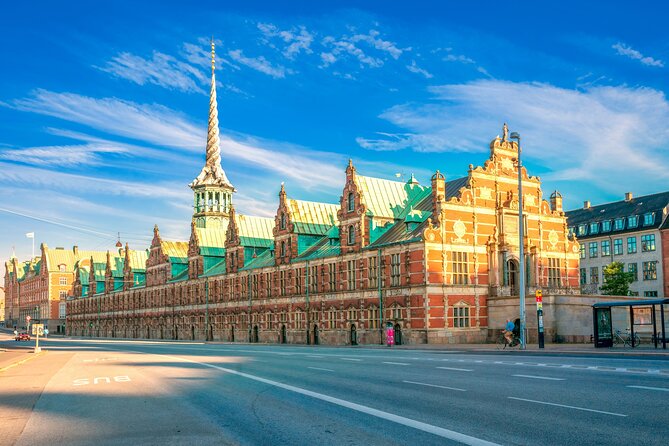
At Christian IV’s Brewhouse, built in 1618 in a brick harbor setting, you learn how the harbor served as a navy base in the Renaissance. That detail matters because it explains why buildings near the water aren’t just decorative. They were infrastructure, tied to ships, supplies, and military logistics.
Admission for this stop is not included, so if you want to go in, you’ll need to pay separately. That’s a normal trade-off for an introduction tour: you get the story and context, but you decide whether you want the ticketed deep dive.
Next up is the old stock exchange from the early 1600s, a striking building with a tower made up of tails from three dragons. It’s the kind of detail you’ll remember because it sounds like something from a legend, but it’s attached to real commercial history. The guide helps you connect symbols and commerce: Copenhagen’s economy wasn’t just practical; it also had visual branding in stone.
If you like architecture with a twist of myth, this stop delivers. If you’re indifferent to “old buildings with weird details,” you may still appreciate it as an anchor point for the harbor area’s timeline.
Holmens Kirke and King’s New Square: Royals, Burials, and Easy Next Steps
Holmens Kirke is from the 1500s and becomes a story about who’s connected to the church. The tour notes that prime ministers are buried here, and royals are married here. That’s a big deal because it explains why this church feels more like a national institution than a neighborhood chapel.
You’ll enter the church if it’s open, depending on church activities. So treat this as a “maybe” moment. When it works, it’s an atmospheric break from the street and a chance to see how Danish public memory is tied to religious spaces.
After that, the walk reaches Copenhagen King’s New Square. The guide describes it as Renaissance in character and surrounded by impressive 1700s buildings. Even if you don’t go inside anything, this stop is useful because it helps you understand how Copenhagen’s center expanded and refined itself over time.
The tour ends here in terms of the walking arc, and then you get a practical pivot: the guide explains how to get back or how to continue exploring on foot. Key nearby targets include Nyhavn, Amalienborg Palace, and the Little Mermaid. In other words, the tour doesn’t just point at sights. It helps you chain them into a route.
A small caution: if you’re hoping to do everything right after the walk, plan for your energy. This is still a lot of sights in a short window.
A few more Copenhagen trips we have been out on and rated






Nyhavn and Amalienborg Palace: Color, War, and a Smart Finish
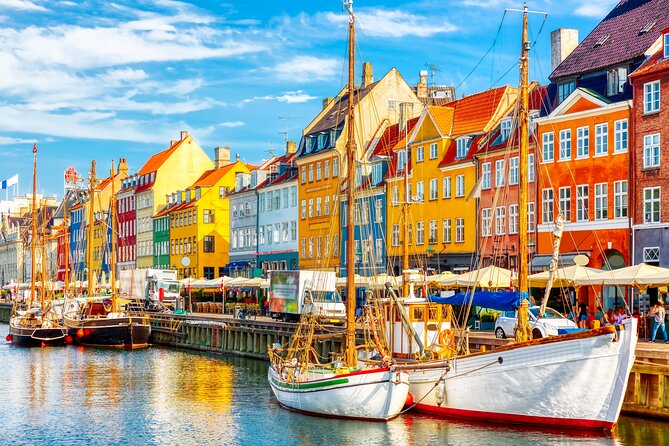
Nyhavn is the iconic New Harbour with colorful houses. The tour highlights how the harbor was dug out in the 1600s by Swedish prisoners of war. That fact adds weight to the postcard view. You’re not just looking at pretty facades—you’re looking at a built environment created through the grim realities of conflict.
When the weather is cooperative, Nyhavn is also a natural place to regroup. One nice detail that shows up in the tour experience is that guides sometimes time a quick rest moment for a cold drink in Nyhavn, which is exactly what you want when you’ve been walking in city heat.
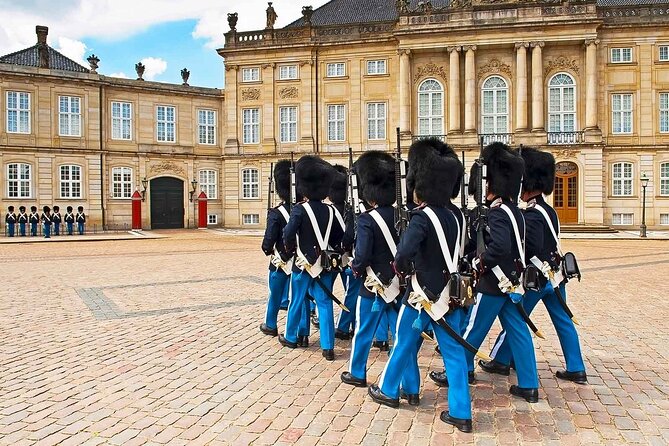
Then the tour finishes at Amalienborg Palace. This is the royal residence where the king and his family live in four huge mansions from the mid-1700s. You’ll also learn that dramatic fights took place here during World War II, which is a reminder that Copenhagen’s story includes more than pageantry.
Admission here is not included. So you’re there for the setting, the architecture, and the surrounding royal-square atmosphere, not for an indoor palace visit. If you want the inside experience, you’ll need to schedule that separately.
One more tip based on the timing aspect of the walk: depending on the day and schedule, your tour may line up so you can see the changing of the guards at Amalienborg. It’s not guaranteed, but the fact that the walk ends here makes it more likely you’ll catch something ceremonial.
Is This Tour Worth $40.41? Value, Pacing, and What You Skip
At $40.41 per person for about 2 hours, the value comes down to two things: orientation and expert guidance.
First, orientation in Copenhagen is genuinely useful. The city has a tight center, and many landmarks feel close together until you start walking. A guided route that connects City Hall, Christiansborg, the harbor, Nyhavn, and Amalienborg helps you build a mental map fast.
Second, you’re not paying just for “seeing stops.” You’re paying for a guide who explains what you’re looking at—past and present—plus handles questions. The headset option also improves value. It’s easy to underestimate how annoying it is when you keep missing the next story because you can’t hear over traffic.
What you skip matters too. You won’t go into castles and museums on this walk. The tour is an introduction, not a ticket-hungry day. It also includes some stops with free admission and others where admission isn’t included, such as Christian IV’s Brewhouse and Amalienborg Palace.
So I’d frame it like this: it’s ideal if you want to walk away with clarity and a list of what to do next. It’s less ideal if you want a deep museum day packed with indoor stops.
Tips Before You Go: Comfortable Shoes and Question Time
A few practical moves will help you get more out of this 2-hour loop:
- Wear shoes you can walk in for real. Copenhagen streets are easy, but 2 hours adds up fast.
- Use the headset if you find the street noise distracting. It’s provided, and it’s there for a reason.
- Bring a few questions. Ask what neighborhoods fit your interests, what to prioritize, and what to skip if you only have one more day.
- Pay attention when the guide points out a route for continuing to Nyhavn and other nearby highlights. That “how to get there after the walk” part is often what saves you the most time later.
- If you’re hoping to enter Holmens Kirke, keep your expectations flexible since it depends on whether it’s open.
And if you’re trying to plan around crowded schedules, it helps to book early. The tour is typically booked about a month in advance, which suggests popular times can fill up.
Should You Book This 2-Hour Copenhagen Walk?
Book it if you want a clean first-day win: you’ll see the main sights, learn what connects them, and leave with a smarter plan for the rest of your trip. It’s especially good if you like history explained in plain language with humor and local color—and if you value a guide who actively answers questions.
Skip or supplement it if your idea of a great Copenhagen day is mostly museum interiors and long indoor visits. This is a walking orientation. You’ll likely still want at least one later stop where you go deeper with tickets.
For most people landing in Copenhagen and trying to get their bearings, this is a very solid start.
FAQ
How long is the walking introduction to Copenhagen?
It’s about 2 hours total.
What does the tour cost, and is there anything extra I might pay?
The price is $40.41 per person. Some locations are free, but admission is not included for certain stops like Christian IV’s Brewhouse and Amalienborg Palace.
What’s included in the experience?
You get a guided walk in a small group, a local English-speaking guide, a headset so you can hear the guide, and a small city map with tips for what to see next.
How many people are in the group?
The tour has a maximum of 10 travelers.
Where do I meet, and where does the tour end?
You start at the statue of Andersen at Rådhuspladsen (1553 København V). You end at Amalienborg Palace at Amalienborg Slotsplads (1257 København K).
Does the tour run in bad weather?
This experience requires good weather. If it’s canceled due to poor weather, you’ll be offered a different date or a full refund.
What is the cancellation policy?
You can cancel for a full refund up to 24 hours in advance of the experience’s start time. If you cancel less than 24 hours before, the amount you paid will not be refunded.
More 2-Hour Experiences in Copenhagen


More Tour Reviews in Copenhagen


More Highlights & Hidden Gems



Fresh Off the Cobbles: The Newest Copenhagen Reviews










Copenhagen Hygge, Highlights & Hidden Gems, compared.
 ★ 5.0Private Walking Grand Tour of CopenhagenFrom $3423,953 reviews
 ★ 5.0Copenhagen Highlights Walking TourFrom $402,324 reviews
 ★ 4.8Highlights 3 Hour Bike Tour with a Local GuideFrom $622,312 reviews
 ★ 5.0Politically Incorrect Private Highlights Walking TourFrom $3741,244 reviews
 ★ 4.73-Hour City Highlights Bike Tour with GuideFrom $551,239 reviews
 ★ 5.0Copenhagen Highlights 3 Hour Bike Tour with local GuideFrom $611,125 reviews
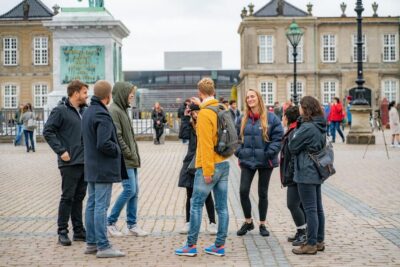 ★ 4.7Group Walking Tour – City Highlights – 2 HoursFrom $391,088 reviews
 ★ 5.03-hour Copenhagen City Highlights Bike TourFrom $54757 reviews
Browse the lists this tour appears in