
Reviewed · COPENHAGEN HYGGE, HIGHLIGHTS & HIDDEN GEMS
Walking tour – Copenhagen Old Town & Tivoli Park included
If Copenhagen feels big, this walk makes it make sense fast. You’ll cover Old Town landmarks in a tight loop, then finish at Tivoli Park with general admission included. I like that the route is built for time-tight visitors, and you’re not left alone trying to figure out what’s what.
Two things I especially like: you get a guide to handle the “where do we go next” problem, and you get skip-the-line Tivoli access so your afternoon doesn’t melt away in queues. The main drawback to keep in mind is that some sights have opening-hour quirks, and one group got caught by a situation around the Church of Our Lady on a Sunday. If you’re the type who needs extra time inside, build in some flexibility for the day you visit.
In This Review
- Key takeaways before you go
- Why this 2-hour Old Town loop is such a smart idea
- Price and what you’re really paying for ($79.30)
- Meeting at Højbro Plads and how the pacing works
- Copenhagen’s new square, Strøget’s spine, and Christian V’s big plan
- Nyhavn canals: the postcard view with useful context
- Amalienborg at noon: what to watch during the Royal Guard change
- Rosenborg Castle area: a Renaissance reminder in a modern city
- Church of Our Lady (Copenhagen Cathedral): the big events and the famous sculptures
- Old Market and Nytorv: Caritas Well and the city rebuilt after fire
- City Hall Square (Radhuspladsen) and why it matters to the walk
- Tivoli Park: general admission included, and the stop that sets you up to enjoy
- What kind of guide experience should you expect?
- Who this tour fits best
- My practical call: should you book it?
- FAQ
- How long is the walking tour?
- What does the tour cost?
- Where is the tour meeting point?
- Where does the tour end?
- What’s included with the price?
- What’s not included?
- Is the tour ticket mobile?
- Is the changing of the Royal Guard included?
Key takeaways before you go
- A 2-hour, hit-the-main-sights route across the center, designed for getting your bearings quickly
- Tivoli Park general admission (+8) included, with faster entry so you can start enjoying right away
- Amalienborg at noon is timed for the daily changing of the Royal Guard
- Strøget and the old squares give you the city’s spine, not just a few photo stops
- Guides like Felipe and Viviane have been praised for clear explanations and patience during the walk
- Small group size (up to 21) keeps it easier to stay together and hear the stories
Why this 2-hour Old Town loop is such a smart idea
Copenhagen can be a very walkable city, but it’s also easy to overshoot your energy. This tour is built like a good city bus line: you pass the big landmarks, learn why they matter, and avoid the decision fatigue.
You start in the pedestrian core and end at Tivoli. That matters. You don’t just “see” the city and then go back to your hotel wondering what you should do next. You finish with a built-in way to keep the day going.
More highlights, hidden corners and a little hygge on foot



Price and what you’re really paying for ($79.30)
At $79.30 per person for about 2 hours, the headline cost is simple. The real value is in what that price buys you: a knowledgeable guide to stitch the sights together, plus paid Tivoli entry that you’d otherwise have to add later.
You also get the practical stuff. A mobile ticket means less fumbling. And Tivoli is included in a way that’s designed to reduce waiting. If you’re visiting during peak hours, that time saved can be worth more than the difference between a paid guided option and a DIY plan.
Meeting at Højbro Plads and how the pacing works
The meeting point is Højbro Plads (Højbro Pl., 1200 København). The start time listed is 10:00 am, and the tour ends at Vesterbrogade 3, 1630 København V, which is right at Tivoli Park.
This is not a slow museum crawl. It’s a walking tour with short stops and quick context. Plan for uneven “stop, listen, move” rhythm. If you’re traveling with someone who needs a longer pause for photos or accessibility breaks, you’ll want to tell the guide early and be ready for a bit of flexibility.
The group size is capped at 21 travelers, which helps. You’re not being swallowed by a giant crowd, and your guide can keep an eye on timing.
Copenhagen’s new square, Strøget’s spine, and Christian V’s big plan
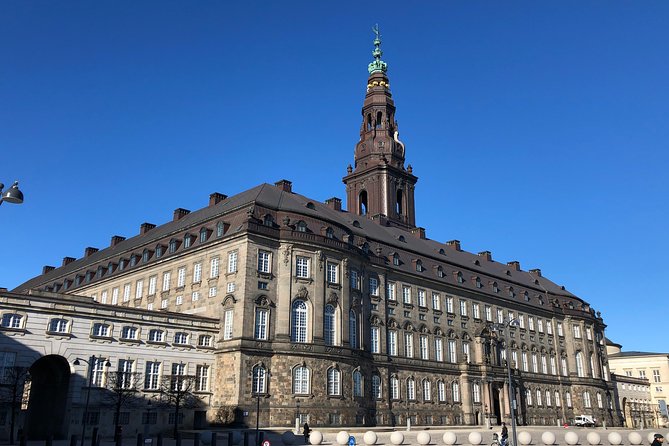
Your first stop is Copenhagen King’s New Square. It sits at the end of Strøget, the long pedestrian shopping street that runs through the old center. This is the kind of place where it’s easy to look at the buildings and miss the story.
Here’s what makes the square worth your time. It was laid out by King Christian V in 1670, and it helped shift the city’s center from the older medieval area around Gammeltorv. So you’re seeing not just architecture, but a turning point in how Copenhagen grew.
Make a quick mental note of the buildings facing the square:
- Royal Danish Theatre (from 1874)
- Charlottenborg Palace (from 1671, now part of the Royal Danish Academy of Fine Arts)
- Thott Palace (from 1683, now the French Embassy)
- Hotel D’Angleterre
- Magasin du Nord
This stop is also a good “warm-up.” You’ll get your bearings before the tour heads toward the water and the royal sites.
Nyhavn canals: the postcard view with useful context

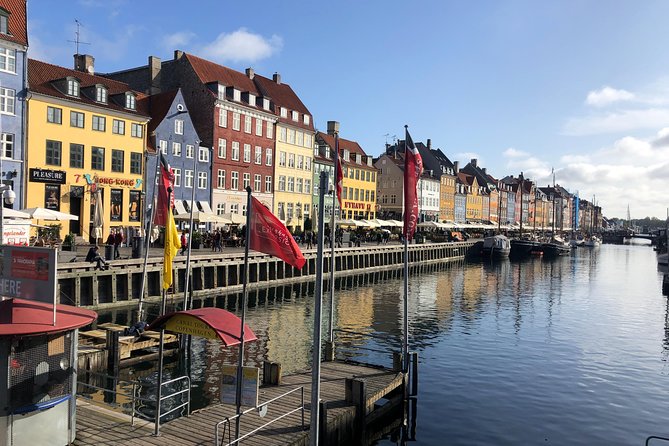
Next you’ll hit Nyhavn. It’s famous for a reason: canal-side scenes, colorful facades, and a photo layout that works from many angles.
The practical point is timing and positioning. Because you’re walking through the center with a guide, you’re less likely to wander too far off the main route. You can enjoy Nyhavn for what it is without losing momentum.
Even if you’ve seen Nyhavn in pictures before, I like that the tour doesn’t just drop you there and vanish. It gives you a sense of why this canal area fits into Copenhagen’s story.




Amalienborg at noon: what to watch during the Royal Guard change
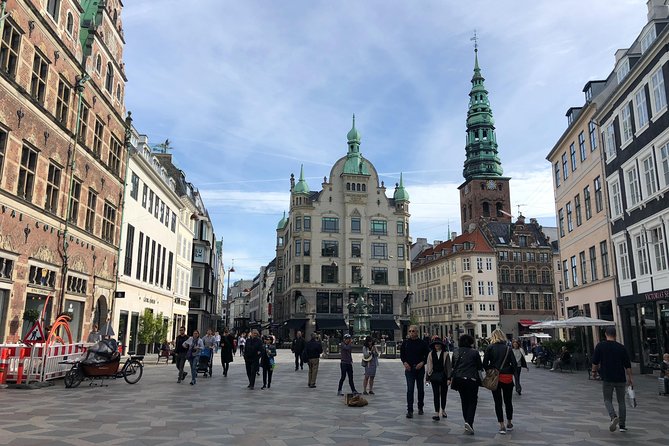
This is one of the most “only-in-Copenhagen” moments. The tour includes Amalienborg Palace, and the changing of the Royal Guard is listed for 12:00 noon daily.
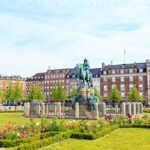
Amalienborg is built as four identical palaces around the central square, each tied to a different branch of the royal family. The statue of King Frederik V from 1771 anchors the area.
If you go, watch the whole choreography, not just the marching. The ceremony is about order and tradition, and it’s also a great way to experience how the royal family lives inside an active city.
What’s especially useful from a tour like this is the setup. Without local guidance, people often arrive too late, end up at the wrong angle, and feel like they missed the best parts. Here, the guide’s navigation helps you land in the right spot and know what you’re looking at.
Rosenborg Castle area: a Renaissance reminder in a modern city
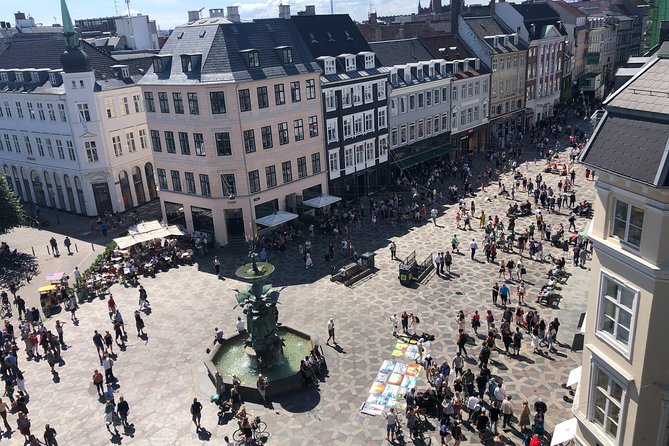
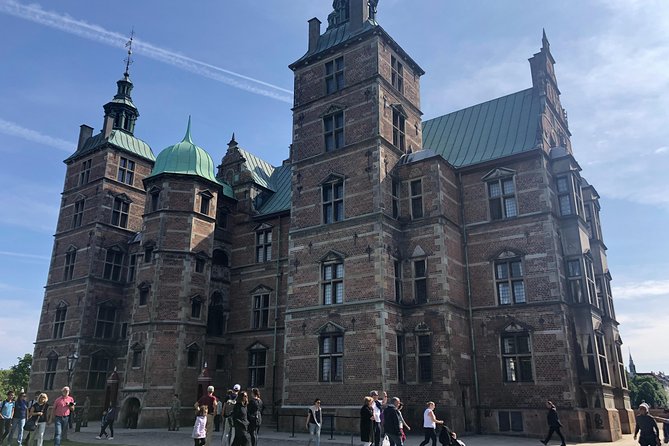
The next segment points you toward Rosenborg Castle. The key idea is simple: it’s a Renaissance castle that began as a country summerhouse in 1606 under Christian IV’s long run of building projects.
Even if your time inside is limited, the value is in seeing how royal power left a physical mark across centuries. Rosenborg is one of those places where you can look at it and immediately understand why Copenhagen attracts history lovers.
Church of Our Lady (Copenhagen Cathedral): the big events and the famous sculptures
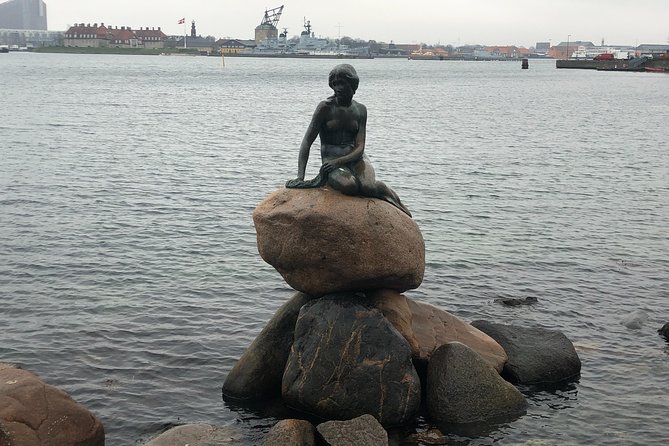
One of the tour’s strongest stops is Church of Our Lady, also known as Copenhagen Cathedral.
This church has layers. The foundation stone is connected to King Frederik VI in 1817, with the solemn consecration on Whitsunday in 1829. The site itself has held religious structures since Bishop Absalon, a founder of Copenhagen, and an earlier church stood there around 1200 at the highest point in town.
The tour also connects the cathedral to major Danish moments, including:
- In 1363, where Margrethe (later Queen Margrethe I) was given in marriage by her father, Valdemar Atterdag,
- The 1855 funeral of Søren Kierkegaard,
- And a modern royal wedding in 2004, when Crown Prince Frederik and Mary Donaldson married here.
Inside, you’ll hear about Thorvaldsen’s sculptures, including Christ and the twelve apostles. There’s also an interesting detail: the tradition replaces Judas with Paul, so the composition carries a clear symbolic structure.
Important note before you bank on a full interior visit: there’s at least one real-world warning from past guests. On a Sunday, one group found the church wasn’t open until after the tour had ended. If you’re visiting on a day when opening hours might change, you might want to plan a second chance to see the interior later that day.
Old Market and Nytorv: Caritas Well and the city rebuilt after fire
The tour then moves to an iconic pairing of squares: the old market area (often referred to as Gammeltorv) and Nytorv, which together form a shared space along Strøget.
This is where you get that Copenhagen feels planned, then rebuilt, then planned again. Most of the buildings around here were constructed after the Great Fire of 1795, in a Neoclassical style.
A standout feature is Caritas Well, a Renaissance fountain erected by King Christian IV in 1610. It’s the kind of detail you might skip if you’re rushing for photos, but it’s exactly the sort of anchor a guide can help you notice.
There’s also the Copenhagen Court House façade dominating the scene. It served as the city hall from 1815 to 1905. So as you stand here, you’re not only looking at pretty architecture. You’re in the administrative heartbeat of older Copenhagen.
City Hall Square (Radhuspladsen) and why it matters to the walk
Next you’ll come to Radhuspladsen, the City Hall square. The stop is brief, but it acts like a transition from the older civic core toward Tivoli.
This kind of “one more landmark” stop is underrated. It prevents the walk from feeling like a straight sprint from royal palaces to an amusement park. You get a better sense of where the city’s official life sits.
Tivoli Park: general admission included, and the stop that sets you up to enjoy
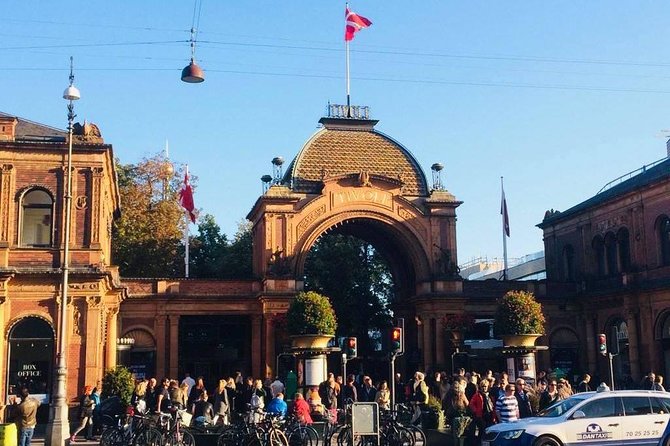
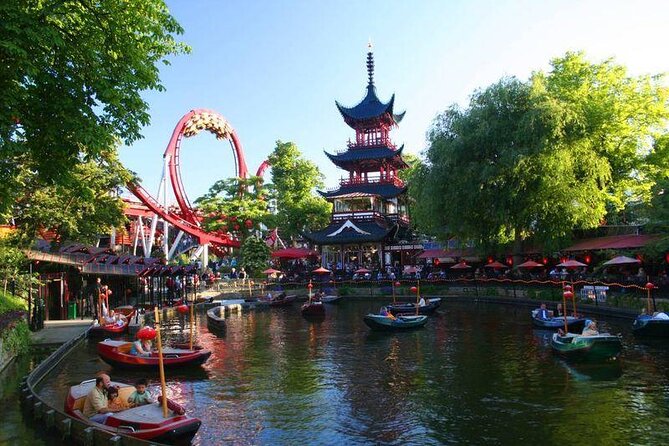
The final push ends at Tivoli Park on Vesterbrogade. You also get an included entrance ticket: general entry for +8 years old.
Two things make the Tivoli inclusion feel practical:
- The tour doesn’t end with a bus drop-off. It guides you to the park and helps you enter.
- The tour stop includes a moment to see the main entrance and hear a bit of park history, so your first minutes inside aren’t total guesswork.
Also, Tivoli is a place where you don’t need to do everything to have a great time. You can wander, snack, take photos, or just sit and people-watch. The best value of this kind of guided ending is that you can split your time: keep the morning focused, then take the afternoon at your own speed.
What kind of guide experience should you expect?
This tour is listed as having a local guide, and the results can vary depending on the guide’s comfort level with the exact route and day schedule.
The good news: names like Felipe and Viviane have been specifically praised for making the walk feel informed and for handling photo stops patiently. That’s a big deal in Copenhagen, where the buildings invite you to pause.
The caution: at least one past guest felt the guide wasn’t native to Denmark, struggled with some details, and had uncertainty about the cathedral stop. Another guest described a guide who seemed rushed and didn’t slow down much for the group. That doesn’t mean your tour will be like that, but it does mean you should go in expecting a lively pace and be ready to ask questions early if something matters a lot to you.
Who this tour fits best
This is a strong match if you:
- Have limited time and want the core sights without planning a route
- Like learning what you’re seeing in plain language
- Want Tivoli included so your afternoon is already covered
- Care about royal history and the feel of Copenhagen’s center
It’s less ideal if you:
- Want long indoor time at the cathedral or want to linger at every square
- Plan a day where you can’t adjust if a church’s opening hours don’t line up with the tour timing
- Prefer total DIY freedom with no structured stops
My practical call: should you book it?
Yes, you should book this tour if your main goal is seeing the best of Copenhagen’s core in a short window and getting to Tivoli without added ticket hassle.
It’s especially worth it when you value two things: a guide-led “what matters and why” walk and a Tivoli entry included finish. If you’re visiting specifically for the Church of Our Lady interior, I’d still plan a backup for later in the day, just in case opening hours don’t sync with the tour timing on your date.
If you like Copenhagen fast, organized, and fun, this one is a good use of your morning.
FAQ
How long is the walking tour?
It’s listed as about 2 hours.
What does the tour cost?
The price is $79.30 per person.
Where is the tour meeting point?
The meeting point is Højbro Plads (Højbro Pl., 1200 København, Denmark).
Where does the tour end?
It ends at Vesterbrogade 3, 1630 København V, at Tivoli Park.
What’s included with the price?
A local guide is included, plus Tivoli Park general admission entry for ages +8.
What’s not included?
Coffee and/or tea aren’t included.
Is the tour ticket mobile?
Yes, it includes a mobile ticket.
Is the changing of the Royal Guard included?
Yes. The changing of the Royal Guard at Amalienborg is listed for 12:00 noon daily, and it’s part of the tour.
More Tours in Copenhagen

More Tour Reviews in Copenhagen
More Highlights & Hidden Gems


Fresh Off the Cobbles: The Newest Copenhagen Reviews









Copenhagen Hygge, Highlights & Hidden Gems, compared.
 ★ 5.0Private Walking Grand Tour of CopenhagenFrom $3423,953 reviews
 ★ 5.0Copenhagen Highlights Walking TourFrom $402,324 reviews
 ★ 4.8Highlights 3 Hour Bike Tour with a Local GuideFrom $622,312 reviews
 ★ 5.0Politically Incorrect Private Highlights Walking TourFrom $3741,244 reviews
 ★ 4.73-Hour City Highlights Bike Tour with GuideFrom $551,239 reviews
 ★ 5.0Copenhagen Highlights 3 Hour Bike Tour with local GuideFrom $611,125 reviews
 ★ 4.7Group Walking Tour – City Highlights – 2 HoursFrom $391,088 reviews
 ★ 5.03-hour Copenhagen City Highlights Bike TourFrom $54757 reviews
Browse the lists this tour appears in