
Reviewed · COPENHAGEN HYGGE, HIGHLIGHTS & HIDDEN GEMS
Copenhagen: Hygge & Highlights Walking Tour with Local Guide
A good walk can feel like a shortcut to the soul of a city. This Copenhagen Hygge & Highlights tour strings together the big landmarks and the small, character-filled side streets that make Danish life feel human, not museum-label.
I especially like the mix of contrasts: Nyboder’s yellow naval houses on one end, and the calmer, older charm of alleys like Pistolstræde on the other. I also like that it stays a relaxed, personal pace, so you can ask questions instead of just hearing the next fact on a timer.
One thing to weigh: it’s a walking tour built for outdoors, so expect a solid amount of pavement time, weather permitting, and plan around a route that prioritizes sights you can see from the outside.
In This Review
- Key highlights worth planning around
- Copenhagen Hygge & Highlights: the route that actually makes sense
- Starting at Sankt Pauls Kirke (Gernersgade 33) and why the meeting point matters
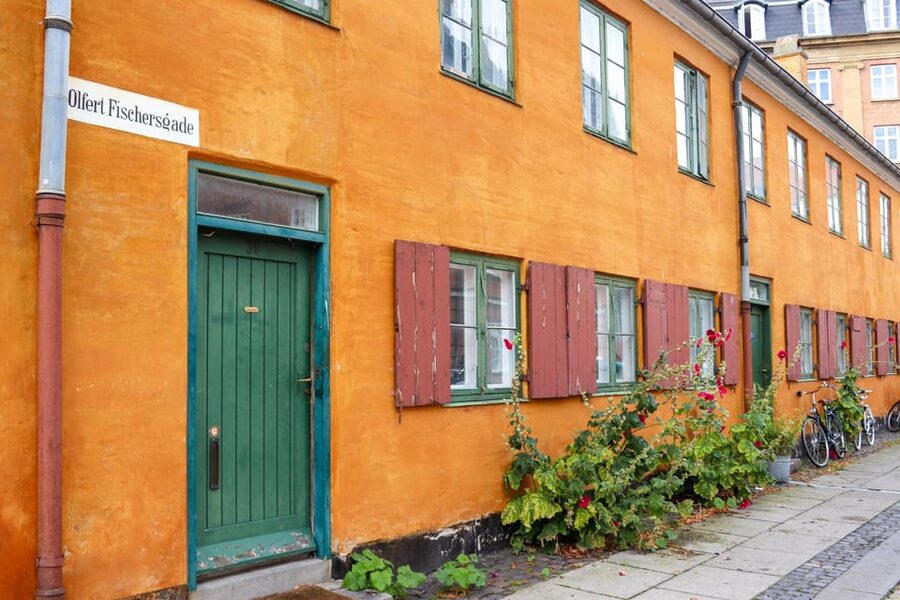
- Nyboder: where Copenhagen’s naval past still shows in the yellow houses
- Frederik’s Church (Marmorkirken): the Marble Church’s dome and the Roman link
- Amalienborg Palace square: royal history plus a real chance to watch the Guard
- Nyhavn break: color, boats, and Hans Christian Andersen’s shadow
- Kongens Nytorv: the largest square and how it became a meeting point
- Strøget: Europe’s long pedestrian street and how to use it wisely
- Pistolstræde: a narrow cobblestoned alley that cools the pace
- Rosenborg Castle approach via Kongens Have: green space with built meaning
- Round Tower: Europe’s oldest functioning observatory (and what it was for)
- Gråbrødretorv: finishing in a square that feels like a local reset button
- Price and value: what $61 buys you in real terms
- The guide factor: when storytelling makes streets click
- Who this tour fits best (and who should pick something else)
- Practical tips so the 2.5 hours feel easy
- Should you book this Copenhagen Hygge & Highlights tour?
- FAQ
- How long is the Copenhagen Hygge & Highlights walking tour?
- How big is the group, and is there an English guide?
- Where does the tour start and where does it finish?
- Are entrance fees included for churches or other attractions?
- Does the tour run in bad weather?
- Is it possible to cancel and get a refund?
Key highlights worth planning around
- Small group energy (up to 10): easier questions, less rushing, more back-and-forth.
- Nyboder to Nyhavn to Strøget: you cover the city’s most recognizable “postcard” areas without doing them in a boring loop.
- Frederik’s Church details: you get the story behind the Marble Church’s striking dome inspired by Rome.
- Royal Copenhagen in the open: Amalienborg’s square history and a chance to see the Changing of the Guard.
- Old-meets-new city rhythm: long pedestrian shopping street (Strøget) then tucked-away courtyards (Pistolstræde).
- Finish in a local-feeling square: Gråbrødretorv is a strong end point for regrouping and grabbing a drink.
Copenhagen Hygge & Highlights: the route that actually makes sense
This tour is built for the first-time Copenhagen visit. In 150 minutes, you get a guided path through the city’s best-known sights while also slipping into lesser-seen corners that you’d miss if you were just wandering with a map app. The goal is simple: help you understand what you’re looking at, then give you enough local direction to keep exploring after.
You’ll cover a lot of ground, but it’s not a speed-run. The structure is stop-and-walk with short guided moments, a break by the harbor, and time to ask questions. That balance matters because Copenhagen can feel orderly at first—this tour helps you notice the story underneath the neat facades.
More highlights, hidden corners and a little hygge on foot



Starting at Sankt Pauls Kirke (Gernersgade 33) and why the meeting point matters
You start in front of Sankt Pauls Kirke at Gernersgade 33. It’s a good “launch pad” because it puts you on the right side of town for the route that follows: you head toward the city center sights first, then work your way through the royal and historic areas, ending back in a lively, walkable square.
Practically, it also means you’re not wasting your energy on a hunt for an exact landmark. Just arrive with a little cushion in your schedule, then get ready for shoes-on pavement time.
Nyboder: where Copenhagen’s naval past still shows in the yellow houses

Your first named stop is Nyboder, the 17th-century district of striking yellow houses built for Danish naval personnel. What you get here is context. The buildings aren’t just pretty—they’re a window into how King Christian IV thought about housing, work, and community tied to national service.
This is one of those spots where a guided walk changes everything. Without the explanation, you might clock the color and move on. With it, you start seeing layout and design choices as hints about how people actually lived in a working community.
Frederik’s Church (Marmorkirken): the Marble Church’s dome and the Roman link
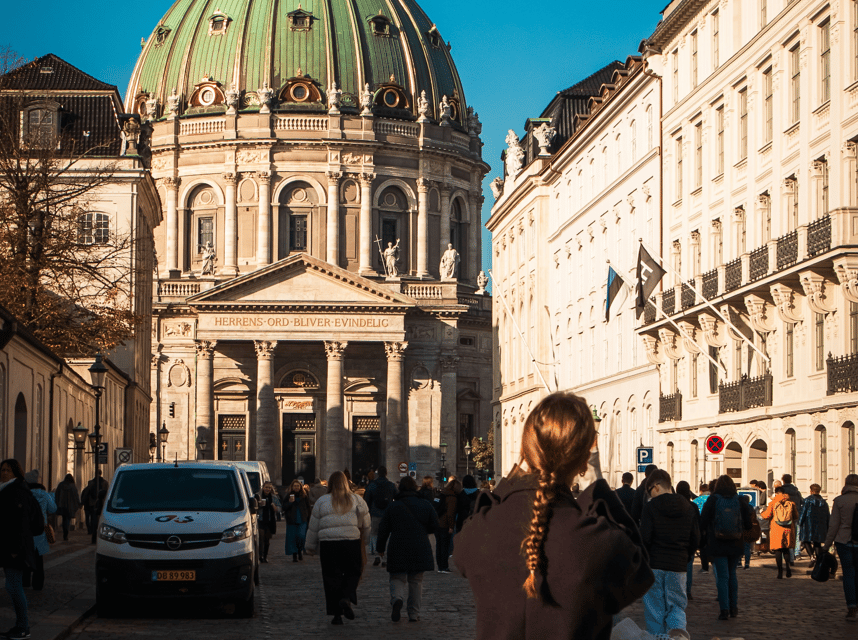
Next comes Frederik’s Church, also called Marmorkirken, with its impressive dome. The dome’s inspiration is tied to St. Peter’s Basilica in Rome, and the tour gives you the story behind the scale and symbolism of that choice.
Another plus: you hear about the long build journey—nearly 150 years—so the church feels less like a finished “attraction” and more like a project that stretched across generations. If you like architecture, this is a high-payoff stop.
Amalienborg Palace square: royal history plus a real chance to watch the Guard
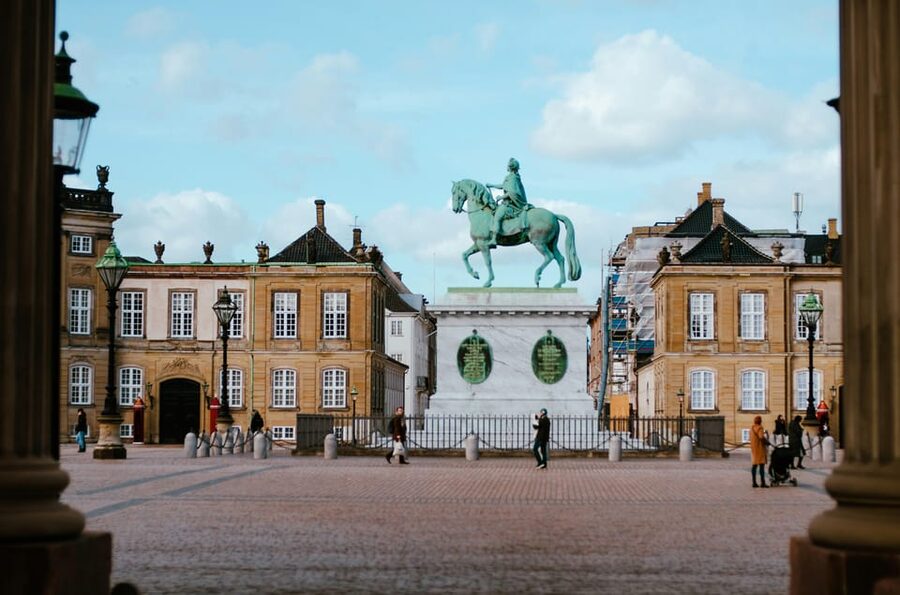
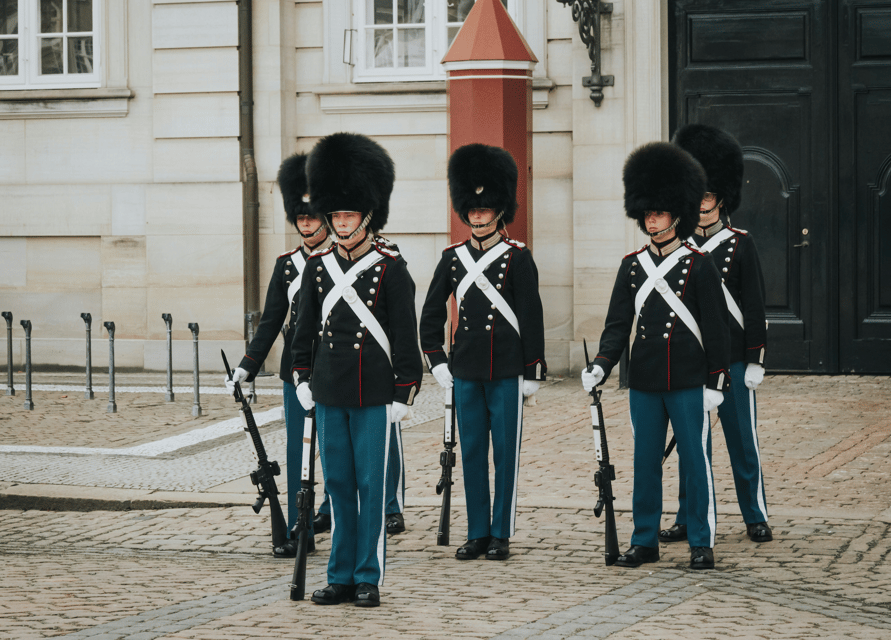
From there you walk to Amalienborg, the residence of Denmark’s royal family. The emphasis is on the central square—where you may get the chance to see the Changing of the Guard.
Even if you don’t catch the guard moment, the tour still helps you read the space. Denmark’s monarchy can feel distant unless someone connects it to specific eras and named royal figures, and that’s exactly what your guide is aiming to do here.
Let a Copenhagen local lead the way






Nyhavn break: color, boats, and Hans Christian Andersen’s shadow
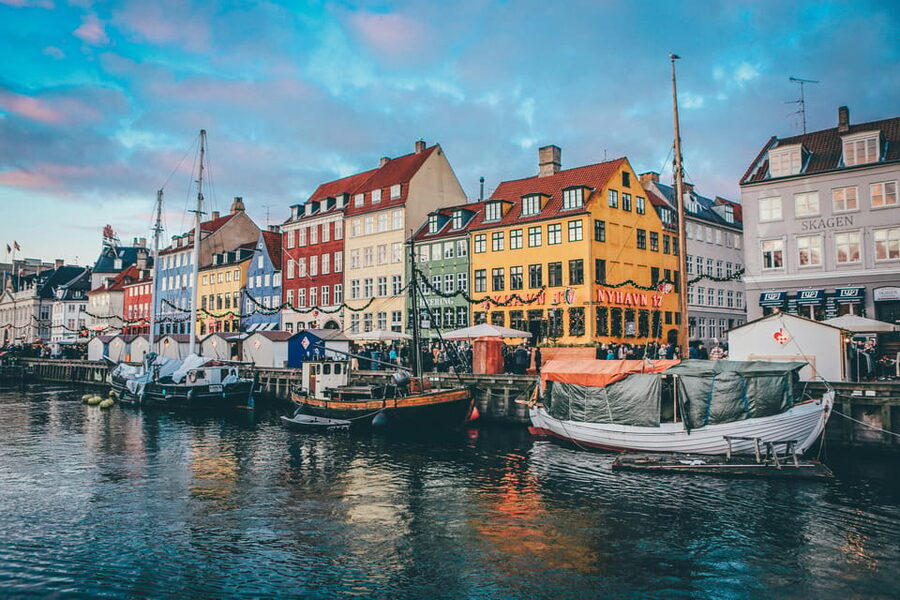
Then comes Nyhavn, Copenhagen’s iconic harbor lined with colorful buildings and wooden ships. You get a short break here—an actual pause to look around, reset, and take photos without feeling like you’re being marched along.
What makes Nyhavn more than a picture stop is the human thread. You’ll hear stories that link sailors and merchants to the area, including Hans Christian Andersen, who lived here. That kind of detail turns the waterfront from “pretty” into “oh, this place shaped people’s lives.”
Kongens Nytorv: the largest square and how it became a meeting point
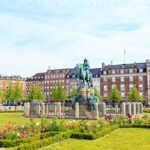
You continue to Kongens Nytorv, described as the largest square in Copenhagen. It’s surrounded by major buildings, including the Royal Danish Theatre and Hotel d’Angleterre, so the square feels important even before you hear any facts.
The tour focuses on why this kind of place matters: meeting point, movement hub, and a stage for public life over centuries. If you’ve ever wondered why some cities feel socially centered around a square, this stop is a clear example.
Strøget: Europe’s long pedestrian street and how to use it wisely
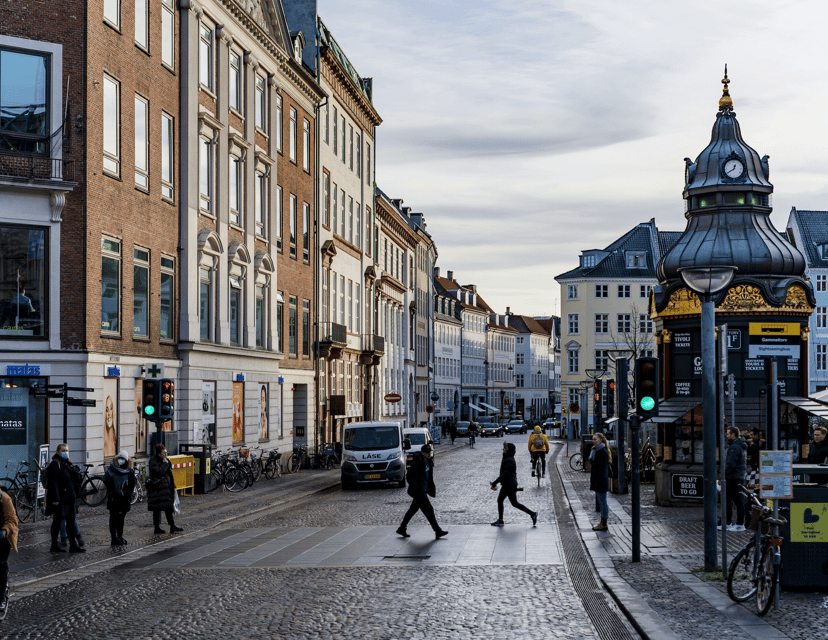
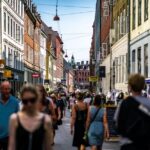
Next up is Strøget, known as Europe’s longest pedestrian street. This is the “you’re in Copenhagen now” corridor: shops, cafés, and street performers keep the energy up.
The smart move here is to understand your strategy. Strøget can tempt you into shopping-trap mode, so use the guided walk to learn where you are, then decide what you truly want to do next—coffee, a quick snack, or simply a slower stroll for people-watching.
Pistolstræde: a narrow cobblestoned alley that cools the pace
After the wider streets, you go to Pistolstræde, a narrow, cobblestoned alley with colorful, quaint courtyards. This is the tour’s pressure release valve. It’s quieter, older-feeling, and full of small visual surprises that reward slow attention.
This is also the stop that makes the whole tour feel worth booking. If you only did the famous spots, Copenhagen can start to feel like a checklist. Pistolstræde is where it starts to feel lived-in.
Rosenborg Castle approach via Kongens Have: green space with built meaning
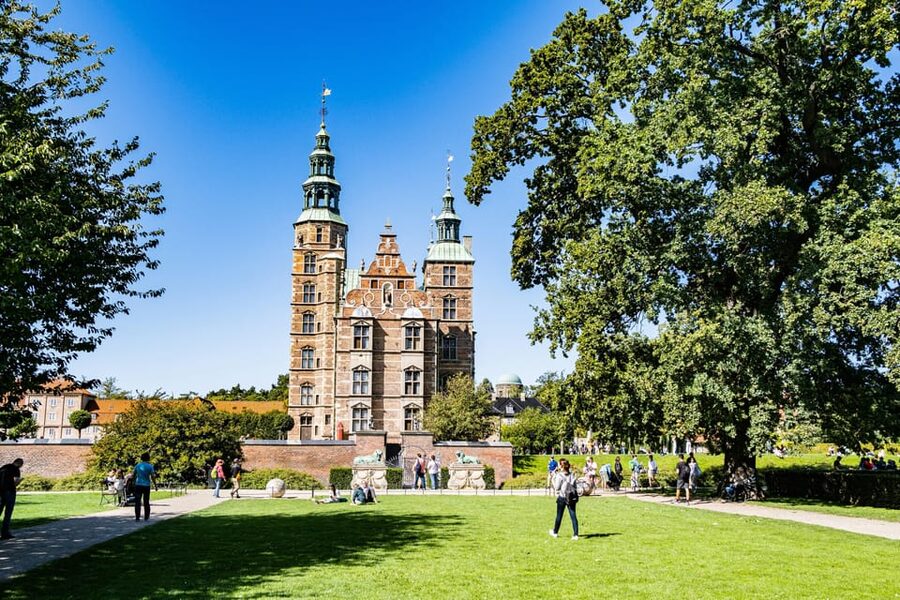
You then walk through Kongens Have (King’s Garden) toward Rosenborg Castle. The garden itself matters because it breaks the “city wall to city wall” feeling you can get while sightseeing. It also gives you breathing room before the next big landmark.
Rosenborg Castle lands as a 17th-century Renaissance castle, and the tour uses that to connect the look of the building with the era that produced it. If you enjoy history, this stop scratches that itch without forcing you into a museum schedule.
Round Tower: Europe’s oldest functioning observatory (and what it was for)
Finally, you reach the Round Tower. This is one of those places where the building design tells a story, because it has been an observatory and a library for scholars. You’ll learn about the tower’s original use and why it was important in the 17th century.
Since this tour is structured as a walking experience without paid entrance time, treat this stop as a learning moment. You’re getting the meaning behind the structure, not a ticket-based deep dive.
Gråbrødretorv: finishing in a square that feels like a local reset button
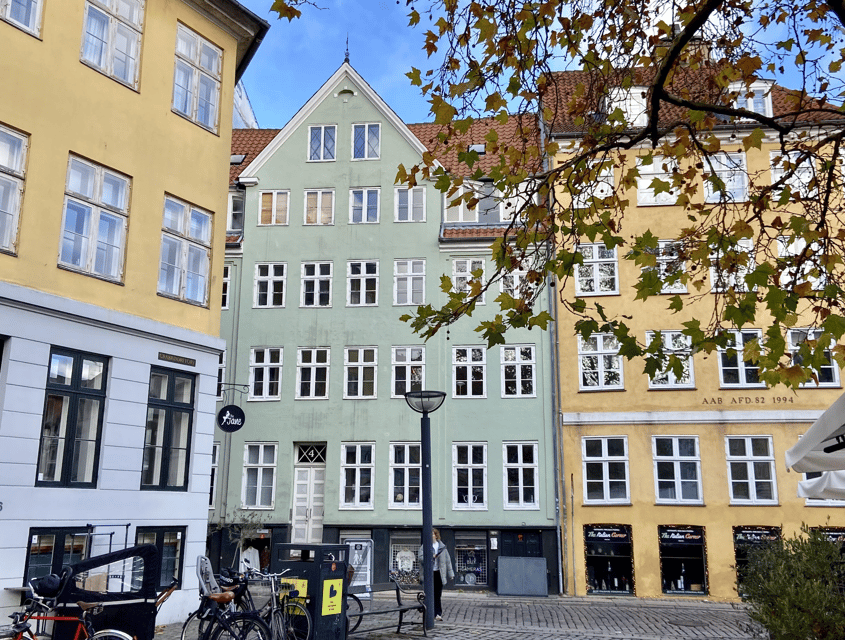
You end at Gråbrødretorv, a picturesque square with colorful houses and a relaxed, lived-in vibe. Ending here is practical: it’s central, it’s easy to pivot from sightseeing to food or a café break, and it doesn’t feel like you finish trapped far from your next plan.
It’s a nice capstone because it gives you the sense of a “day in the city” rather than a half-hour sprint of landmarks.
Price and value: what $61 buys you in real terms
At $61 per person for 150 minutes, the real value isn’t just the route—it’s the guide time and the small-group size. With a maximum of 10 participants, you’re more likely to get personal answers instead of nodding along with a distant voice.
Also important: there are no entrance fees included. That can be a drawback if you specifically want ticketed museum time or indoor viewing. But as a trade-off, you’re getting a focused outdoor orientation that helps you decide later what’s worth paying for on your own.
If you’re the type who wants to walk away with a clear sense of where everything is and what you actually saw, this price makes sense. If you want lots of interior access, you may still enjoy it but you’ll want to plan separate paid visits afterward.
The guide factor: when storytelling makes streets click
The guides mentioned in strong feedback include Laura and Hamid, and what stands out is the way they connect history and daily life. You’ll see this during stops where the facts could be dry—like naval housing or a church’s slow build—yet the tour keeps it readable and question-friendly.
That matters because Copenhagen can be visually impressive but emotionally distant if you only skim it. A good guide turns “I see a place” into “I understand why it exists,” and that changes how you walk the city afterward.
Who this tour fits best (and who should pick something else)
This is a great match if you:
- Want a first-pass Copenhagen walking tour that mixes major sights with quieter corners
- Prefer an English-speaking guide and a relaxed pace you can keep up with
- Like photos, but also care about the story behind what you’re photographing
It may be less suitable if you:
- Have mobility limitations, since it isn’t designed for that
- Get cranky with lots of walking, even though the stops are frequent and the pace stays manageable
- Are hoping for lots of indoor ticket access, since entrances aren’t part of what’s included
Practical tips so the 2.5 hours feel easy
- Bring comfortable shoes. Cobblestones can slow you down if your footwear isn’t up to it.
- Pack water and a light layer. Weather changes fast, and the tour runs in all weather conditions.
- Plan for “outdoor-only” sightseeing. If you want inside views that require tickets, treat this as the orientation part of your day.
Should you book this Copenhagen Hygge & Highlights tour?
If it’s your first time in Copenhagen and you want a smart route that balances the headline locations with small alley details, I think this tour is a good buy. The small group size, the chance for stories behind real places, and the way it ends in an easy-to-use central square make it a strong starting block.
Skip it only if you’re mostly chasing paid-entry interiors or if your mobility needs make a walking-heavy outing difficult. Otherwise, you’ll come away with better bearings, more context, and a short list of what to do next—without turning your day into a checklist.
FAQ
How long is the Copenhagen Hygge & Highlights walking tour?
The tour lasts 150 minutes (about 2.5 hours).
How big is the group, and is there an English guide?
It’s a small group with a maximum of 10 participants, and the tour guide speaks English.
Where does the tour start and where does it finish?
The tour meets in front of Sankt Pauls Kirke at Gernersgade 33. It finishes at Gråbrødretorv.
Are entrance fees included for churches or other attractions?
No. Entrance fees are not included, and the tour is designed as outdoor-only.
Does the tour run in bad weather?
Yes. The tour operates in all weather conditions, so dress appropriately.
Is it possible to cancel and get a refund?
Yes. There is free cancellation up to 24 hours in advance for a full refund.
More Tours in Copenhagen

More Tour Reviews in Copenhagen
More Highlights & Hidden Gems

Fresh Off the Cobbles: The Newest Copenhagen Reviews










Copenhagen Hygge, Highlights & Hidden Gems, compared.
 ★ 5.0Private Walking Grand Tour of CopenhagenFrom $3423,953 reviews
 ★ 5.0Copenhagen Highlights Walking TourFrom $402,324 reviews
 ★ 4.8Highlights 3 Hour Bike Tour with a Local GuideFrom $622,312 reviews
 ★ 5.0Politically Incorrect Private Highlights Walking TourFrom $3741,244 reviews
 ★ 4.73-Hour City Highlights Bike Tour with GuideFrom $551,239 reviews
 ★ 5.0Copenhagen Highlights 3 Hour Bike Tour with local GuideFrom $611,125 reviews
 ★ 4.7Group Walking Tour – City Highlights – 2 HoursFrom $391,088 reviews
 ★ 5.03-hour Copenhagen City Highlights Bike TourFrom $54757 reviews
Browse the lists this tour appears in