Reviewed · COPENHAGEN
Life on Copenhagen’s Streets: Philip’s crazy life
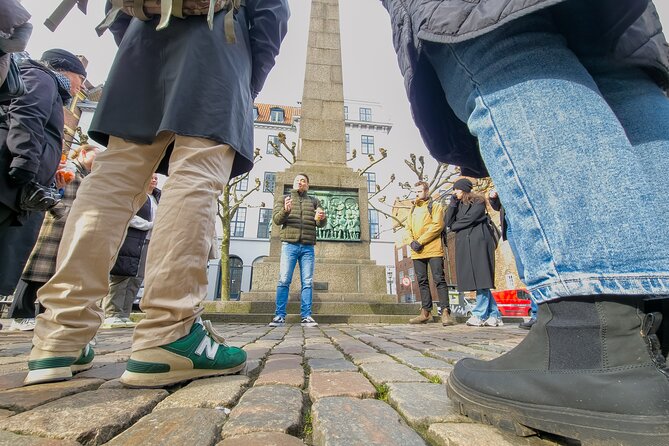
A walk through Copenhagen, with a life attached. This 1½-hour street experience uses everyday locations as a backdrop for Philip’s candid story of choices, addiction, and survival. I love the direct storytelling that feels human, not staged, and I like that the route moves you through real city spaces rather than just pointing at them.
What makes it especially worthwhile is the way Philip paces the walk: short stops, clear context, and lots of room for questions along the way. You’re in an English tour with a small group size (up to 20), which helps the whole thing stay personal and focused instead of turning into a lecture with nobody speaking up.
One caution: this is not light sightseeing. The themes include drug abuse, homelessness, and crime, and Philip does not sugarcoat the hard parts. If you want purely scenic and funny, you might want a different walk.
In This Review
- Key highlights worth your time
- Philip’s crazy life turns Copenhagen streets into meaning
- Nørreport Station: starting in Denmark’s busiest flow
- Church of Our Lady (Vor Frue Kirke): seeing the cathedral without going in
- Gammeltorv: the old square where stories can age well
- Studiestræde: shops, cafés, bars, clubs—and real social pressure
- Rådhuspladsen and City Hall: ending with a big public frame
- Price and value: what $30.62 buys you here
- Getting around and what the walk feels like
- Who this walk is perfect for (and who should pass)
- A balanced take on Philip’s storytelling style
- Should you book Life on Copenhagen’s Streets?
- FAQ
- What language is the tour offered in?
- How long is the experience?
- Where does the tour start and end?
- What are the main stops on the route?
- Is there an admission ticket included for any stops?
- How many people are in the group?
- Do I need a paper ticket?
- Is the tour cancellable?
- What if the minimum number of travelers isn’t met?
- Is the tour accessible in terms of service animals and getting there?
Key highlights worth your time
- A real, first-person story in the middle of ordinary Copenhagen (not a staged history lecture)
- A small group (max 20) that makes questions feel normal
- Smart “stop-and-sense” route through Nørreport, Gammeltorv, Studiestræde, and City Hall Square
- Tough themes handled with a focus on reaching out and rebuilding
- English narration with a guide named Philip (Phillip Larsen in at least one account)
Philip’s crazy life turns Copenhagen streets into meaning
Copenhagen looks polished from a distance. But on this walk, you start seeing how a city can hold both beauty and trouble at the same time. Philip’s narrative connects street corners to decisions—sometimes small ones, sometimes life-altering ones—so the city stops feeling like a postcard and starts feeling like a place where people actually live.
I like that the story is told with honesty that lands. It’s not only about the darkest moments. There’s also a steady thread about what help can look like, and why reaching out matters. One reason this walk works is that Philip doesn’t just throw heavy topics at you; he also answers questions in a way that keeps the conversation grounded.
And yes, the walk is timed like a city hike: multiple short stops, then moving again. That pacing helps you keep your footing mentally, not just physically. You get the story in chunks, like turning pages instead of staring at one long chapter.
Weighing your options? Here is how this one lines up next to the Copenhagen tours people book most.



Nørreport Station: starting in Denmark’s busiest flow
You begin at Nørreport Station at the meeting point near Nørre Voldgade 82. This station is Denmark’s busiest, with roughly 250,000 travellers each day, so it’s a strong starting choice. You’re standing in a real transit hub while the guide sets the frame for how Copenhagen can feel both fast and anonymous.
This first segment matters because it puts your brain in motion. Once you’re in that flow, the later contrasts—old square, church stop, shopping and nightlife street, then City Hall—make more sense. You’re not just touring landmarks. You’re learning a pattern for how Philip reads the city.
The stop is about 15 minutes, and it’s long enough for orientation without dragging. In practice, this is where you’ll pick up the tone of the walk: thoughtful, personal, and focused on choices rather than vague storytelling.
Church of Our Lady (Vor Frue Kirke): seeing the cathedral without going in
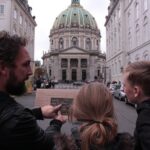
Next comes the Church of Our Lady (Vor Frue Kirke) area—Copenhagen Cathedral for many people. Important detail: you don’t enter the church. That’s helpful if you’re hoping for a smooth walking tour instead of mixing in ticket lines and quiet rules.
Even from the outside, the cathedral setting adds weight. Lutheran cathedrals tend to feel solemn, and that mood fits the serious direction of the story. You get a sense of place: this is still Copenhagen, still central, still normal-looking—while the narrative points toward the “shadow side” that can exist alongside everyday life.
This stop is also kept to about 15 minutes. If you were hoping for inside time or a longer architectural explanation, you won’t get that here. But if you want story-first walking, this structure keeps you on track.
Gammeltorv: the old square where stories can age well
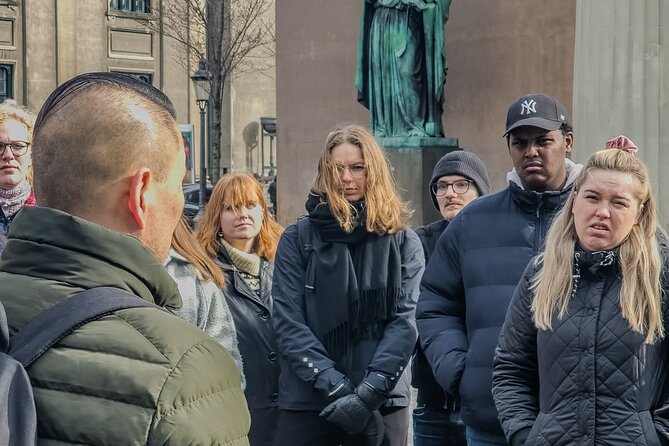
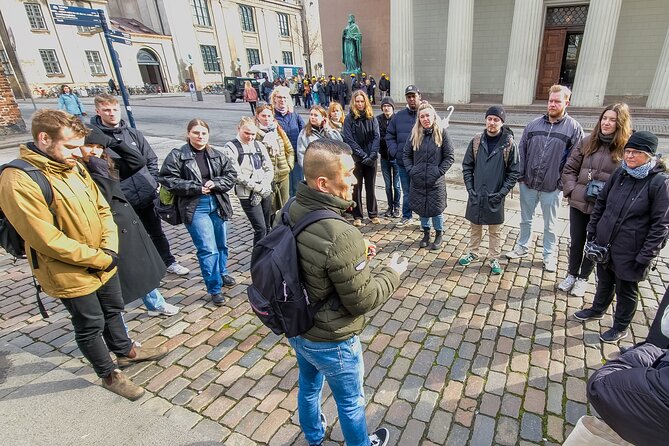
Then you hit Gammeltorv, the old square. It’s one of the oldest public squares in Copenhagen, and that age changes the mood. When a city has layers, people tend to tell stories differently—less like a tourist and more like someone explaining how things became the way they are.
This is also a good contrast stop. After transit intensity and a cathedral pause, the square gives you a slower, more “human-scale” moment. You’re not just walking; you’re absorbing the idea that the city’s history and its current life share the same space.
The practical time here is short (around 15 minutes), which keeps the tour moving without turning the day into a long sit-down. You’re learning the route rhythm: brief scenes, then back to walking.
Studiestræde: shops, cafés, bars, clubs—and real social pressure
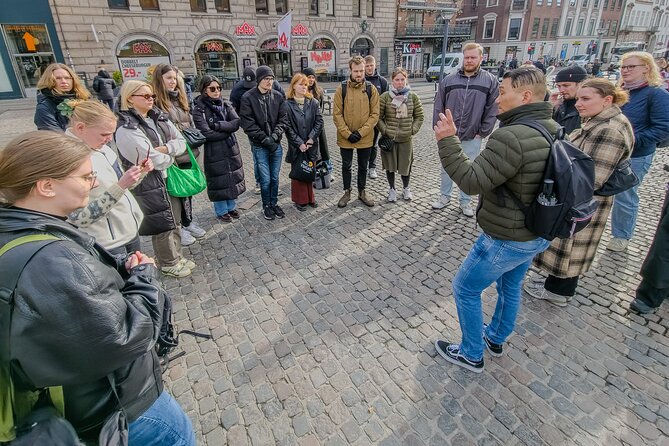
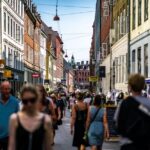
Next is Studiestræde, a street in the heart of Copenhagen. This is where the city looks like what many people imagine when they think of central Copenhagen: shops, cafés, bars, clubs, and restaurants in close range.
The value of a stop like Studiestræde is that it connects setting to psychology. Philip’s story isn’t only about where something happened. It’s also about what the environment can do—temptations, coping, social pressure, and the way choices can snowball when help is hard to reach.
This segment stays around 15 minutes. You get a short, focused experience of the street rather than a full wandering session. For me, that’s part of the appeal: you’re not trying to do everything in one afternoon. You’re doing one guided narrative well.


Rådhuspladsen and City Hall: ending with a big public frame
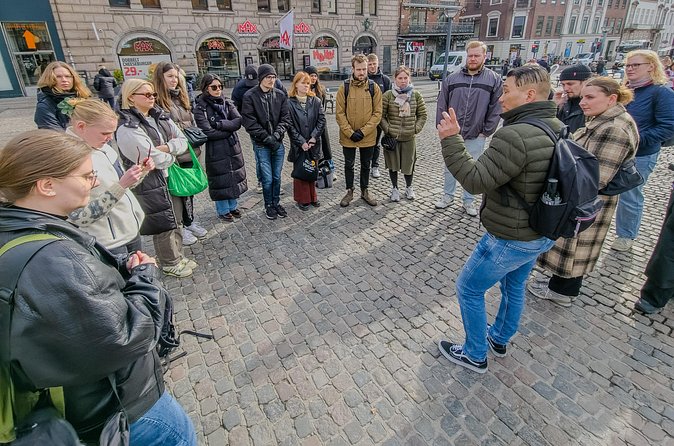
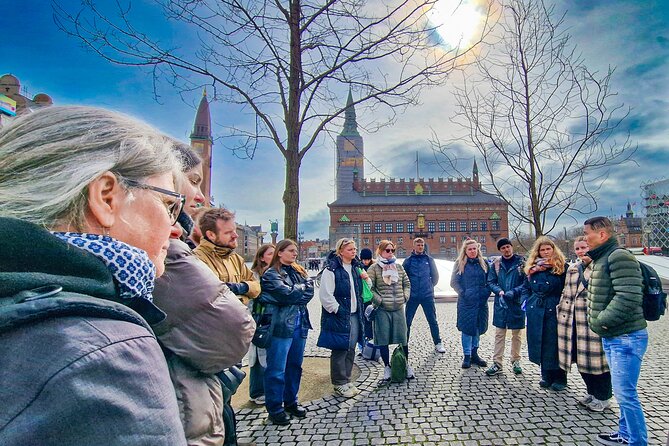
The final stop is Rådhuspladsen (City Hall Square), dominated by the Copenhagen City Hall, built in the early 20th century. The square works as a strong finish point because it’s open and prominent—very “public.” After hearing about private struggles, it’s a reminder that society is still the setting where help, rules, and community play out.
You end near the Metro at Rådhuspladsen, which is a practical win if you want to keep moving afterward. Also, finishing at a place like City Hall Square makes the tour feel complete. You go from dense transit, to historic spots, to lively street life, then back to a central civic space.
Timing-wise, plan on roughly 1½ hours, but there can be a bit of flexibility. Some experiences run a little longer when questions come in and the conversation stays alive. If you’re tight on schedule, it’s smart to build in a small buffer.
Price and value: what $30.62 buys you here
At $30.62 per person for about 1½ hours, you’re paying for more than footsteps and street corners. You’re paying for Philip’s lived story—told in a way that’s meant to change how you see the city, not just how you photograph it.
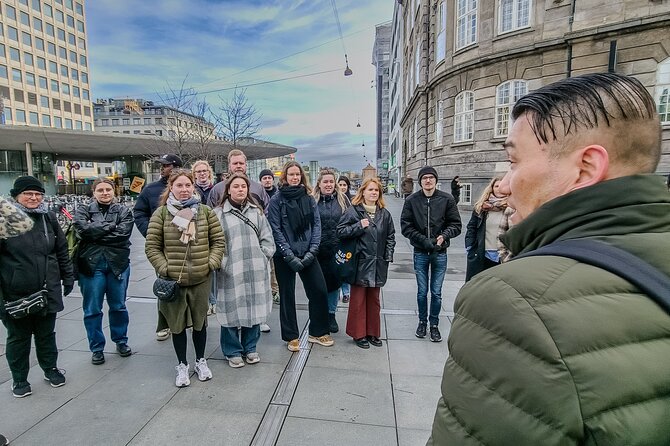
This also isn’t an enormous-group tour. With a maximum of 20 people, the guide can keep the experience conversational. For a story like this, that small size matters. It keeps the atmosphere from turning clinical.
And because you’re walking through meaningful Copenhagen locations—Nørreport, Gammeltorv, Studiestræde, and City Hall Square—you’re also getting orientation. Even if you don’t memorize every detail, you’ll remember the shape of the center. That’s a real value-add for your later self-guided wandering.
If your travel style is built around hearing human stories with context, this price feels fair. If you’re only after classic tourist highlights, you may decide it’s not your best spend.
Getting around and what the walk feels like
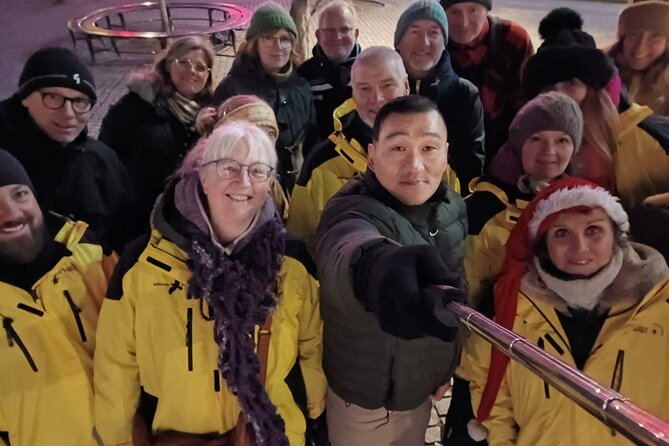
This tour is designed for walking, and it follows a sequence of central stops that stay close enough to manage in about 1½ hours. You don’t need a car. In fact, it’s near public transportation, and you start and end in major transit areas, which makes it easier to stitch into a day of sightseeing.
One neat detail: service animals are allowed. If that matters for you, it’s good to know up front. Also, the tour notes that most people can participate, which usually means the pace is approachable for a typical walking holiday.
What you should consider most is not physical difficulty—it’s emotional tone. The narrative covers dark territory, and Philip handles it with a directness that can feel intense. If you’re sensitive to discussions involving addiction, crime, or homelessness, you’ll want to think about your own comfort level before booking.
Who this walk is perfect for (and who should pass)
This is ideal if you like tours that explain a city through people. You’ll probably enjoy it if your travel goal isn’t only to collect sights but also to understand how decisions and systems shape lives. It also fits well if you’re traveling with students or a younger group—because the story clearly points toward consequences and the importance of reaching out for help.
If you prefer cheerful, top-ten sights with light commentary, then the heavy themes might feel too heavy for an afternoon stroll. Also, if you’re expecting a “cathedrals inside” visit, remember the church stop is outside only.
For most people, though, the balance works because the guide doesn’t leave you in despair. He ties the story to reflection and change—so the experience lands as thought-provoking rather than purely depressing.
A balanced take on Philip’s storytelling style
Philip’s delivery comes across as thoughtful and honest. The most praised aspect is the way the story feels real, including the willingness to talk about parts he isn’t proud of. That kind of candor tends to create trust quickly, which then makes questions easier.
Another key strength: Philip doesn’t just narrate. He mediates the conversation in a way that keeps it respectful and safe. People asking questions doesn’t feel like an interruption—it feels like part of the meaning-making of the walk.
And there’s hope in the middle of the hard parts. That balance matters. You’re not just hearing that bad decisions can crush a life. You’re also hearing that recovery and change are possible, even if the path is tough. That’s why the walk can feel perspective-changing without being numb or preachy.
Should you book Life on Copenhagen’s Streets?
Book it if you want a Copenhagen walk with a human spine. If you like small-group tours, English narration, and meaningful stops that connect to real life, this is a strong choice. It’s also a good fit if you’re the kind of traveler who enjoys asking questions and learning how a city functions beyond the obvious attractions.
Skip it if you’re looking for purely scenic sightseeing, or if emotional heavy topics will spoil your day. You won’t be touring museums on this one—you’ll be walking with a lived story that centers on tough realities.
My final advice: treat this as a guided conversation with Copenhagen as the classroom. If you’re open to that, you’ll likely leave with a different mental map of the city.
FAQ
What language is the tour offered in?
The tour is offered in English.
How long is the experience?
It’s approximately 1 hour 30 minutes.
Where does the tour start and end?
It starts at Nørre Voldgade 82, 1358 København, Denmark, and ends at Rådhuspladsen (next to the Town Hall Square Metro at Rådhuspladsen metro).
What are the main stops on the route?
The walk includes Nørreport Station, the Church of Our Lady (Vor Frue Kirke) stop (without entering), Gammeltorv, Studiestræde, and Rådhuspladsen.
Is there an admission ticket included for any stops?
Some stops are listed as free (Nørreport Station, Gammeltorv, Studiestræde, Rådhuspladsen). The Church of Our Lady stop is not included, and you don’t enter the church.
How many people are in the group?
The tour has a maximum of 20 travelers.
Do I need a paper ticket?
No. It uses a mobile ticket.
Is the tour cancellable?
Yes, you can cancel for a full refund up to 24 hours in advance.
What if the minimum number of travelers isn’t met?
If it’s canceled because a minimum isn’t met, you’ll be offered a different date/experience or a full refund.
Is the tour accessible in terms of service animals and getting there?
Service animals are allowed, and the tour is near public transportation.