Reviewed · COPENHAGEN
Explore Copenhagen’s Art and Culture with a Local
Copenhagen has art in the open air. This small-group walk mixes landmark architecture with street art, museums, and galleries chatter, all guided in English by a local. You’ll move fast enough to feel productive, but not so fast that you miss the details.
I especially like the stop-by-stop focus, from the Stork Fountain at Amagertorv to the end-of-tour drift through Nyhavn’s historic harbor. I also like that the guide connects what you’re seeing to the city’s creative side, including real-world context like Danish food customs you’ll actually notice later.
One drawback to consider: the route is designed for efficiency in about 90 minutes, so you won’t get long, museum-style explanations at every corner. There can also be calmer stretches where you’ll likely want to ask questions if you’re craving nonstop commentary.
In This Review
- Key highlights you’ll feel within 90 minutes
- Why this Copenhagen art-and-culture walk works so well
- Stork Fountain and Amagertorv: where the tour starts to set the tone
- Stine Hvid street art: seeing Copenhagen’s creativity at street level
- Andersen in the gardens: a calmer stop that still tells a story
- Kastellet and the Gefion legend: fortress geometry with myth attached
- Rococo structure, the largest dome in Scandinavia, and Kierkegaard nearby
- The royal opera view: architecture across water
- Nyhavn finish: 17th-century harbor vibes and colorful facades
- What you actually learn: street art, museums, galleries, and Danish food clues
- Price and value for an English walk with a local guide
- How to get the most out of the 90 minutes
- Should you book this Copenhagen tour?
- FAQ
- How long is the Copenhagen art and culture walking tour?
- How much does the tour cost?
- Where does the tour start and end?
- Is the tour offered in English?
- What is the group size limit?
- Is a mobile ticket included?
- What’s included in the price?
- Is food or drinks included?
- What happens if I cancel?
Key highlights you’ll feel within 90 minutes
- Small group, big attention with a maximum of 8 travelers
- Street art spotlight featuring work by Stine Hvid and where to look for more
- Iconic Copenhagen landmarks in a tight walk: Kastellet, the Kierkegaard statue area, and Nyhavn
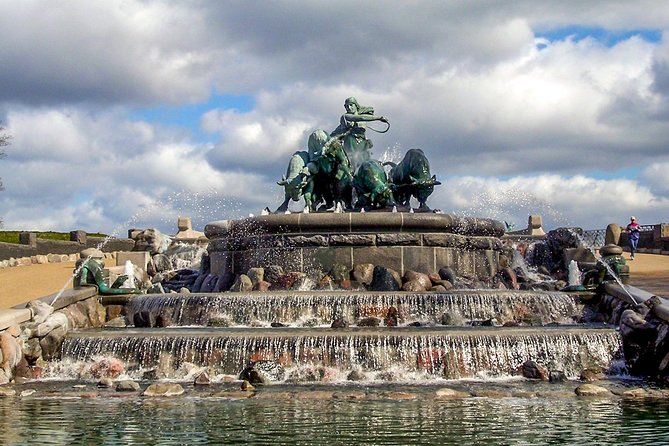
- Myth meets city planning via the Gefion legend connected to the Kastellet fountain
- Architecture lovers get their fix with a Rococo structure and the largest dome in Scandinavia
- Local practical context that goes beyond pictures, including hints about Danish food customs
Why this Copenhagen art-and-culture walk works so well
A lot of Copenhagen tours either feel like a history lecture or like a photo scavenger hunt. This one finds a middle path: you get guided storytelling while you’re still walking through real neighborhoods and squares.
Because the tour runs about 1 hour 30 minutes, it’s perfect for your first day when you want orientation fast. It’s also great if you’re returning and think you already know the center, because you’ll get pointed toward street art and culture connections you might miss on your own.
The group stays small (up to 8 people), which means you can actually hear the guide without fighting for attention. That matters here, since the most interesting parts are often the “why this matters” bits, not just the “what it is.”
Weighing your options? Here is how this one lines up next to the Copenhagen tours people book most.


Stork Fountain and Amagertorv: where the tour starts to set the tone
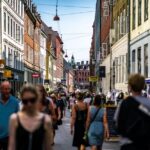
You begin at the Stork Fountain at Amagertorv (Amagertorv 6). The square itself does some heavy lifting: it’s a historical setting with a mosaic floor and surrounded by the kind of old-town buildings you’ll keep passing later as you wander.
This first stop is more than a formal start. It’s a quick primer on how Copenhagen’s center blends civic space, architecture, and public art into one everyday stage. If you like tours that help you read a city instead of just ticking off sights, you’ll enjoy how the guide frames what comes next.
Then the pace shifts from classical city square to modern creative expression.
Stine Hvid street art: seeing Copenhagen’s creativity at street level
Next up is street art by Stine Hvid, where the guide talks through what you’re looking at and why it fits Copenhagen’s cultural rhythm. Copenhagen has murals and street art that feel intentionally placed, not random decoration, and this stop helps you notice that.
The value here is practical: the guide doesn’t just point at one piece and move on. You’ll get a sense of how street art appears across different neighborhoods, so after the tour you’ll know what to watch for as you walk back on your own.
If you’re the type who usually strolls past walls without thinking, this stop is the switch. It trains your eye, and that pays off later when you’re searching for art rather than waiting for a museum.
Andersen in the gardens: a calmer stop that still tells a story
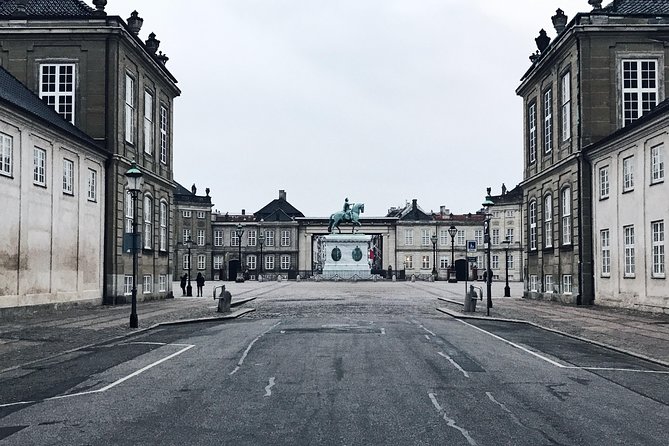
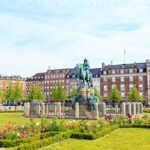
After the street-art hit, you shift into something quieter: a historical castle and gardens with a sculpture of Hans Christian Andersen. This is the kind of pause that makes the overall walk feel human-paced, not like you’re sprinting between photos.
The gardens setting matters. It gives you a breather while the guide connects Andersen to Copenhagen’s cultural identity, so you’re not just seeing a statue—you’re understanding why the city chooses to keep celebrating him in public.
If you like your culture stops with atmosphere, this one helps the tour feel balanced. And if you’re traveling with kids or just need a moment to reset your legs, it’s a good place to catch your breath without losing the thread of the tour.
Kastellet and the Gefion legend: fortress geometry with myth attached

Then comes Kastellet, the star-shaped fortress built in 1664. You’ll spot that distinctive layout quickly—the star form isn’t just decorative; it’s tied to defense thinking from centuries ago. It’s one of those places where architecture and history become visible geometry.
The guide adds a layer that makes it more than “old walls.” You’ll hear the legend of the Norse goddess Gefion connected to the impressive fountain here. Myth can sound like fluff, but when it’s tied to a specific location, it makes the scene stick in your memory.
A minor consideration: this part is still sightseeing-heavy. If you were hoping for a deep, museum-style narrative, you’ll likely want the guide to answer your follow-up questions while you’re there.
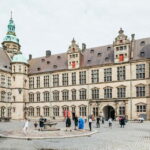



Rococo structure, the largest dome in Scandinavia, and Kierkegaard nearby

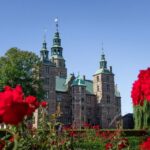
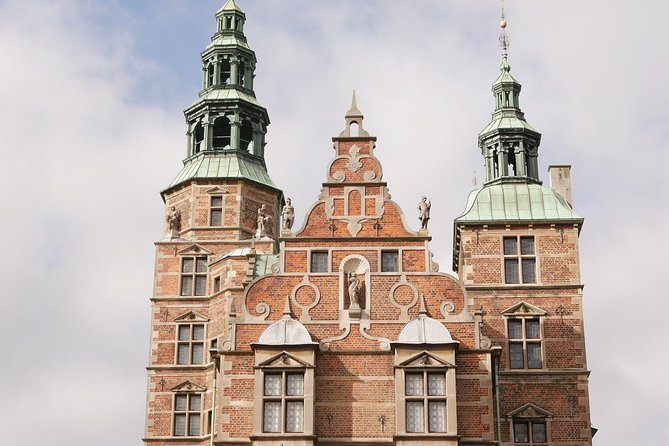
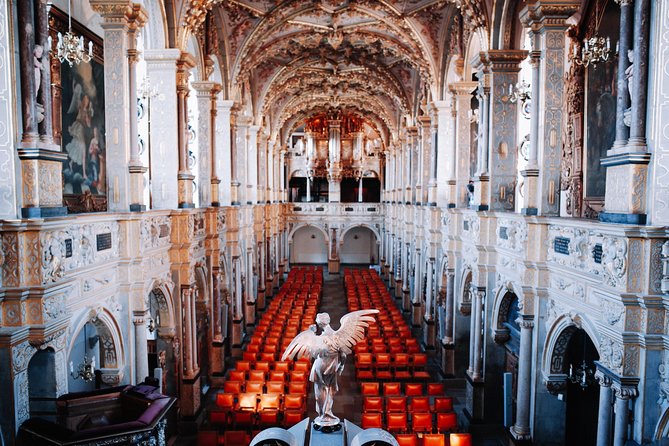
The tour then leans architectural again, toward a Rococo structure famous for having the largest dome in Scandinavia. Even if you’re not a building nerd, domes like this change your sense of scale fast. You can’t help but look up.
In the grounds, there’s also a Kierkegaard statue, and that’s a nice pairing. You get religious or ceremonial-feeling architecture vibe from the structure, then a philosopher presence that keeps the focus on ideas rather than only aesthetics.
This stop works well if you like culture that’s connected—art, architecture, and the intellectual life of Denmark in one bundle. It also sets up what you’ll see across the water next.
The royal opera view: architecture across water
As you explore the square, the palace, and the garden, you’ll get a glimpse of the Danish Royal Opera House on the other side of the water. You’re not doing an inside visit here, but the sightline is worth it because it shows how Copenhagen places major cultural institutions within walking-and-water routes.
This is a smart way to manage the limited time. The guide gives you context for what you’re seeing, and you also leave with a visual anchor. After the tour, you can decide if you want to plan an opera stop later—or just appreciate the building as part of your mental map.
If you’re a “read the city like a designer” traveler, you’ll love how the route keeps shifting perspectives between close-up details and long views across water.
Nyhavn finish: 17th-century harbor vibes and colorful facades
The tour concludes with a stroll through a picturesque 17th-century harbor with the iconic colorful waterfront facades of Nyhavn. Nyhavn is often crowded, but there’s a reason it sticks in travelers’ minds: the buildings and waterfront feel theatrical, like the city built a postcard set you can walk through.
Finishing here also helps your day planning. When you end at Nyhavn, you’re close to plenty of places to keep going—whether you want coffee, a simple meal, or just more wandering. Even if you choose not to stop, you’ll appreciate how easy it is to continue your own route from this ending point.
What you actually learn: street art, museums, galleries, and Danish food clues
This walk is described as covering street art, museums, galleries, and more, and that matches what you’ll experience in the way the guide talks. You’ll learn what to look for as you walk, not just what to look at.
One highlight mentioned in the experience feedback is that the guide includes delightful nuggets about Danish life, including food customs. You might not suddenly become an expert on Danish cuisine in 90 minutes, but you’ll leave with a few cues—things you can notice at dinner later, and questions you can ask when menus look a little unfamiliar.
The big win is that culture here isn’t treated like a separate world. Instead, it’s folded into squares, facades, and street corners you’ll keep passing after the tour ends.
Price and value for an English walk with a local guide
At $128.94 per person for about 1.5 hours, this is not a budget-only option. But for what you’re getting—an English-speaking local guide, a route planned around major art-and-culture stops, and a group capped at 8 travelers—the value makes sense if you want guidance rather than guesswork.
You’re paying for three things: someone to point out what matters, someone to connect it to broader context, and someone to keep the walk efficient. If you’re the kind of traveler who likes reading and researching later, you might feel this is pricey. If you’d rather have the city explained while you’re standing in front of it, the cost is easier to justify.
Also, the tour notes group discounts, which can improve value if you’re traveling with others. And since it’s a walking format near public transportation, you’re not paying for additional transit time or complicated logistics.
How to get the most out of the 90 minutes
A short walking tour rewards preparation. I’d wear comfortable shoes, because you’ll be moving through multiple stops without a long sit-down break. Bring a phone with battery to capture details—some of the most interesting moments are visual, like street art.
If you care about specific sites like major museums or theaters, keep expectations realistic. The route is built for a compact loop, so you might not see every “extra” you’d pick on a longer day. If there’s a place you really want, ask the guide at the start if there’s an easy add-on you can do after Nyhavn.
If you prefer nonstop narration, note that with walking tours there can be quieter stretches while you take photos or just look around. The best strategy is simple: ask questions when you pause. Guides often have the most useful information in response to what you’re genuinely curious about.
Should you book this Copenhagen tour?
Book it if you want a quick, guided way to connect Copenhagen’s public art, street art, and cultural landmarks without planning a full itinerary yourself. It’s especially good for first-time arrivals who want orientation, and for returning travelers who want a different angle on the center.
Skip it if you’re expecting an in-depth museum program or a very long, slow walk with lots of extended stops. Also, if you hate any downtime in group tours, you may find the pacing a bit matter-of-fact during transitions.
If you’re aiming for value through guidance—someone to point your eyes in the right direction—this is the kind of tour that earns its place in your schedule.
FAQ
How long is the Copenhagen art and culture walking tour?
It lasts about 1 hour 30 minutes.
How much does the tour cost?
The price is $128.94 per person.
Where does the tour start and end?
It starts at Stork Fountain (Amagertorv 6, 1160 København, Denmark) and ends in Nyhavn, Indre By.
Is the tour offered in English?
Yes, it’s offered in English.
What is the group size limit?
The tour has a maximum of 8 travelers.
Is a mobile ticket included?
Yes, it includes a mobile ticket.
What’s included in the price?
A local guide is included.
Is food or drinks included?
No, food, drinks, or snacks are not included.
What happens if I cancel?
Free cancellation is available, and you can cancel up to 24 hours in advance for a full refund.