
Reviewed · COPENHAGEN BIKE & E-BIKE TOURS
Copenhagen: Guided Bike Tour in French
Copenhagen on two wheels makes the city feel instantly readable. This French-language guided bike tour connects landmark sightseeing with the ideas behind Denmark’s social welfare model, urban planning, and what modern cycling infrastructure changes for daily life.
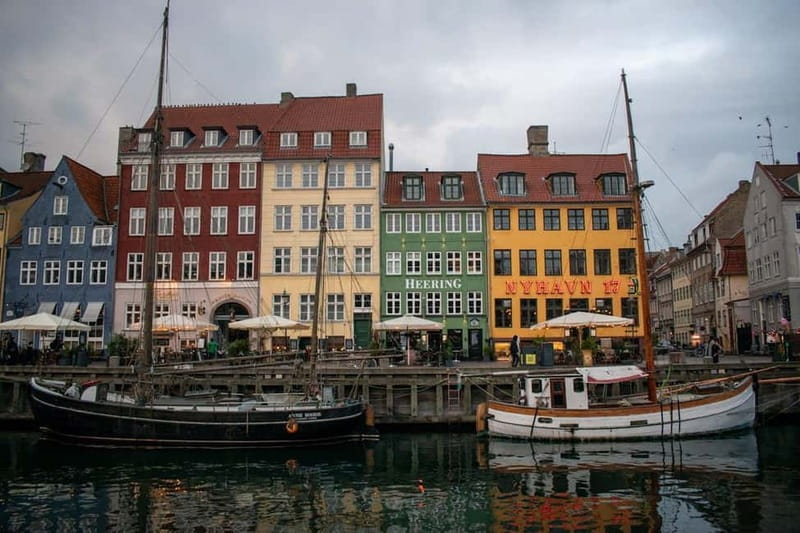
I especially like how the route mixes “big name” Copenhagen with street-level contrast. You pass by Christiansborg Palace, glide near Nyhavn, and roll through areas tied to older power and newer community culture.
One consideration: you’re responsible for your own bike. Bikes and helmets aren’t provided, and the tour requires cycling experience, so plan a rental ahead if you don’t already have wheels.
In This Review
- Key highlights to look for
- Meeting near Tivoli and rolling with a French guide
- Why the Danish social welfare model becomes a bike-route story
- City Hall, Christiansborg, and the civic core you can ride through
- Freetown Christiania and the alternative Copenhagen on wheels
- Church of Our Saviour to Amalienborg: architecture, power, and perspective
- Rosenborg Castle and the Round Tower finish you can build on
- Price and value: $51 plus the cost of your bike
- Who should book this Copenhagen bike tour in French
- Should you book it? Yes, if you want Denmark explained while you ride
- FAQ
- FAQ
- What language is the guided bike tour in?
- Do they provide bikes or helmets?
- How long is the tour?
- How many people are in the group?
- Where do I meet, and where does the tour finish?
- Is there free cancellation?
Key highlights to look for
- French guide for full-context stories on Danish history, social policy, politics, geography, and the economy
- Danish social welfare model on the ground, not just in theory
- Recently built bicycle bridges that show how Copenhagen keeps redesigning for cyclists
- Freetown Christiania pass-by with colorful street art and an alternative lifestyle
- Practical sightseeing flow from City Hall toward Rosenborg Castle and a Round Tower finish
- Small group (max 10), which keeps the pace easier to manage
Meeting near Tivoli and rolling with a French guide
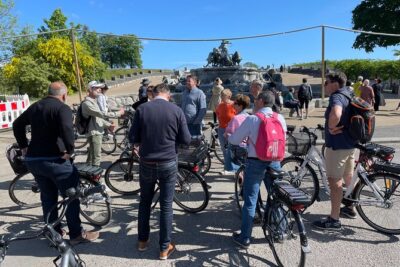
The tour starts by the Copenhagen Visitor Service in the Axelborg building, very near Tivoli Garden and the SAS Skyscraper. The itinerary also references Vesterbrogade 4B as the starting area, so expect the first minutes to be about getting you oriented and placed for the ride. The guide will be wearing a hat or cap, which makes it easy to spot your group.
You’ll be cycling for about 4 hours, and the group stays small—limited to 10 participants. That matters because Copenhagen bike lanes can be busy at peak times, and you want a guide who can keep everyone together without turning the ride into a stop-and-start slog.
Here’s the main practical point: bring your own bike. The company doesn’t provide bikes or helmets. If you need a rental, local shops offer daily bike rentals starting at €12, with different sizes for different riders. Helmets aren’t supplied either, though helmets are recommended. Also plan for the fact that this tour is designed for riders who already know how to cycle for real—balance, braking, and staying aware in traffic are part of the deal.
Finally, if you’re thinking about cost: the tour price covers the guide and the bike tour, not the bike itself. Your total trip cost will depend on what you pay for a rental.
More of the city the way locals take it, on two wheels
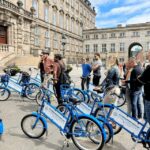
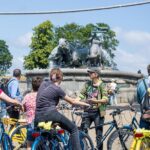
Why the Danish social welfare model becomes a bike-route story
This is the kind of Copenhagen tour where you don’t just look at impressive buildings—you hear how the city’s choices affect everyday life. The guide focuses on Denmark’s social welfare model, plus the city’s urban evolution—how Copenhagen grew, how space is allocated, and why transportation design is part of social policy, not just convenience.
I like tours that connect cause and effect. Here, you’re given that link in plain language: what “good planning” looks like when you’re cycling to public institutions, royal sites, and civic landmarks in one continuous loop. You’re also shown the modern side of Copenhagen through its cycling infrastructure, including the recently constructed bicycle bridges. That detail isn’t random. It’s a reminder that cycling isn’t a nostalgic hobby in this city—it’s an actively maintained system.
A standout element from the experience write-ups is the way the guide keeps talking for the full duration with lots of angles on Denmark—historical context, social and political viewpoints, plus how geography and the economy shape where people live and move. That’s why this tour can feel like more than sightseeing. You get a framework that helps you interpret what you’re seeing as you pedal.
City Hall, Christiansborg, and the civic core you can ride through
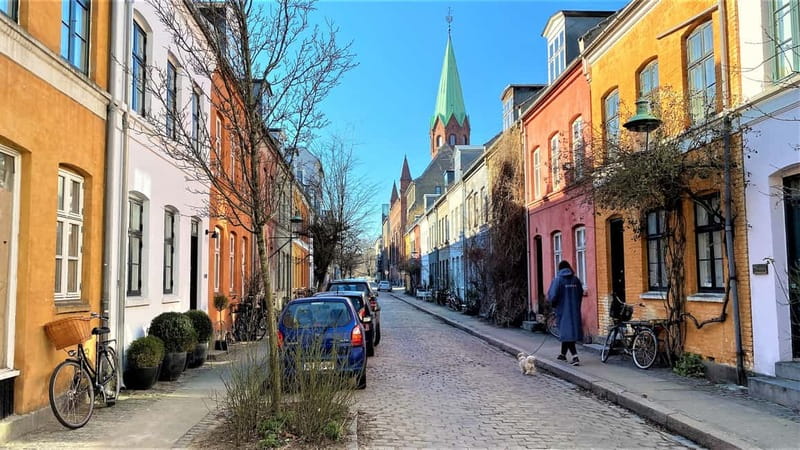
The first major stop on the route is Copenhagen City Hall, where you’ll get time for sightseeing. This is a good anchoring point because City Hall is pure civic identity. It also helps you understand the city’s scale and layout—once you see it from the street and approach it by bike, the rest of the route makes more sense.
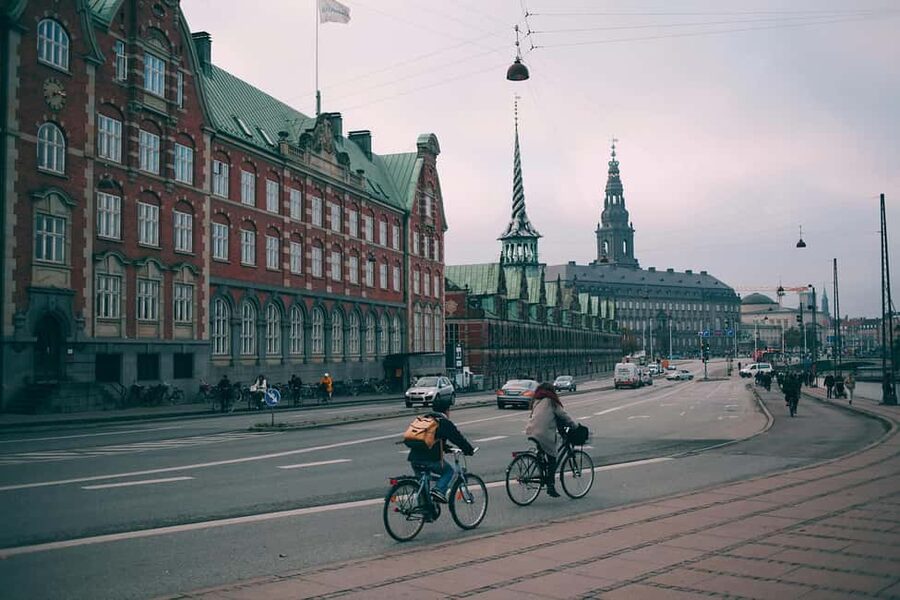
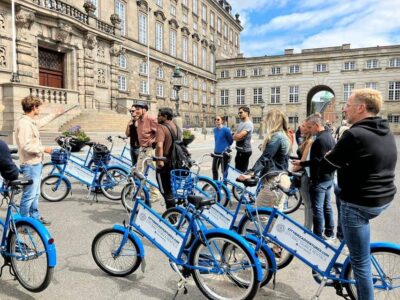
From there you pass by Christiansborg Palace. You won’t necessarily get long lingering time here, but it’s still an important stop in the story. Christiansborg connects the city to governance and national institutions, which pairs nicely with the guide’s focus on social and political structures.
Next comes the Copenhagen Stock Exchange, another sightseeing stop. Even if you’re not a finance person, this area helps you “read” the city’s economic engine. In Copenhagen, economic planning and public planning don’t feel like separate worlds when you’re moving through the same streets.
Practical rider tip: in downtown areas, the bike flow can tighten. Keep your line smooth, and don’t expect to roam away from the group for photos unless the guide pauses. If you want a camera shot at City Hall or the Stock Exchange, plan to ask for a quick moment rather than stopping abruptly.
Freetown Christiania and the alternative Copenhagen on wheels
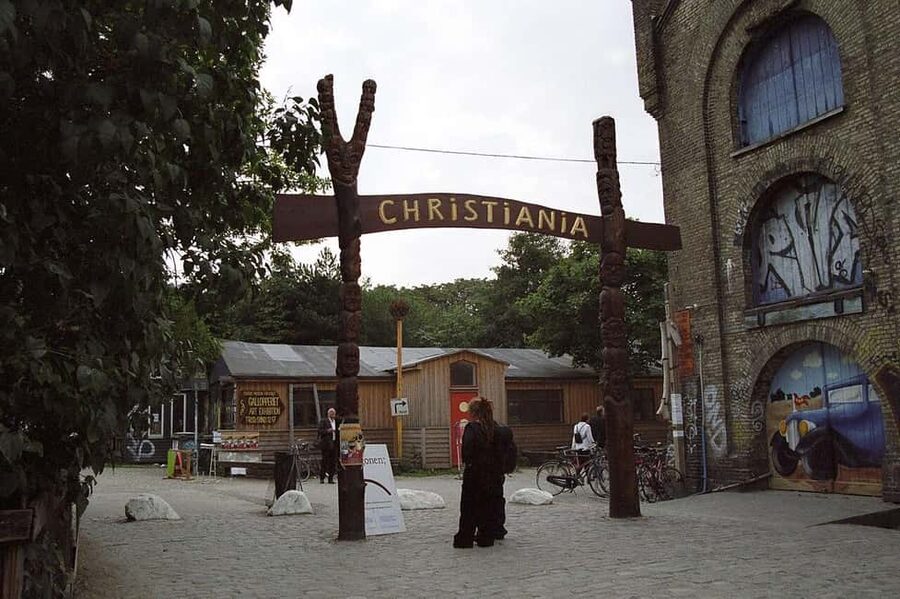
One of the most talked-about sections is the pass-by of Freetown Christiania. The neighborhood is known for colorful street art and an alternative lifestyle, and your guide uses it as a contrast point to official institutions you saw earlier. You’re not just watching murals. You’re seeing how different communities occupy public space in their own way.
This is also where the tour’s pacing helps. Christiania works best when you’re already in “city-reading” mode—able to notice contrasts between old authority and newer forms of community expression. Coming from civic buildings and economic sites, Christiania hits with extra meaning.
As you move through the city, you’ll also use parts of Copenhagen’s newer cycling network, including the recently constructed bicycle bridges. I find these sections valuable because they show you Copenhagen’s design thinking in action: how the city connects neighborhoods and makes routes feel safer and more direct for cyclists.
You’ll also pass by Nyhavn, one of the best-known harbors in town. The good news is you don’t need to stand in a crowd all morning to get a feel for it—you get a moving look that can be much less exhausting. After Nyhavn, the route heads toward King’s New Square (pass-by) and then toward the royal section.
One small caution: Christiania has its own atmosphere, and while you’ll be there from the bike route, it still pays to keep your expectations realistic. This is a guided pass-through, not a long neighborhood walking visit, so keep your time for observation and question your guide rather than trying to explore on your own.
Church of Our Saviour to Amalienborg: architecture, power, and perspective
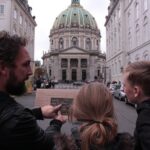
Church of Our Saviour is a sightseeing stop on the route. This one matters because it adds a landmark with a very recognizable silhouette and a history tied to Copenhagen’s identity. Seeing it while cycling keeps your sense of scale grounded—you can judge distances and street angles in a way that photos alone won’t do.
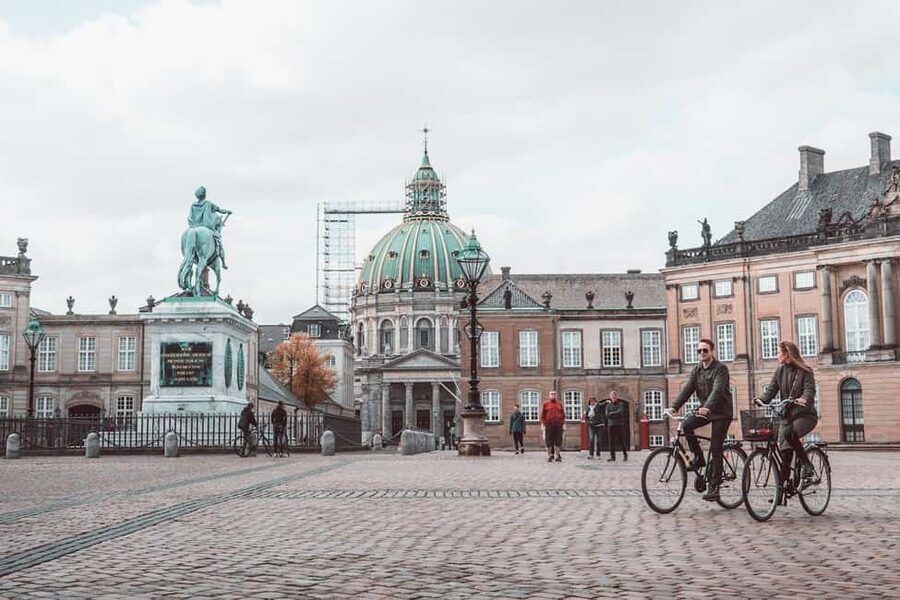
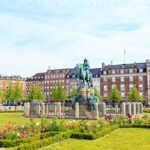
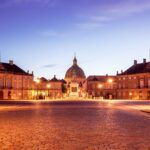
Next, Amalienborg Palace is listed as a sightseeing stop. This is royal Copenhagen, and it’s also a useful piece of context for the guide’s bigger theme: the city’s institutions have changed over time, but they still shape where people gather and how public space flows.
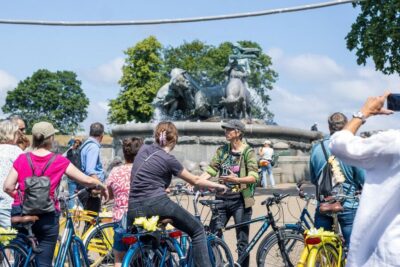
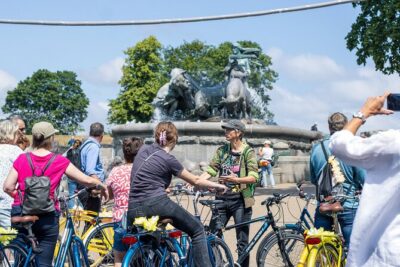
As the route continues, you’ll pass Gefion Fountain and the Little Mermaid (statue). These are classic Copenhagen images, but the bike format changes how you experience them. Instead of hunting for the one postcard angle, you move past and get a sense of what’s around them—the streets, the waterfront approach, the way foot traffic and bike traffic coexist.
Then you’re set up for a major historical follow-up with Rosenborg Castle.
Photo tip that saves time: if you want the Little Mermaid shot, don’t wait until the last second when everyone is rolling. If the group pauses, take your quick angle and then get back in line. You’ll lose less time and keep the ride calm for everyone.
Let a Copenhagen local lead the way

Rosenborg Castle and the Round Tower finish you can build on
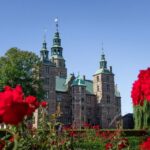
The tour includes Rosenborg Castle as a sightseeing stop. This is one of those places where the architecture and the grounds help you understand how power and culture expressed themselves in earlier centuries. It also gives the ride a natural “history anchor” before the final stretch.
The itinerary indicates the finish at The Round Tower. At the same time, the meeting info notes the activity ends back at the meeting point. In practice, expect the final leg to bring you back toward the central area where you started—so even if the last named viewpoint is the Round Tower, you should still be able to find your bearings afterward.
I like a ride that ends at a place with walkable options. The Round Tower area gives you a good platform to keep exploring on foot for museums, viewpoints, or just a slow coffee break.
If you’re juggling plans later that day, this tour’s structure is helpful: you’ll already have seen a high-confidence loop of Copenhagen’s key districts. That means less time figuring out the next transit step and more time enjoying what you choose after the ride.
Price and value: $51 plus the cost of your bike
At $51 per person, this tour is priced low for a guided 4-hour bike experience in central Copenhagen. The key value lever is that your money buys a guide plus a bike-tour structure that links civic landmarks, architecture, and Danish planning ideas into one narrative.
The catch is straightforward: bikes and helmets aren’t included. Daily rentals start at €12 from local shops, and you’ll want a bike size that fits you comfortably. If you already have a rental (or your own bike), you’re in great shape. If you’re renting, you should budget the combined total for bike + tour.
For families, there’s one nice detail: teenagers enjoy a half-price discount. That can make the whole package more sensible for a mixed-age group, as long as the teens have the cycling comfort level the tour requires.
One more value point: because the group is small and the guide is French-speaking, you can ask questions and actually understand what you’re seeing. In Denmark, a lot of the “why” matters—and this tour is built to explain it.
Who should book this Copenhagen bike tour in French
This tour fits you best if:
- you can already cycle confidently in an urban setting
- you want French-language commentary, not just sign-posting
- you like understanding the city’s design choices, not only taking photos
- you want a 4-hour format that covers a strong slice of central Copenhagen without long transit waits
It’s not the best fit if you want a relaxed pace with frequent stops to wander. This is a guided cycling tour with pass-by segments, so your attention needs to stay on the ride.
If you’re traveling with kids or teens, note the discount, but only if they’re comfortable riding. For adults who don’t like cycling for hours, it might feel too structured.
Also, consider your bike setup. The tour doesn’t provide a helmet, but helmets are recommended. Plan a quick safety check (brakes, tire pressure, lights if needed) before you meet the guide, especially if you rented the bike that day.
Should you book it? Yes, if you want Denmark explained while you ride
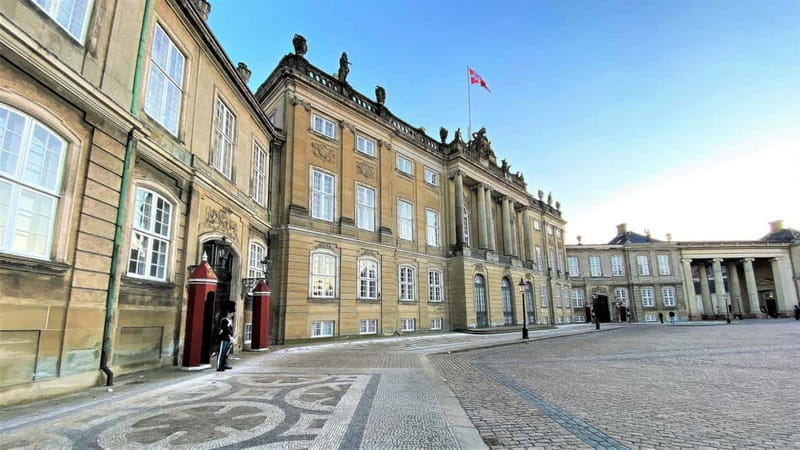
I’d book this tour if your goal is to see Copenhagen with context. The guide’s focus on the social welfare model and urban evolution turns a classic landmark route into something more useful. Add in the Christiania pass-by, the cycling infrastructure story (including bicycle bridges), and the fact that you cover City Hall through Rosenborg and finish near the Round Tower, and you get a well-built afternoon.
Skip it if you don’t already have a bike you’re comfortable riding, or if you’re hoping for a tour where helmets and bicycles are handled for you. Your success here depends on having your cycling gear sorted and riding skills ready.
FAQ
FAQ
What language is the guided bike tour in?
The live guide speaks French.
Do they provide bikes or helmets?
No. Bikes and helmets are not provided, so you need your own bike. Bike rentals are available locally (daily rentals start at €12). Helmets are recommended.
How long is the tour?
The duration is 4 hours.
How many people are in the group?
The tour is a small group limited to 10 participants.
Where do I meet, and where does the tour finish?
You meet in front of the Copenhagen Visitor Service in the Axelborg building near Tivoli Garden and the SAS Skyscraper. The tour ends back at the meeting point, and the route finish is listed at The Round Tower.
Is there free cancellation?
Yes. You can cancel up to 24 hours in advance for a full refund.
More Tours in Copenhagen

More Tour Reviews in Copenhagen
Copenhagen by Bike, A Few More Ways
Fresh Off the Cobbles: The Newest Copenhagen Reviews





Copenhagen Bike & E-Bike Tours, compared.
 ★ 4.8Highlights 3 Hour Bike Tour with a Local GuideFrom $622,312 reviews
 ★ 4.73-Hour City Highlights Bike Tour with GuideFrom $551,239 reviews
 ★ 5.0Copenhagen Highlights 3 Hour Bike Tour with local GuideFrom $611,125 reviews
 ★ 5.03-hour Copenhagen City Highlights Bike TourFrom $54757 reviews
 ★ 4.61.5-Hour City Highlights Bike TourFrom $38477 reviews
 ★ 5.0Bike Tour Copenhagen. Private Guide, Concierge Service, Small GrpFrom $52416 reviews
 ★ 4.73-Hour Culinary Bike TourFrom $110301 reviews
 ★ 5.02 Hours Copenhagen E-Bike Guided ToursFrom $89276 reviews
Browse the lists this tour appears in