
Reviewed · GUIDED
Copenhagen Architecture and Sustainability Tour with local Guide
Copenhagen reads better from a bike. This eco-focused architecture tour links modern design, social policy, and city planning while you cycle on bike-first routes with a local guide. You’ll get to see areas that most classic sightseeing routes skip.
I especially like the small group size (capped at 15) because it stays calm, and questions feel welcome. I also like that admissions are free at the stops, so your money goes into time on the route and not ticket lines. One consideration: in summer, the harbor approach near the first water-side area can feel crowded, so you’ll want to follow the guide’s pacing instead of trying to linger.
Plan for a steady ride and a bit of cycling stamina. You’ll cover about 11 km in roughly 3 hours total, with plenty of short stops to look closely and understand what you’re seeing.
In This Review
- Key highlights worth penciling in
- Why Copenhagen’s architecture makes more sense on two wheels
- Price and what you actually get for $72.57
- Getting set up at Tropical Bikes and staying comfortable
- The route: Blox to the harbor baths, where city life returns
- Stop 1: Blox
- Stop 2: Lille Langebro
- Stop 3: Havnebadet Islands Brygge
- Housing designed for community: The Tietgen Residence Hall
- Stop 4: The Tietgen Residence Hall
- Culture in a big room: DR Koncerthuset
- Stop 5: DR Koncerthuset
- Amagerfælled and Enghave Park: nature on reclaimed and planned land
- Stop 6: Amager Fælled
- Stop 7: Cykelslangen
- Stop 8: Enghave Park
- Folkehuset Absalon and Kødbyen: reuse, religion-to-community, and industrial planning
- Stop 9: Folkehuset Absalon
- Stop 10: Meatpacking District (Kødbyen)
- Foodie meeting points and parks that reuse defenses
- Stop 11: Israel’s Square and Torvehallerne
- Stop 12: Ørstedsparken
- The cycling stretch: time-efficient between-stop connections
- What to consider before you book
- Who this tour is for
- Should you book this Copenhagen Architecture and Sustainability bike tour?
- FAQ
- What’s the tour price and length?
- How many kilometers will I cycle?
- Is the tour group small?
- What’s included in the price?
- Are admissions included at the stops?
- Where does the tour start, and does it end nearby?
- What if the weather is bad?
Key highlights worth penciling in
- A local guide who connects buildings to real sustainability choices, not just style.
- 11 km of cycling that beats walking if you’re short on time.
- Free entry at every stop, so the itinerary stays easy on your budget.
- Harbor-to-neighborhood variety, from new bridges and harbor baths to housing and parks.
- Bike-first infrastructure, including crossings designed exclusively for cyclists.
- Guides like Jörn and Julia are known for friendly, clear explanations that keep the ride understandable and fun.
Why Copenhagen’s architecture makes more sense on two wheels
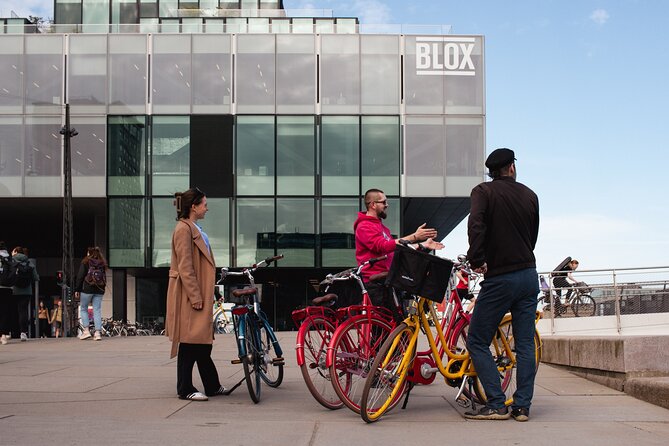
Copenhagen is one of those cities where the bike network isn’t an afterthought—it’s how you actually move. This tour uses that advantage. You’ll spend about an hour cycling between stops, then pause often enough to look at details you’d miss at walking speed.
The sustainability angle is practical. You’re not just hearing vague statements about green living. Instead, you’ll see how sustainability shows up in concrete ways: building design, shared community spaces, how public space is restored for people, and how the city repurposes older infrastructure.
And because it’s capped at 15 people, you’re not stuck behind a single file of helmets. The route stays relaxed, which matters when you’re weaving through bike lanes and crossing near busy harbor areas.
Let a Copenhagen local lead the way
Price and what you actually get for $72.57
At $72.57 per person for about 3 hours, the best value is the combo. You’re paying for a local guide, a bicycle, and a full loop of meaningful architecture stops. You’re also getting free bike helmets upon request and restroom access at the store.
The other quiet value: most of the stops you visit have free admission. That means you’re not forced to decide between seeing the building and paying extra to enter. Instead, you can focus on learning what makes each place work.
If you’re already planning to bike around Copenhagen, this is a strong “guided ride with context” rather than a museum day. It’s also a good pick if you want a broader feel for the city’s current thinking without spending your whole day hopping between destinations.
Getting set up at Tropical Bikes and staying comfortable
Your meeting point is Vester Voldgade 2 (1552 København). It’s near public transportation, which helps if you’re arriving from another part of town.
Once you arrive, you’ll use the provided bicycle and get on the road with the guide. Helmets are available for free if you request them, and there are toilets at the shop. If you’re bringing kids, children’s bikes are available in different sizes—just confirm availability in advance.
You should also know what’s not included. Basic bike comfort add-ons like phone holders and baskets cost extra (49 DKK per item). If you want a different ride setup—cargo/tandem (449 DKK), e-bike (249 DKK), e-cargo (649 DKK), or a child-seat (119 DKK)—those are also extra upgrades you’d need to reserve.
The route: Blox to the harbor baths, where city life returns
Stop 1: Blox
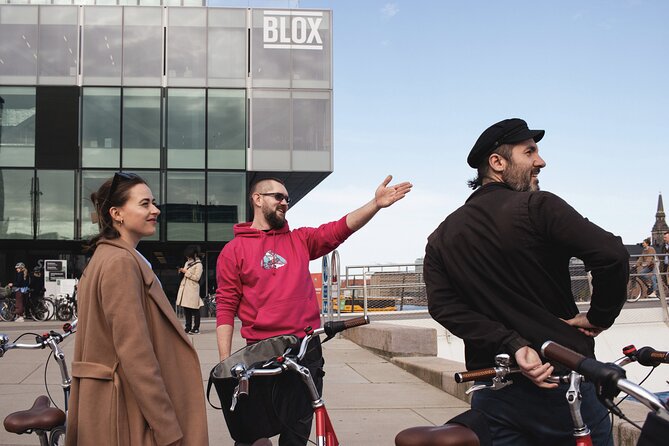
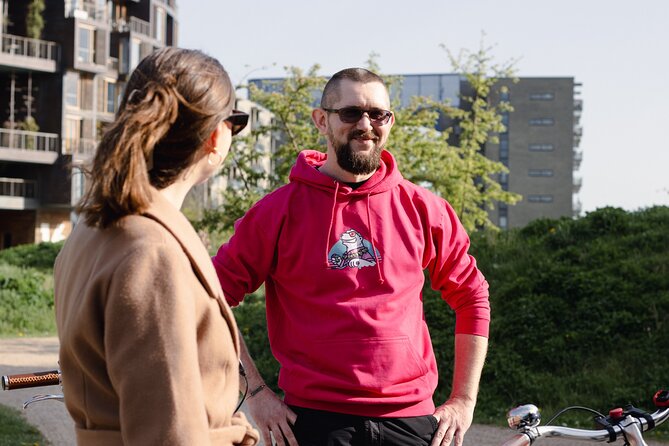
Blox is a mixed-use building designed with sustainability in both technical and social terms. That social part is key: it’s not only about energy performance, it’s also about how the building supports people and community life.
Most importantly for your timing, it hosts exhibitions about Copenhagen architecture. If something is on view during your visit, it’s a fast way to tie the tour’s theme to real, current ideas in the city.
How this stop feels: quick, easy to enter, and useful as a starting point before the ride opens up.



Stop 2: Lille Langebro
Lille Langebro is new enough to represent a recent mindset shift in Copenhagen: connecting the harbor for pedestrians and cyclists. These crossings help turn a former trade and naval space into something people actually use for free-time.
Look for: how the bridge is designed around people moving—especially cyclists—rather than treating the harbor like a boundary.
Stop 3: Havnebadet Islands Brygge
When the harbor bath opened in 2003, it marked a major change in Copenhagen’s relationship with the water. This is one of those places where the lesson is bigger than the view: it shows how public access to the harbor can be planned, not just hoped for.
What you’ll notice from the bike: the city doesn’t hide its water. It builds for it.
Housing designed for community: The Tietgen Residence Hall
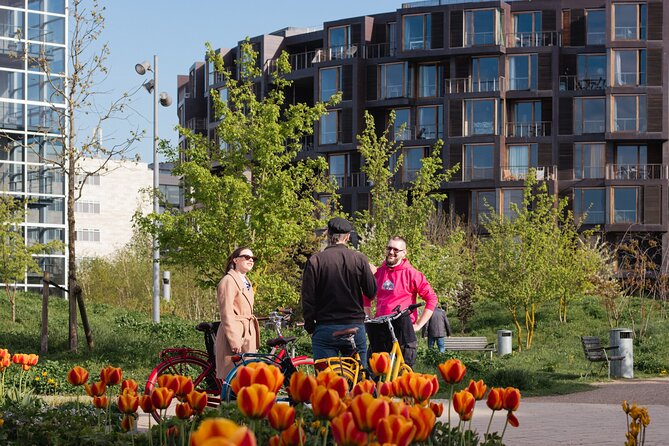
Stop 4: The Tietgen Residence Hall
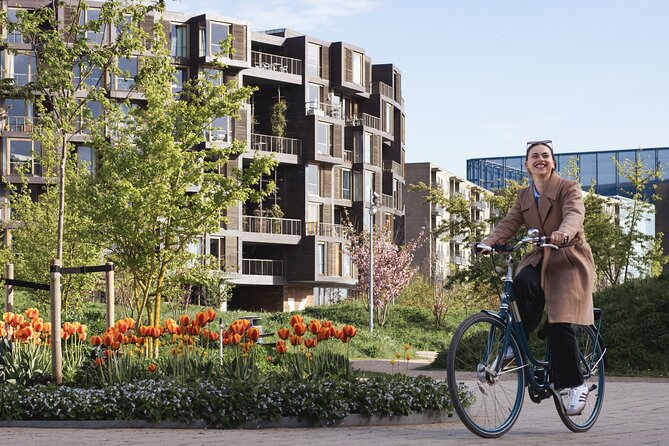
Tietgen is one of the most interesting stops because it treats sustainability as a human scale issue. The building is designed to support personal development of its residents while balancing individual space with shared life.
Social sustainability is built in through shared common areas like living rooms and kitchens, while private rooms are smaller and come with a washroom. The idea is straightforward: community is part of daily routine, not an optional event.
Possible drawback: this is a concept-heavy stop. If you like quick photo ops, you’ll still enjoy it—but you’ll get more from it if you ask the guide how the shared design affects day-to-day living.
Culture in a big room: DR Koncerthuset
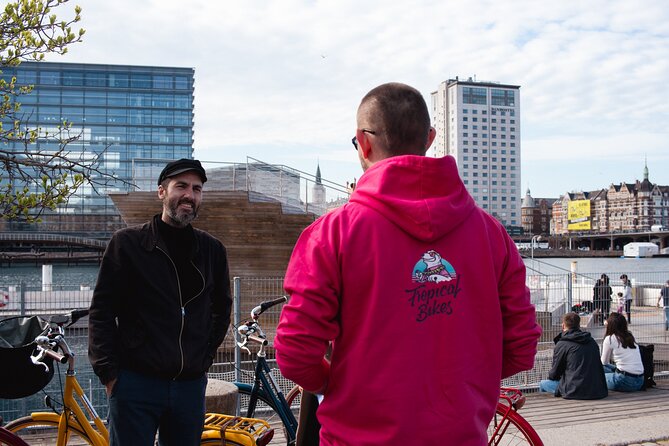
Stop 5: DR Koncerthuset
This is the kind of architecture that looks impressive and works even better once you connect it to purpose. DR Koncerthuset houses a concert hall with about 1,800 seats and is home to the Royal Symphony Orchestra, plus smaller stages and recording studios.
The sustainability takeaway here is less about eco tech and more about what cultural institutions represent: long-term investment in public life. It’s also a reminder that modern Copenhagen isn’t only about offices and housing. It’s about shared culture.
Amagerfælled and Enghave Park: nature on reclaimed and planned land
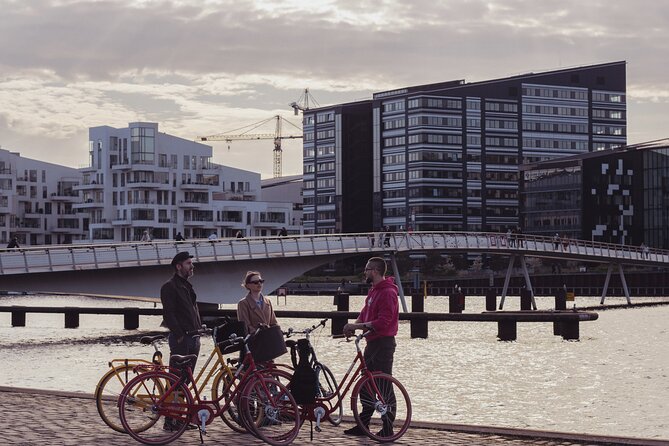
Stop 6: Amager Fælled
Amagerfælled has a complicated past that Copenhagen jokes about—the old military training and shooting range that continued for centuries, then its later use as a garbage dump afterward.
Yet today, it reads as an unusually intact pocket of nature for Copenhagen. It’s also situated largely on artificially reclaimed land, which makes the landscape lesson feel grounded in real planning choices.
What I’d watch for if you’re detail-oriented: how the land use changes over time, and how the city treats recovery as a long project, not a quick fix.
Stop 7: Cykelslangen
Cykelslangen is one of the bike-crossover stories in this route. Together with Bryggebroen, it was among the first new harbor crossings built exclusively for cyclists. That means the design isn’t only about getting you from A to B—it’s about making cycling feel safe and natural.
If you’ve ever been on a bike route where motorists treat you like an interruption, this section is the opposite. Copenhagen designs infrastructure so cyclists don’t have to negotiate for space.
Stop 8: Enghave Park
Enghave Park began as allotment gardens and later became a park laid out in a neoclassical style with a bandstand, playground, and sports fields. Between 2017 and 2019, it was redesigned with stormwater in mind, taking on a larger role in handling torrential rains.
That’s sustainability you can see in the function. Good parks in Copenhagen do more than look nice—they help manage the city’s water challenges.
Folkehuset Absalon and Kødbyen: reuse, religion-to-community, and industrial planning
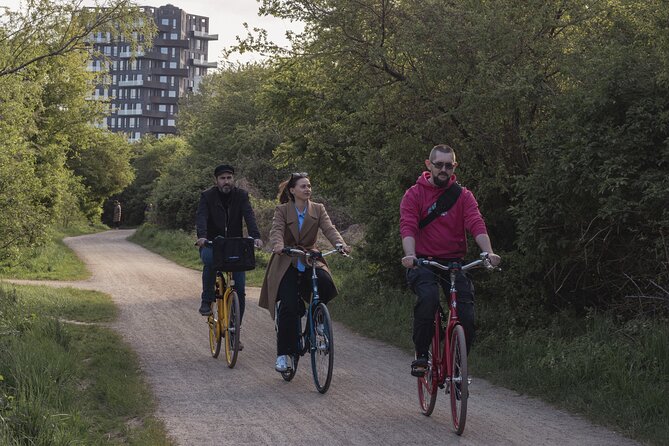
Stop 9: Folkehuset Absalon
Folkehuset Absalon is a former church now run as a community center. This is reuse at a practical level: rather than demolishing a solid structure, the city shifts its function to meet community needs.
It’s also the kind of stop that makes sustainability feel cultural. A building can be green on paper, but it becomes meaningful when people actually use it.
Stop 10: Meatpacking District (Kødbyen)
Kødbyen is a huge industrial architecture story. The city planned the meatpacking district to support sanitation and healthier conditions for a growing metropolis. Over time it expanded, leaving behind an architectural trail through the 19th and 20th centuries.
Why it matters for the tour theme: sustainability isn’t just about today’s climate policies. It’s also about how cities handled public health and infrastructure back when those were urgent challenges.
Foodie meeting points and parks that reuse defenses
Stop 11: Israel’s Square and Torvehallerne
Israels Plads is a meeting place for Copenhagen food culture, and the adjacent Torvehallerne adds energy to the area. There’s also a long timeline underneath: before buildings returned after the walled-city era, the square was tied to open space rules.
Then came the period where the area became a massive parking lot, which is an important reminder of how urban space can swing between people-first and car-first eras.
Stop 12: Ørstedsparken
Ørstedsparken is one of the strongest reuse stories in the route. It started as part of the city’s defenses outside the walls. Later, after the city wall was demolished, the area became a park, keeping parts of the old moat as an internal lake.
You’ll also get to see the dramatic hills and crooked paths—signs that the terrain wasn’t erased just to make it look tidy.
The cycling stretch: time-efficient between-stop connections
After Israel’s Square and Ørstedsparken, you’ll spend the remaining time cycling between locations. This is where the whole tour earns its keep. You’re not stuck waiting around. The guide keeps the pace moving so you see a lot without feeling rushed at each stop.
With about 1 hour 5 minutes cycling time and short stops spread across the route, it’s a smart option for time-poor visitors. You’ll leave feeling like you understand how Copenhagen is evolving—especially how it treats water, bikes, and public space as everyday life.
What to consider before you book
This tour is best if you’re comfortable with moderate cycling. The tour is listed for moderate physical fitness, and you should expect a total of roughly 11 km. If you’re not used to riding regularly, plan to go slower and take the guide’s cues on pace.
The other practical note: timing can affect crowd levels. If you’re coming in peak season, the harbor-side areas can be busy, and you may spend less time lingering than you’d like. The fix is simple: go with the flow and let the guide manage the route so you stay safe and keep moving.
Finally, if you want extra gear like baskets or a phone mount, don’t assume it’s included. Those add-ons have extra fees, and you should reserve what you need ahead of time.
Who this tour is for
You’ll probably love this if you:
- Want architecture and sustainability, but still prefer a fun bike ride over a museum crawl.
- Like learning how cities function: housing models, bridges, public spaces, and cultural infrastructure.
- Are in Copenhagen for a short visit and want a high “see-and-understand” ratio.
It’s also a good choice for people who enjoy photography, but with context. You’ll have lots of quick stops where you can get visuals and then get the meaning.
Should you book this Copenhagen Architecture and Sustainability bike tour?
If your ideal day in Copenhagen is active, guided, and grounded in real planning—not just postcard views—yes, I’d book it. The value is strong because you get a local guide, a bike, helmets, toilets, and free entry at the stops, all in about 3 hours for a small group.
I’d book it especially if you want to understand how Copenhagen handles sustainability as daily life: shared housing choices, reused structures, park redesign for rain, and harbor spaces designed for people.
Skip it only if you strongly dislike cycling or you’re expecting long, unbroken indoor visits. This is a ride-first experience. When you go in with that mindset, it clicks fast.
FAQ
What’s the tour price and length?
It costs $72.57 per person and runs for about 3 hours (approx.).
How many kilometers will I cycle?
There are roughly 11 km of biking between stops on this tour.
Is the tour group small?
Yes. This activity has a maximum of 15 travelers.
What’s included in the price?
Included are use of a bicycle, children bikes in different sizes (availability needs contacting the provider), toilets at the store, a local guide, and free bike helmets upon request.
Are admissions included at the stops?
Yes. The stops listed for this route show admission ticket free.
Where does the tour start, and does it end nearby?
It starts at Vester Voldgade 2, 1552 København, Denmark, and ends back at the meeting point.
What if the weather is bad?
This experience requires good weather. If it’s canceled due to poor weather, you’ll be offered a different date or a full refund.
More Guided Copenhagen Tours
More Tours in Copenhagen
More Tour Reviews in Copenhagen
Fresh Off the Cobbles: The Newest Copenhagen Reviews







Guided, compared.
 ★ 4.6Canal Cruise with GuideFrom $269,115 reviews
 ★ 4.8Highlights 3 Hour Bike Tour with a Local GuideFrom $622,312 reviews
 ★ 4.5Copenhagen Sightseeing Classic Canal Tour With Live GuideFrom $331,906 reviews
 ★ 4.8Guided Canal Tour by Electric BoatFrom $411,341 reviews
 ★ 4.73-Hour City Highlights Bike Tour with GuideFrom $551,239 reviews
 ★ 5.0Copenhagen Highlights 3 Hour Bike Tour with local GuideFrom $611,125 reviews
 ★ 4.9Guided Segway TourFrom $67710 reviews
 ★ 4.6Guided Party Pub Crawl with 4 Shots and 1 DrinkFrom $47603 reviews